
A primary bedroom is the only room in a house with a single job: to help you sleep, and to be pleasant to wake up in. Everything else, including the seating, the dressing area, and the television, is secondary, and rooms go wrong when that hierarchy gets inverted.
We design bedrooms around light control, quiet, and the specific ritual of how you actually start and end the day, then layer in the materials that make the room feel like a retreat rather than a showroom.
Bed placement resolved against windows, doors, and clearances on both sides.
Drapery, blackout layers, and shades specified for how early the sun reaches the room.
Bedside task light that each person can control without waking the other, on dimmers throughout.
Headboards, benches, and nightstands built to the room's dimensions.
Wardrobe, dressing, and storage detailed to what you own.
Specified as a complete palette and installed with the rest of the room.
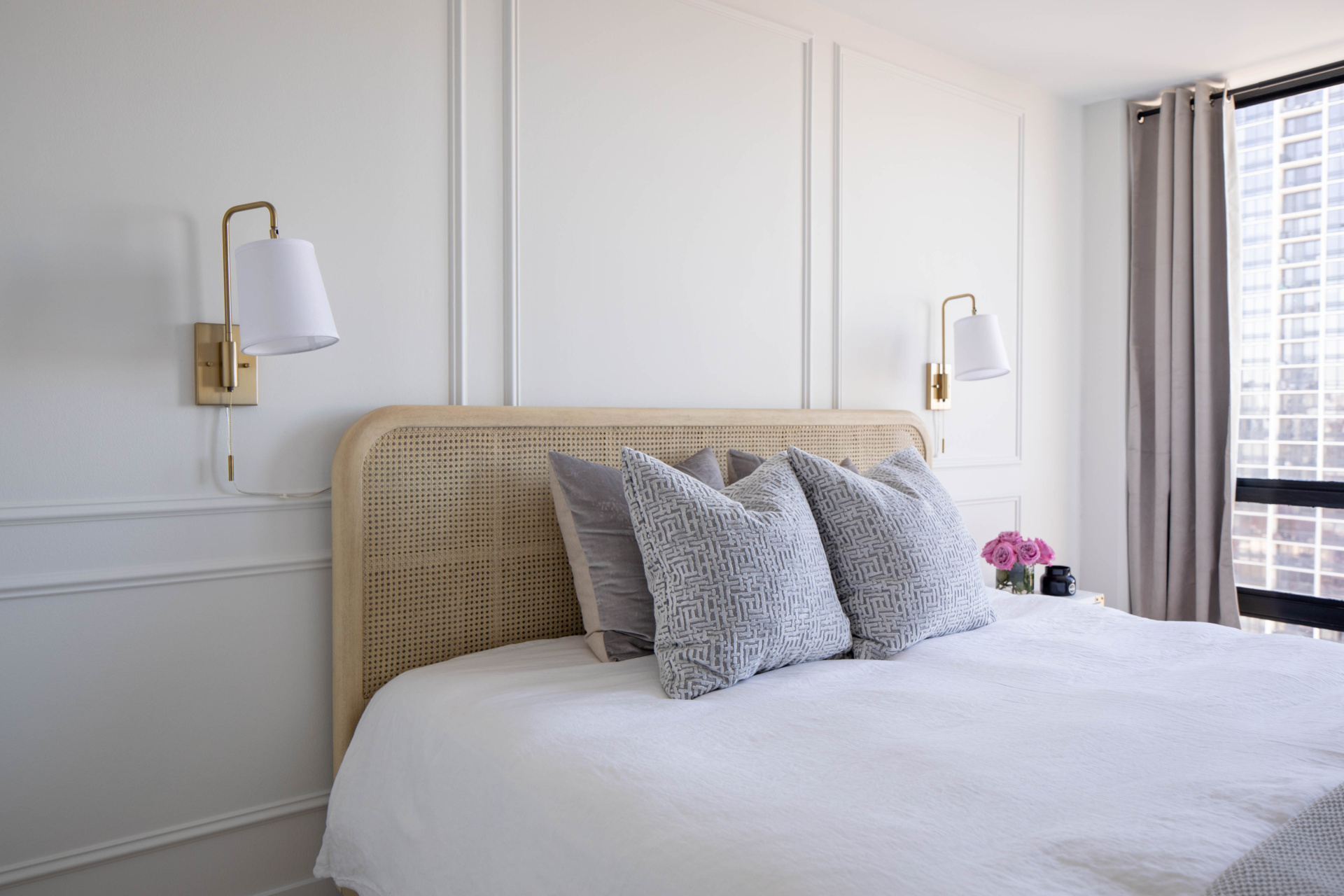
The three things that most affect how a bedroom performs are almost never discussed in design terms. Light control is a drapery and hardware problem: a blackout panel is only as good as the return and the overlap that stop light leaking at the edges.
Sound is a soft-materials problem. Rugs, upholstered headboards, and lined drapery all measurably quiet a room. We factor both into the specification rather than treating them as afterthoughts.
A narrow palette worked through many textures. Restful, hard to tire of, and dependent on excellent materials since there is little pattern to carry the room.
Deeper walls, generous drapery, and layered lighting. Especially effective in bedrooms with modest natural light, or high ceilings that need bringing down.
Pale finishes and natural fibers, with the window treatment doing the heavy lifting on light control so the room can stay bright by day and dark at night.
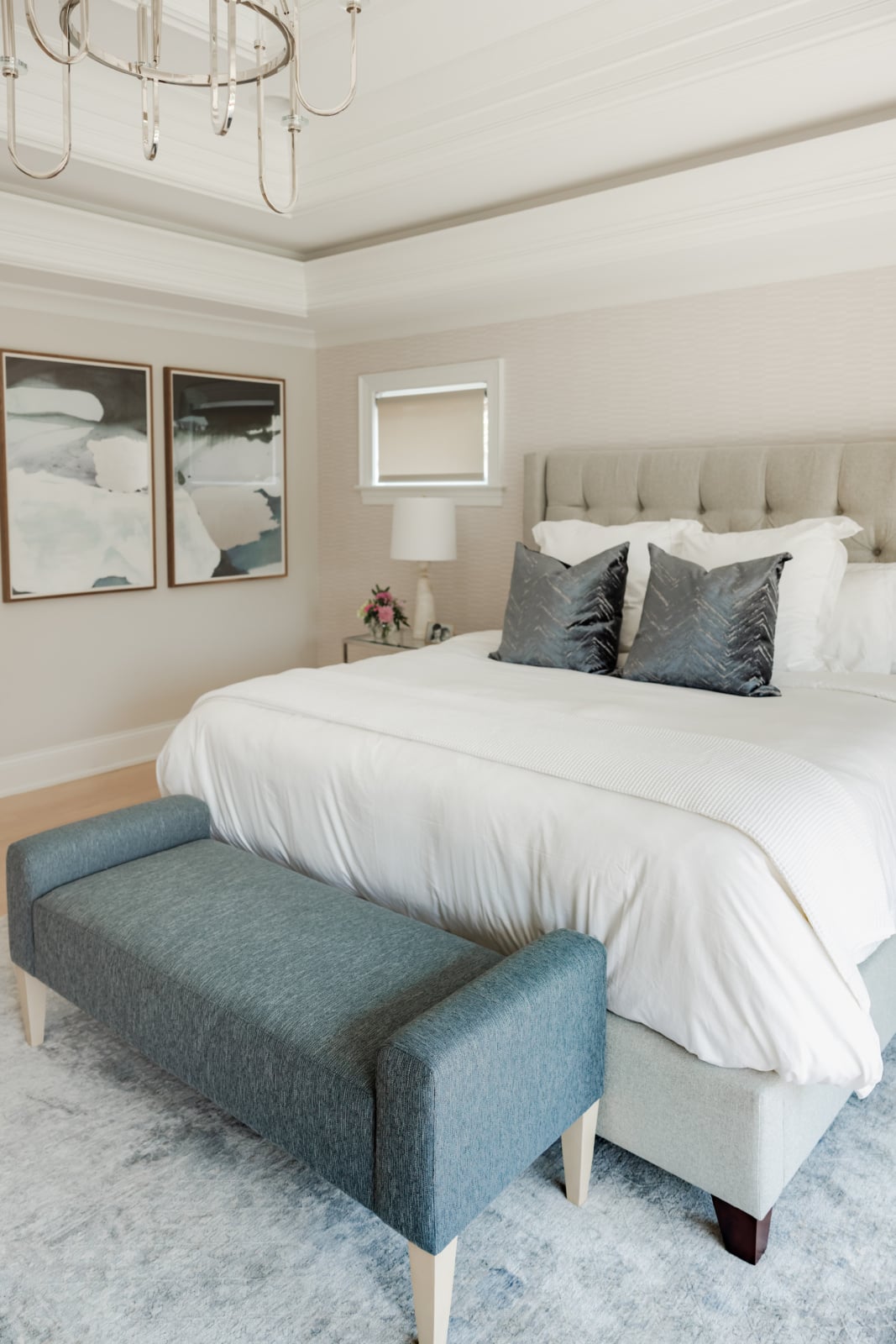
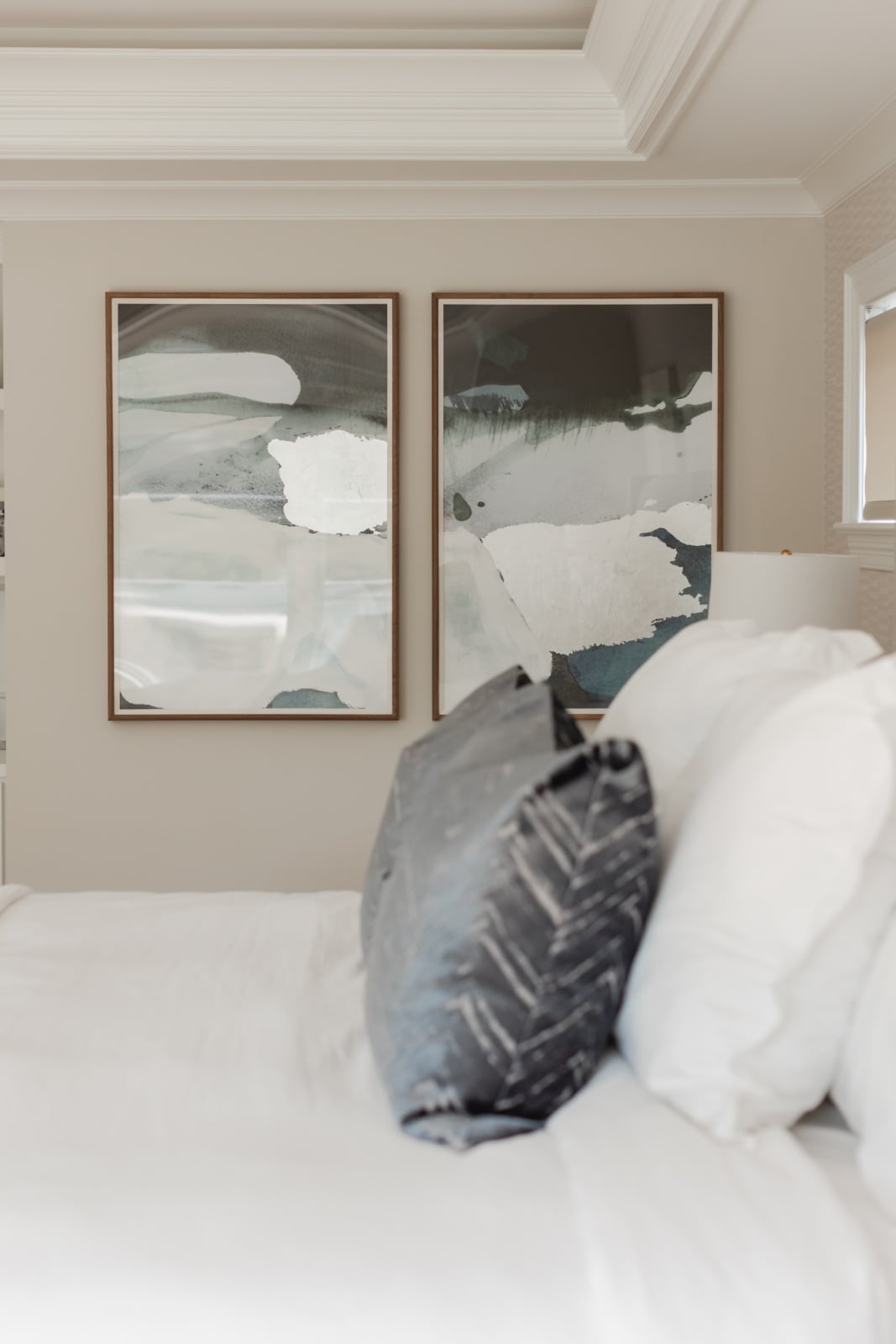
From Modern Classic Elmhurst Furnishing. See more in the full portfolio.
We plan at least 30 inches on each side used for access, and around 36 inches at the foot where there is a walkway. Tight clearance on one side is workable in a guest room but wears on you quickly in a primary bedroom.
Large enough to extend roughly two to three feet beyond the sides and foot of the bed, so your feet land on it getting up. In smaller rooms, runners on either side of the bed are a cleaner solution than a rug that stops short.
Blackout lining alone is not enough, because light leaks around the edges. We specify generous returns, overlap at the center, and either a ceiling-mounted track or a wrapped cornice so the perimeter is sealed. Details like these are the difference between dim and dark.
Only if there is room for it without compromising circulation, and only if you will use it. A bench at the foot of the bed earns its place in most rooms; a pair of armchairs does so only in a genuinely large one.
Yes. Wardrobe and dressing storage is detailed around what you actually own, with hanging lengths, drawer counts, and shoe storage measured rather than estimated, and produced by the millwork shops we work with.
Tell us about your home and how you want to live in it. We will walk you through our design process and what working together looks like.