
Last updated August 27, 2026
Key Takeaways
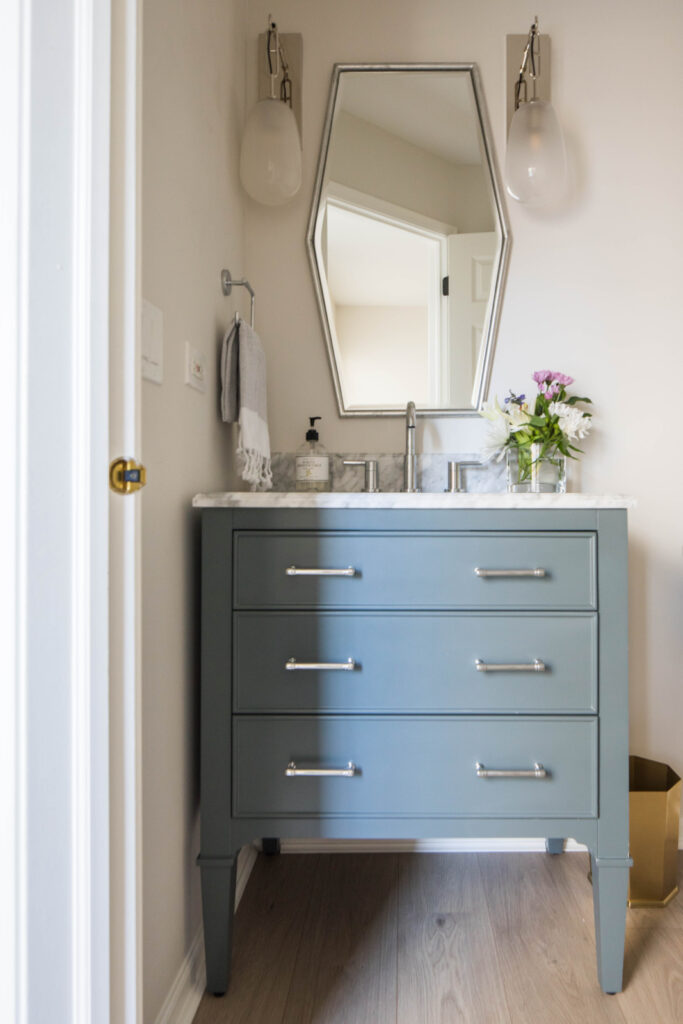
- A windowless room painted white does not look bright. It looks grey, because white only works when there is daylight for it to reflect.
- Stop trying to fake a window. Fake windows, sun-effect murals and mirrors positioned to imply daylight all read as apology.
- Commit to it being an interior room. Deep saturated colour, and the room becomes a jewel box rather than a cupboard.
- The lighting matters more than every other decision combined, and the number to ask about is CRI. Below 90 and every colour in the room goes flat.
- Layer light at three heights. One ceiling fixture is what makes a windowless room feel like a basement.
- Texture replaces the job daylight normally does of revealing depth, so put the money into materials you can feel.
The way to decorate a room without windows is to stop treating it as a damaged room with daylight missing, and design it as an interior room on its own terms. That means deep saturated colour rather than white, layered artificial light at three different heights with a high colour rendering index, and heavy investment in texture. It does not mean fake windows, sun-effect lighting or mirrors arranged to suggest a view.
The single most common mistake is painting it white to brighten it. In a room with no daylight, white has nothing to reflect and reads as flat grey.
Why white fails here
Worth understanding the mechanism, because the instinct is so strong and so widely repeated.
White paint appears bright because it reflects a high proportion of the light hitting it. In a room with windows there is a great deal of light to reflect, and it comes from a large soft source at an angle that models the surfaces. In a windowless room the only light is what you install, there is far less of it, and it usually comes from directly overhead.
So the white has very little to work with. It returns a dull, even, shadowless grey, and because there is nothing else in the room to look at, the greyness is the dominant impression. The room reads as unfinished rather than bright.
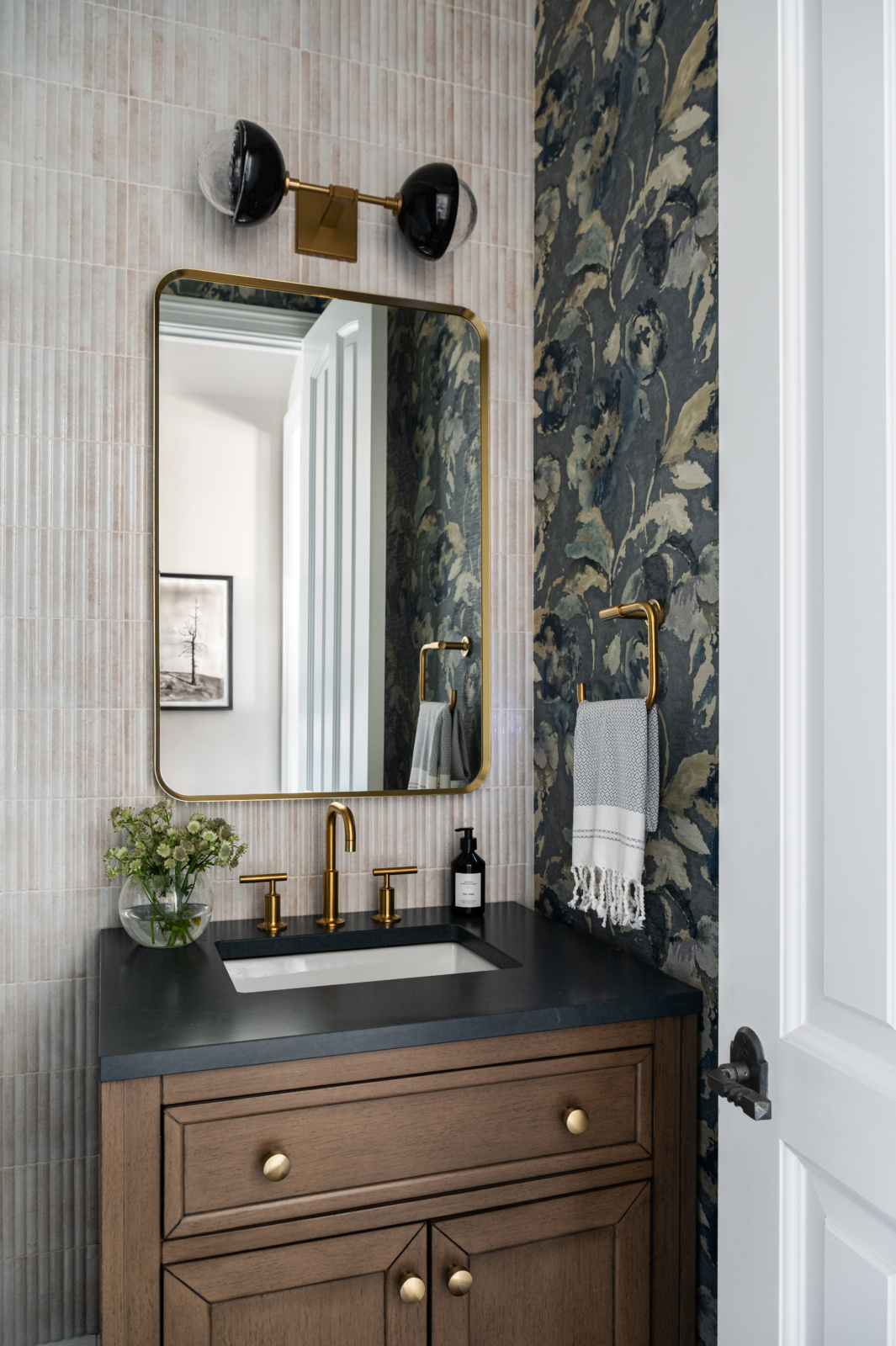
Darker colours in the same room read as intentional. There is no expectation that a deep green or an oxblood should be luminous, so the eye is not disappointed. The room stops apologising.
Do not fake a window
The market is full of products for this and they all share a problem: they draw attention to the absence.
A mirror hung as though it were a window, with a view of the opposite wall in it, fools nobody and looks stranded. Backlit panels imitating daylight read as commercial rather than domestic. Murals of a landscape put a picture of somewhere else in a room that could have had a character of its own.
Every one of these makes the same wager, that the room’s problem is the missing window, and loses it. The room’s problem is that nobody has decided what it is instead.
Mirrors are still useful here, incidentally. Just not as pretend windows. A mirror that bounces lamplight around, or one that reflects something worth seeing inside the room, earns its place. A mirror pretending to look outside does not.
Commit to the jewel box
The rooms of this kind that succeed almost all take the same approach. They stop competing with rooms that have daylight and become something those rooms cannot be.
Deep colour on every surface, walls and ceiling together, so there is no bright line at the top to remind you how low the light is. Rich materials. A concentration of interesting objects. The effect is enclosure rather than confinement, and it is the reason windowless powder rooms are so often the best room in a house: nobody expects them to be light, so people finally allow themselves a decision.
This is the argument for using what you love rather than what is safe. A windowless room is the lowest-risk place in the house to commit to a colour, because there is no daylight coming in to fight it and you are not going to be sitting in it for eight hours a day. Life is short and the room is small.
Lighting is most of the job
In a room with no daylight, the light you install is not a layer on top of the design. It is the design. Get it wrong and nothing else rescues the room.
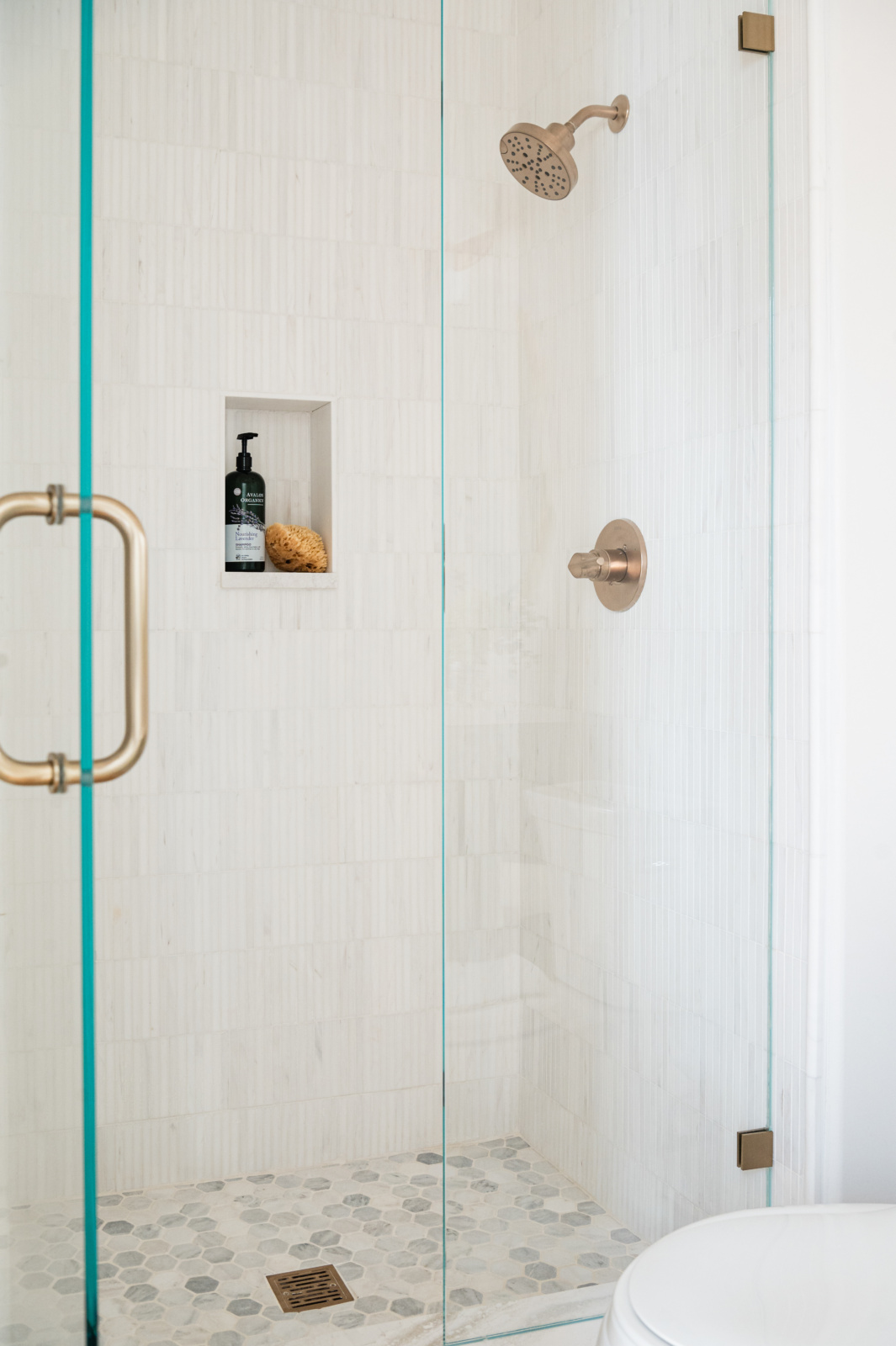
The failure mode is universal and instantly recognisable: one fixture in the middle of the ceiling. It flattens everything, throws hard shadows downward, and is the single reason windowless rooms feel like basements. What works is light at three heights, so the eye has somewhere to travel: something overhead for general level, something at eye level such as sconces, and something low such as a table lamp or a lit shelf.
Dimming matters more here than anywhere else, because the room has no natural variation through the day. Without a dimmer the room has exactly one mood.
The number to ask about is CRI
This is the specification detail that separates a windowless room that looks rich from one that looks dingy, and it is almost never mentioned.
Colour rendering index describes how faithfully a light source shows colour compared with daylight. Daylight is 100. Poorly made lamps often sit in the low 80s, which is why a room can look drained even when it is well lit: the light physically cannot render the colours in it. Reds go brown, greens go grey, and skin looks unwell.
In a room with windows, daylight covers for a mediocre lamp for most of the day. In a windowless room there is no cover. Everything anyone ever sees in that room is being rendered by the lamps you chose.
| Lighting decision | What it does in a windowless room | Specify | Avoid |
|---|---|---|---|
| Colour rendering index Governs whether the colours in the room are visible at all. |
The difference between a rich room and a dingy one, and the most overlooked spec on this list | CRI 90 or above, ideally 95 in a room with strong colour | Anything below 85, however good the fitting looks |
| Colour temperature Sets whether the room reads warm or clinical. |
Consistency matters as much as the number. Mixed temperatures look broken | 2700K throughout, warmer at 2400K for an evening room | 4000K and above, which reads as an office |
| Number of sources Gives the eye somewhere to travel and creates depth. |
The main thing standing between a jewel box and a basement | Three or more, at three different heights | A single ceiling fixture on its own |
| Dimming Supplies the variation daylight would have provided. |
Without it the room has one mood, permanently | Dimmable throughout, on more than one circuit | Switched-only lighting |
| Direction Decides whether surfaces are modelled or flattened. |
Light thrown at walls makes a small room feel larger than light thrown at the floor | Wall washing, uplight, shaded lamps at eye level | Downlights alone, which flatten everything |
Ask for the CRI figure in writing when specifying. It is often left off product pages, and a supplier who cannot tell you is a useful signal in itself.
Texture does what daylight used to
Daylight reveals depth. It rakes across a surface, catches the weave of a fabric and the grain of a timber, and changes through the day so the room never looks quite the same twice. Remove it and every surface flattens.
The compensation is texture you can feel rather than pattern you can only see. A heavy wool, a boucle, a nubby linen, timber with open grain, plaster with a hand-applied finish, unlacquered brass that shifts as it ages. These read as depth even under fixed artificial light, because the shadows are built into the material itself rather than borrowed from the sun.
This is exactly the room to spend more on upholstery. A flat synthetic that would pass unnoticed by a window looks obviously poor under lamplight, because there is nothing else for the eye to do but examine it.
Air, and the thing people actually notice
A point that gets left out of decorating advice entirely, and which determines whether the room gets used.
Windowless rooms have no natural ventilation. However good it looks, a room that feels stuffy after twenty minutes will quietly stop being used, and no amount of design fixes that. Mechanical ventilation is worth raising with your contractor early, particularly for a windowless bathroom, a basement room or an interior office where somebody will sit for hours.
It is not a decorating decision, but it is the one that decides whether the decorating was worth doing.
Which rooms suit being windowless
Not every function belongs in an interior room, and matching the use to the space saves a great deal of disappointment.
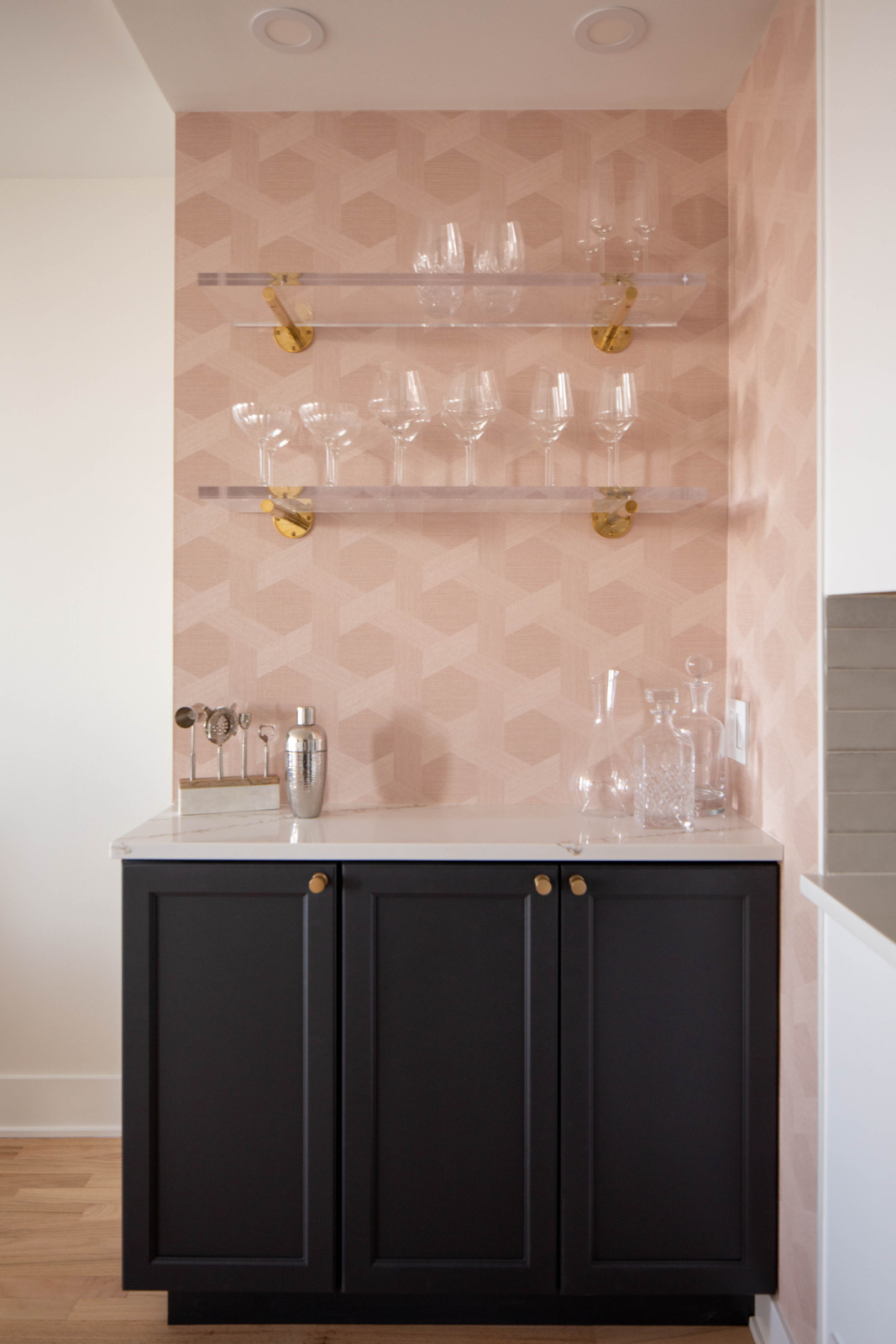
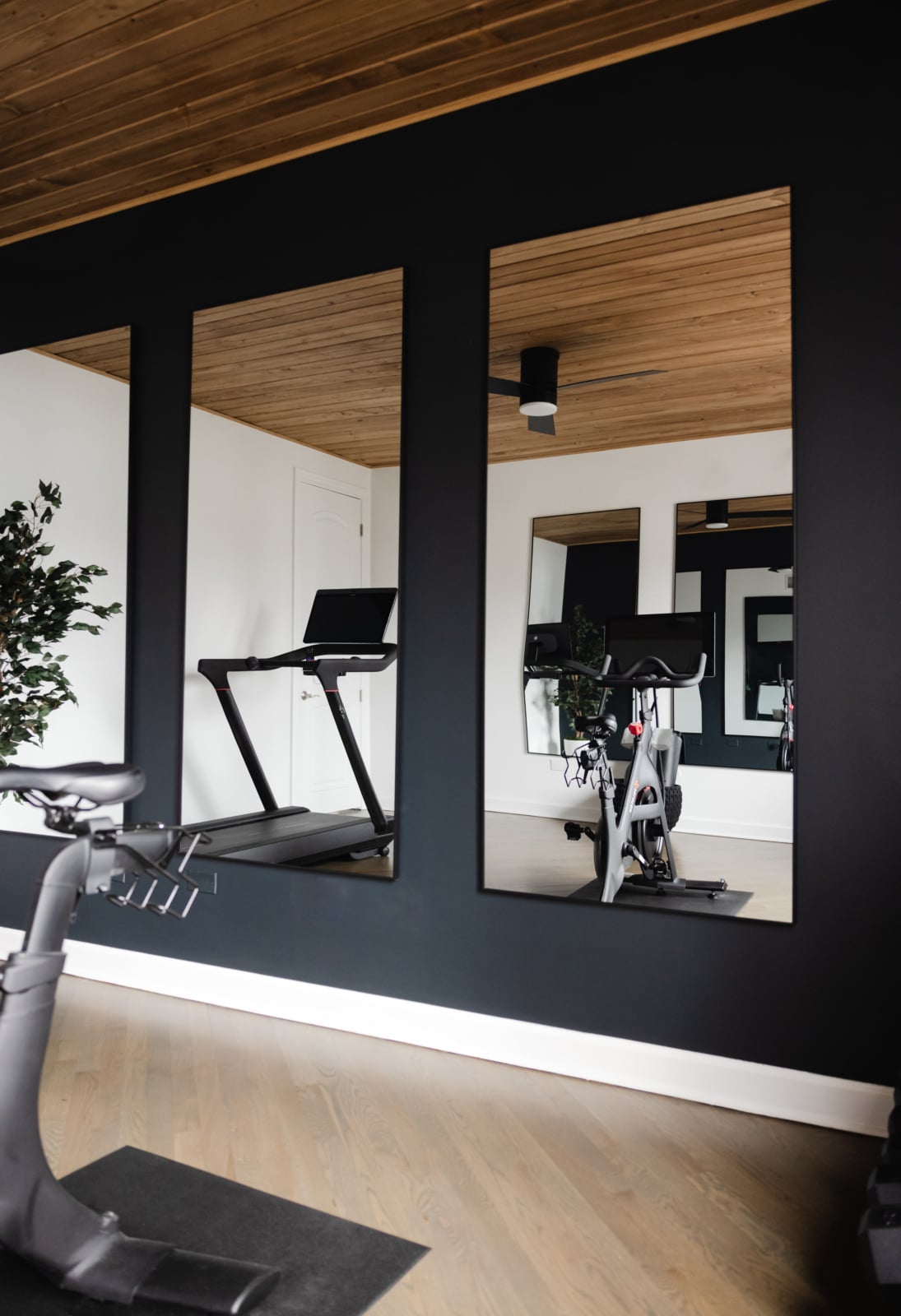
Rooms that genuinely thrive without daylight: powder rooms, dressing rooms, home cinemas and media rooms, wine rooms, pantries, home gyms where mirrors and controlled light are wanted anyway, and studies used mainly in the evening.
Rooms that struggle: any bedroom used by someone who wants to wake up naturally, a room where anyone will work all day, a dining room used at lunchtime, and a playroom. If the plan can be changed so these functions take the rooms with windows, that is a better solution than any decorating scheme.
Chicago houses specifically
Two local patterns generate most of these rooms.
City basements in vintage two-flats and greystones are the obvious one, often with low ceilings and a lot of exposed structure. Ceiling height is the binding constraint: a deep colour on a low ceiling can work beautifully, but only when the lighting is properly layered, because a dark low ceiling with a single downlight is genuinely oppressive.
The other is the interior room in a larger suburban house, a windowless media room, a middle powder room, or a dressing room in the centre of a floor plan. These are usually generous in size, which changes the answer: a big windowless room needs more light sources than people expect, and the number is closer to what you would use outdoors at night than what you would use in a comparable room with windows.
Working through it with us
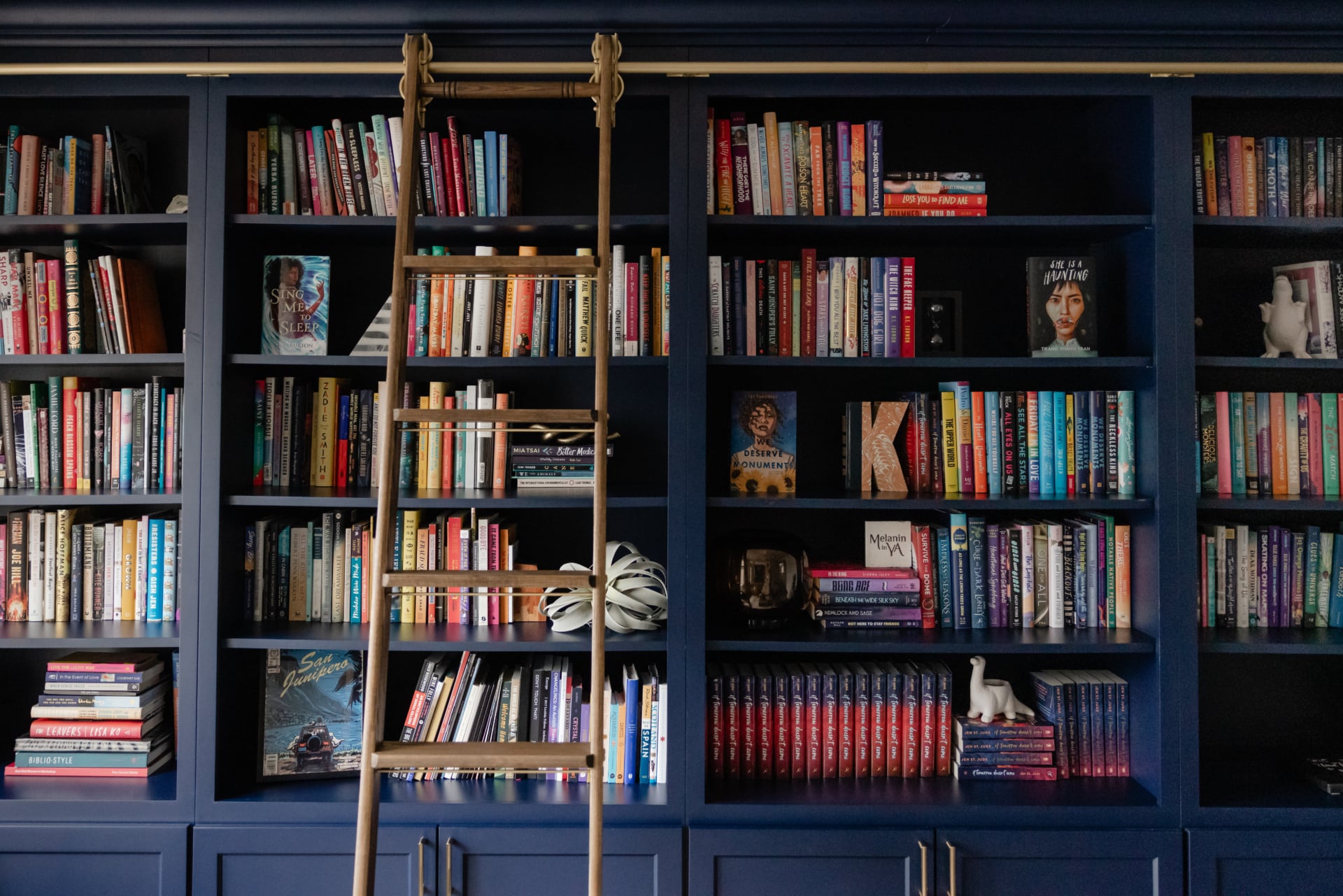
Interior rooms are the ones where the order of decisions matters most: ventilation and lighting first, then colour, then materials. Chosen the other way round you end up with a beautiful scheme lit badly, which is the same as a bad scheme. You can see how we work on our design process page, look through recent projects, or get in touch about your own home.
Related reading: planning a lighting layout, paint colors for north facing rooms, brightening a living room, basement design ideas, high contrast rooms and choosing a white that works. We work across Chicago, Hinsdale and Naperville.
Frequently asked questions
How do you decorate a room with no windows?
Design it as an interior room rather than a room missing daylight. Use deep saturated colour on walls and ceiling, layer artificial light at three different heights, specify lamps with a high colour rendering index, and invest in texture you can feel. Avoid fake windows and sun-effect lighting.
Should you paint a windowless room white to make it brighter?
No. White appears bright because it reflects daylight, and a windowless room has none to reflect. The result is a flat, shadowless grey that reads as unfinished. A deep colour reads as intentional, because nobody expects a dark green or oxblood to be luminous.
What is CRI and why does it matter in a room without windows?
Colour rendering index measures how faithfully a light source shows colour compared with daylight, which scores 100. Below about 85, reds go brown and greens go grey. In a room with windows daylight covers for a poor lamp; in a windowless room the lamps are the only thing rendering colour, so specify CRI 90 or above.
Do mirrors help in a room without windows?
Yes, but not as pretend windows. A mirror hung to imitate a window looks stranded and fools nobody. A mirror that bounces lamplight around the room or reflects something worth seeing inside it does real work.
What lighting is best for a room with no windows?
Three or more sources at three different heights: something overhead for general level, something at eye level such as sconces, and something low such as a table lamp. All of it dimmable, at 2700K, with a colour rendering index of 90 or above. A single ceiling fixture is what makes these rooms feel like basements.
Can a bedroom work without windows?
It can be decorated well, but it is a poor match of function to space. Anyone who wants to wake naturally will find it difficult, and ventilation becomes a real issue overnight. If the floor plan allows the bedroom to take a room with windows, that is a better answer than any decorating scheme.
How do you stop a windowless room feeling stuffy?
Mechanical ventilation, raised with your contractor early rather than treated as an afterthought. A windowless room with no air movement stops being used after about twenty minutes regardless of how it looks, so this decides whether the decorating was worth doing.
Which rooms work best without windows?
Powder rooms, dressing rooms, media rooms, wine rooms, pantries, home gyms and studies used mainly in the evening. These all benefit from controlled light rather than daylight, which is why windowless powder rooms are so often the best room in a house.