Style quiz result: Transitional
Transitional interior design is a mix of traditional and modern styles. It feels classic and comfortable, but still clean and updated. Some pieces may be ornate and highly detailed, while others are more minimalistic, and the room holds both without strain.
If the style quiz landed you here, it means you kept choosing rooms that felt balanced rather than dramatic. That is useful to know. It is not, on its own, a brief. Transitional describes a surface. The decisions that actually make a room yours sit underneath it, and they are the ones we spend the first meeting on.
Style labels describe surfaces. Three decisions locate the room. Here is where transitional tends to sit on each, and where you still have to choose.
Balanced. Substantial upholstery and case pieces, but on legs, against pale walls, with open sightlines. Comfortable without being heavy, clean without being empty.
Mixed on purpose. An ornate, highly detailed piece can sit beside a minimal one: a carved mantel with a plain sofa, a traditional chandelier over a simple table. The contrast is the style.
This one is yours. Transitional is usually shown in warm neutrals, but that is a catalogue habit, not a rule. Warm means something different to every client, and we ask rather than assume.
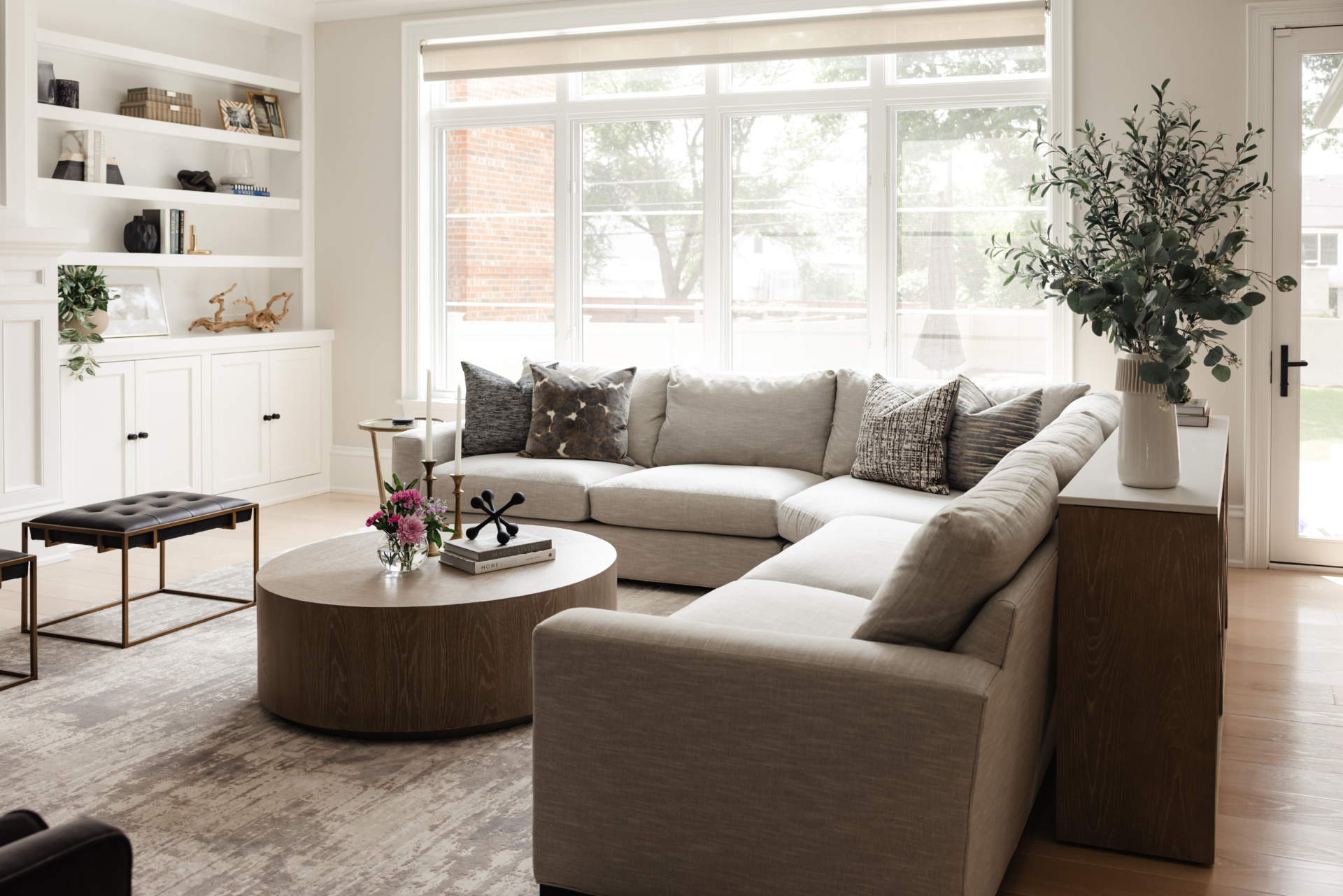
The first thing we do on any project is space plan. Transitional rooms live or die on proportion: a sectional that is a foot too long, a coffee table that floats, a rug that stops short of the seating. If the scale is off, everything feels unbalanced, and no amount of styling fixes it. We draw the room before we choose a single fabric.
A transitional room is carried by three or four large upholstered pieces, which means the quality of those pieces is the quality of the room. Cheap upholstery is built from cheap materials with fast construction, and that is why a sofa looks lumpy three years after it arrives. Upholstery is the number one place we tell clients to invest, and in this style it shows more than in any other.
A transitional room without accessories reads as a furniture showroom. Books tell people what you are interested in, art tells them what you find beautiful, the objects on a shelf tell them where you have been. That layer is what stops a balanced room from being an anonymous one.
Transitional is the style most at risk of becoming a beige room that nobody chose. Greige walls, a greige sofa, a greige rug, a pair of matching lamps, done. It photographs fine and it says nothing about the people who live there.
This usually happens when a client tries to make everything timeless. Nothing is ever completely timeless; every piece shows when it was chosen, the same way clothes do. Design everything to survive trends and you end up with a neutral, boring house. Use what you love. Life is too short to live in a room you hedged.
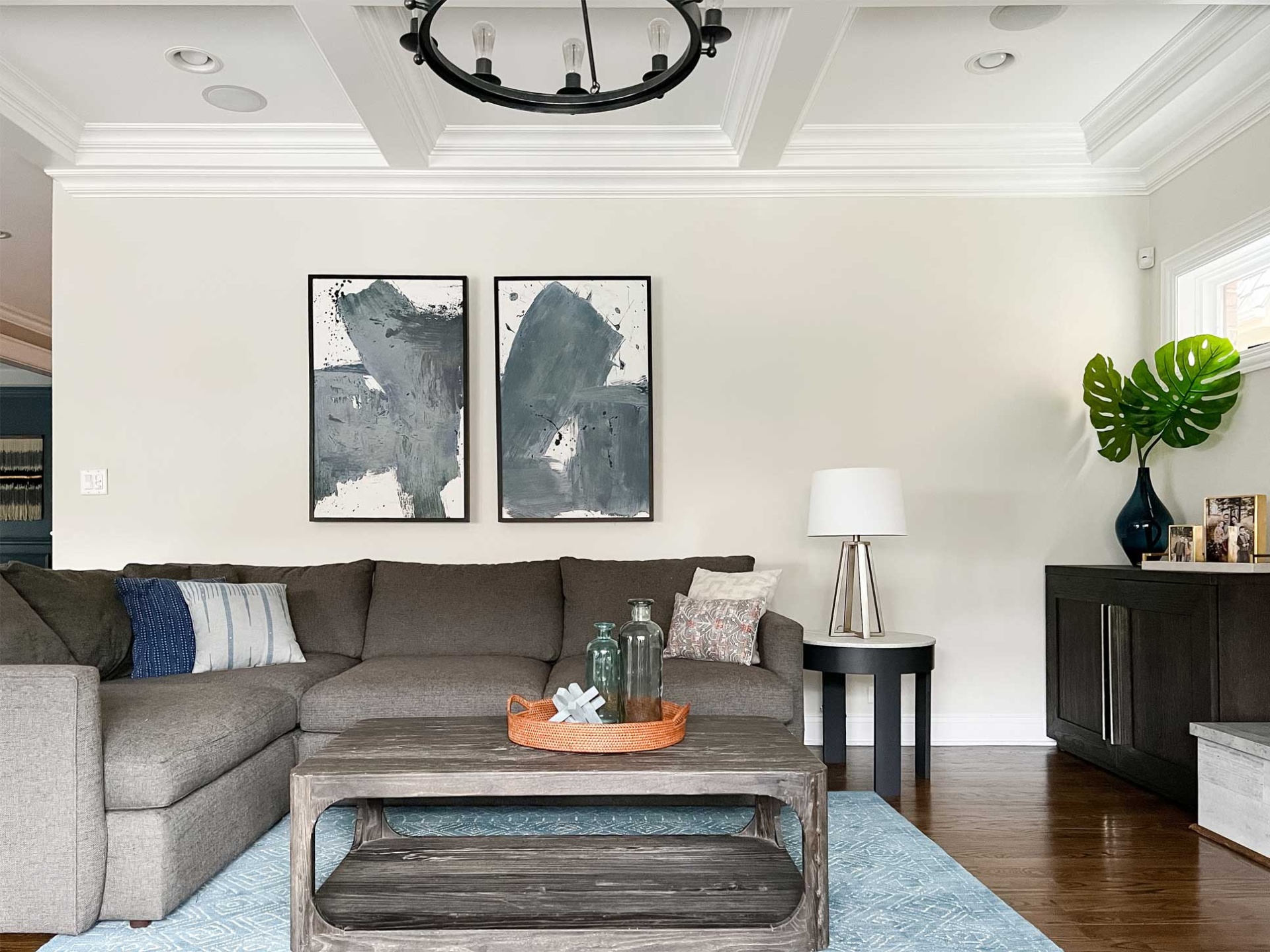
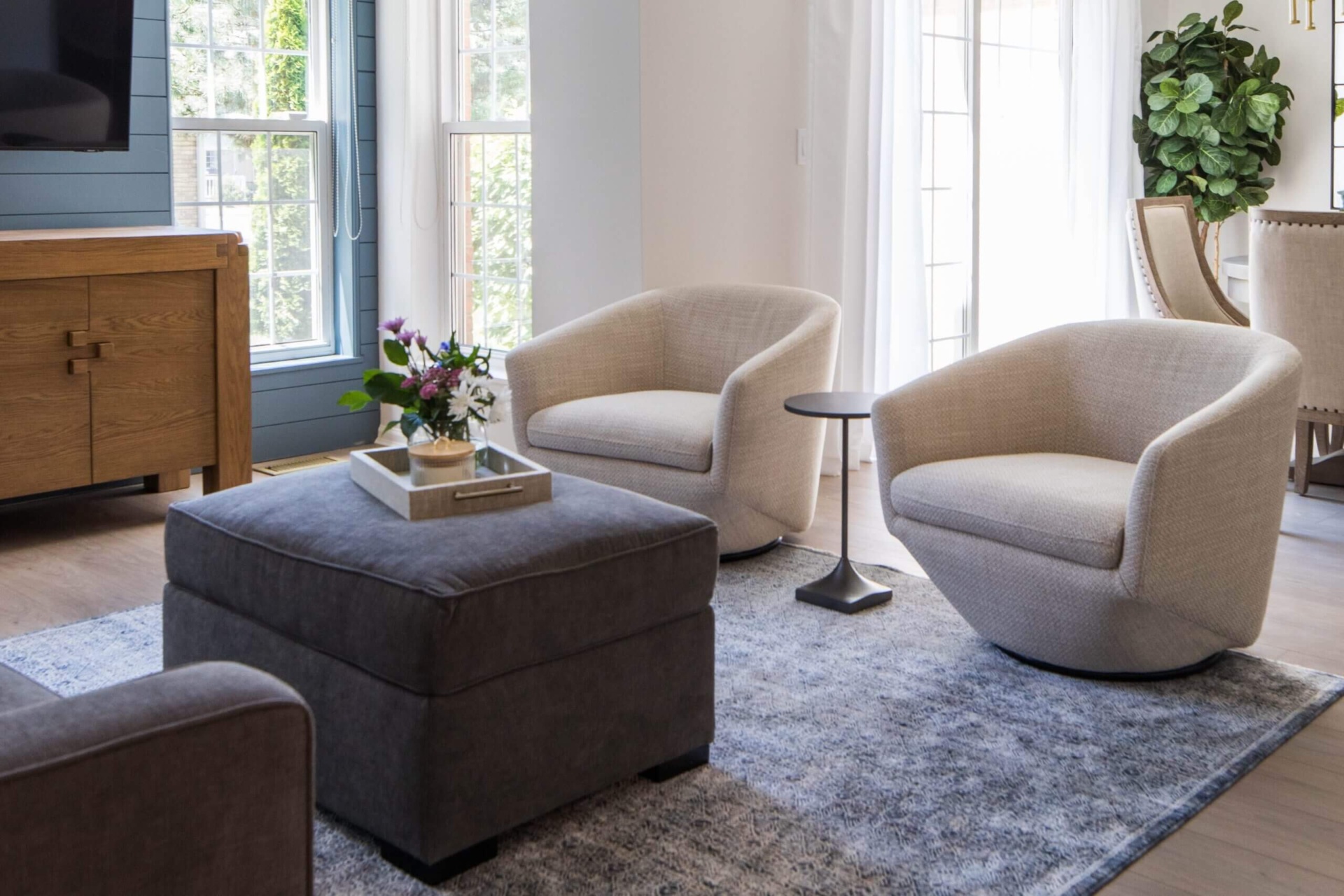
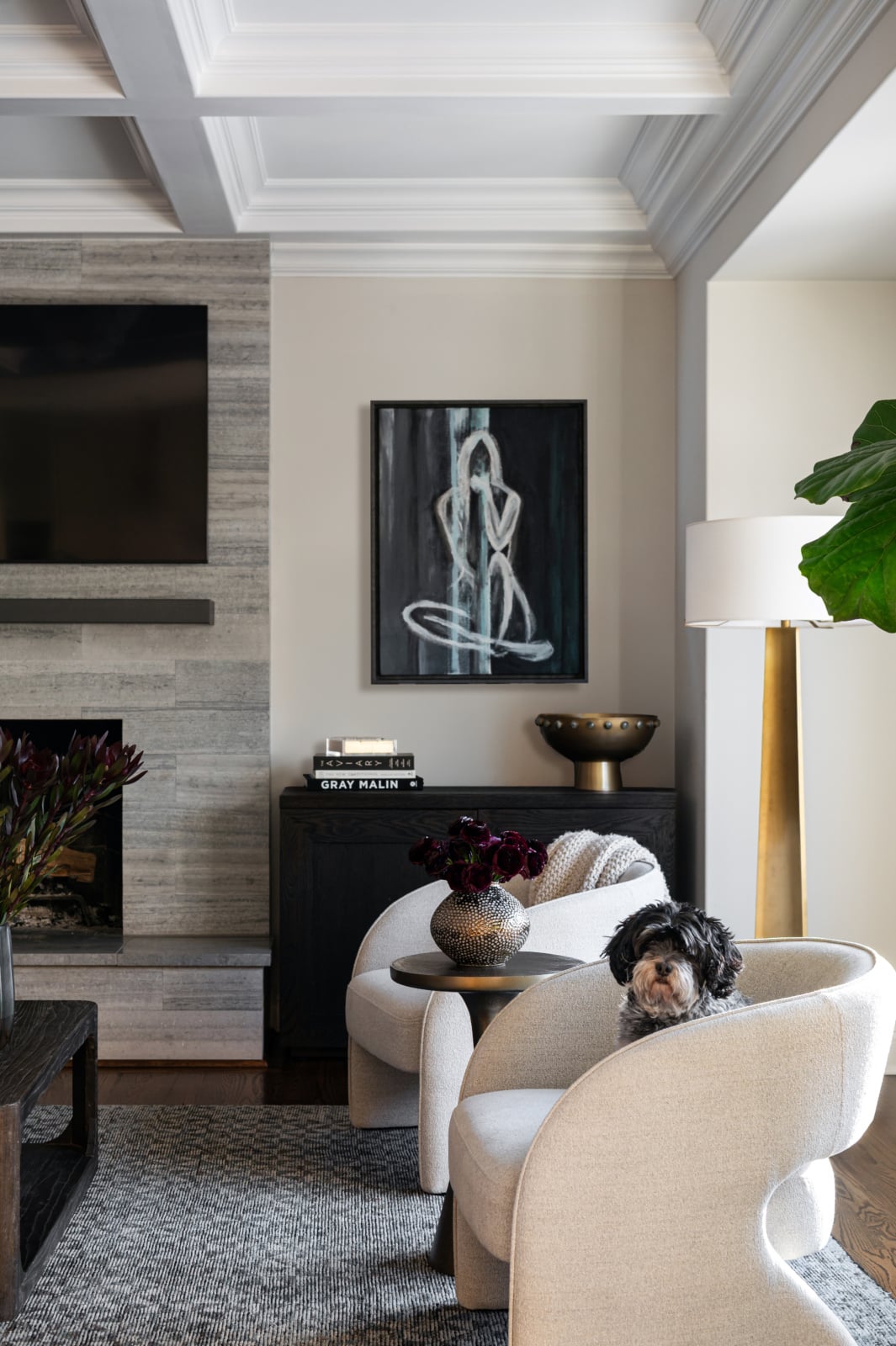
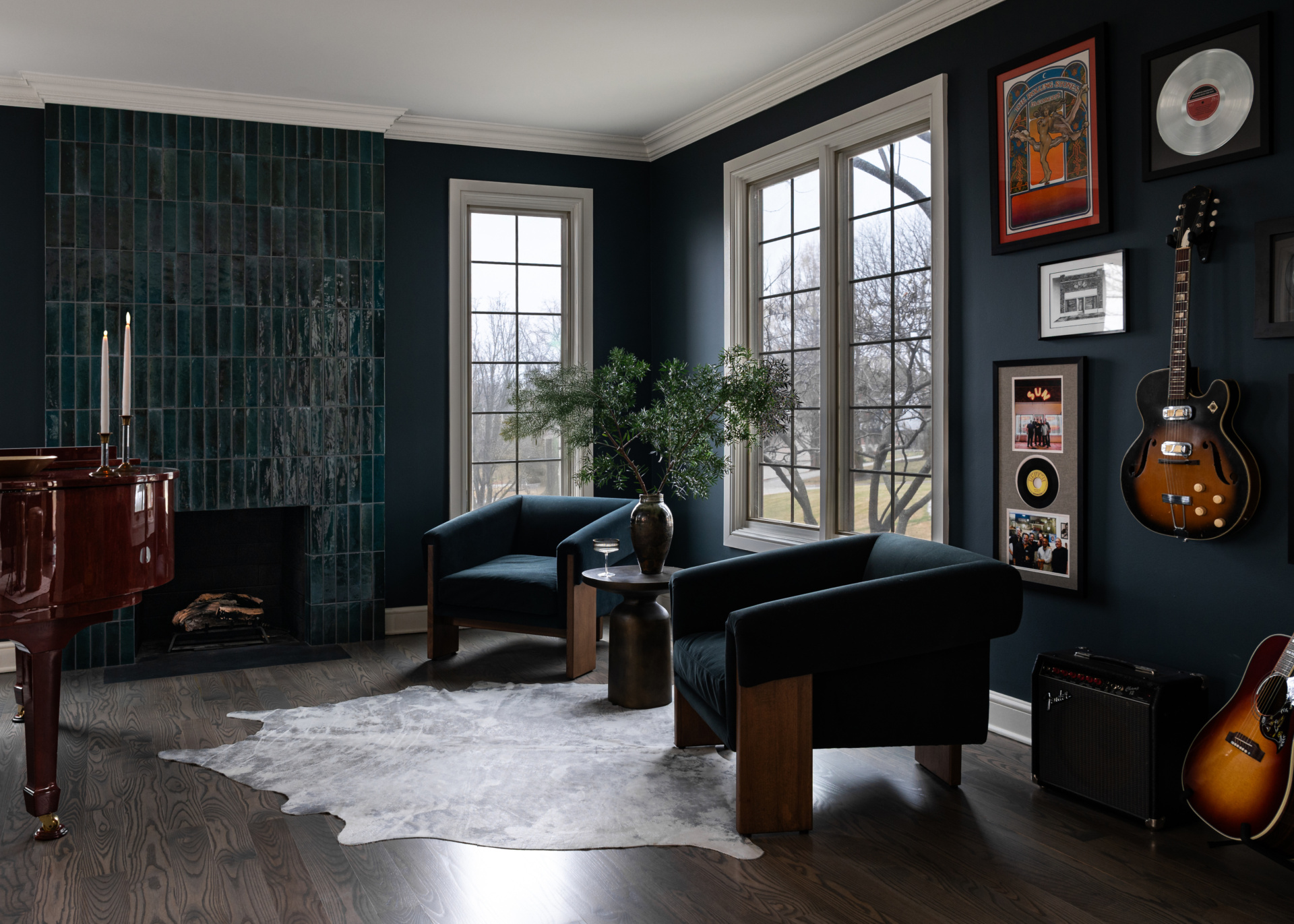
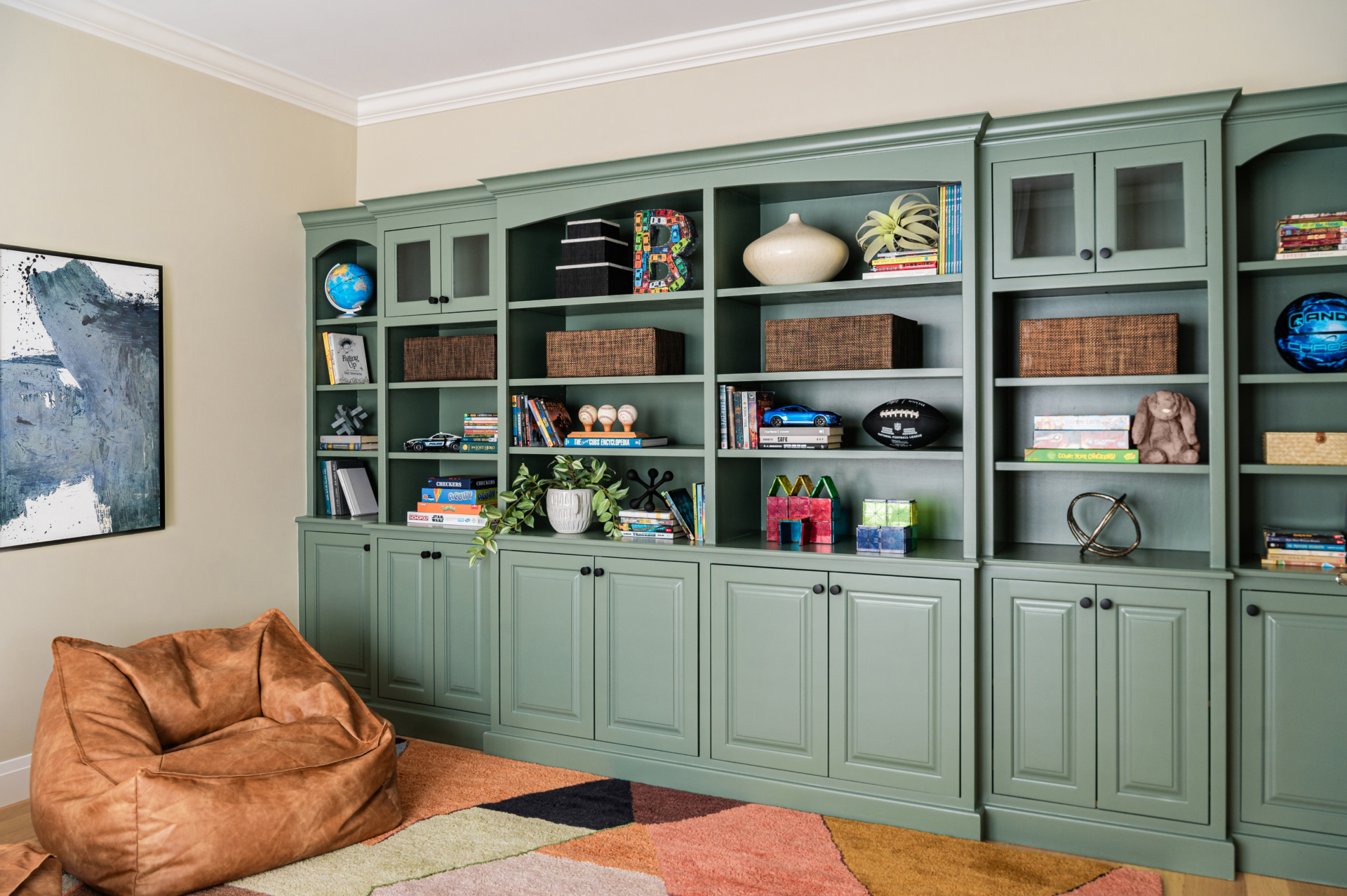
Rooms from recent projects that share this sensibility. See more in the full portfolio.
In Hinsdale, Naperville, Elmhurst and Oak Brook, a lot of transitional work happens in newer construction: flat walls, square openings, large rooms. Houses like that have almost no voice of their own, so the classic half of transitional has to be introduced deliberately, usually through millwork, paneling and a properly scaled fireplace surround. Without it the room slides toward generic contemporary.
Older center-hall colonials and Chicago greystones are the opposite problem. The architecture already supplies the classic half. The job there is the updated half: lighter window treatments, fewer pieces, better ones, and restraint about what gets added.
Transitional interior design is a mix of traditional and modern styles. It feels classic and comfortable but still clean and updated. Some pieces may be ornate and highly detailed while others are more minimalistic, and the result reads as balanced and current without belonging to a single period.
No. Contemporary rooms are defined by what is current and usually drop traditional references entirely. Transitional keeps the classic bones, the rolled arm, the paneled wall, the symmetrical mantel, and pairs them with cleaner, updated pieces. Contemporary is a moment; transitional is a mix.
No, and treating it that way is the most common mistake we see. Transitional rooms are often photographed in warm neutrals because that sells well, but the style is about the mix of classic and modern, not color. A deep green study or a navy dining room can be entirely transitional.
Yes, and it should. That contrast is what makes the style work: a highly detailed chandelier over a plain table, a carved mantel beside a clean-lined sofa, an antique chest under modern art. The room needs a plan so the two sides balance rather than compete, which is the work we do before anything is chosen.
Substantial upholstery with clean lines, often on legs rather than skirted. Case pieces in wood with minimal hardware, sometimes alongside one or two more detailed antiques. Rugs that ground the whole seating group. Lighting with simple shades. Every piece could sit in a traditional or a contemporary room, which is exactly the point.
Yes, and it is one of the styles we use most for new construction in the western suburbs. New houses lack the moldings and proportions that give a room character, so the classic half of transitional, paneling, millwork, a real fireplace surround, is often what we add first.
If the quiz gave you two styles, read both pages. The place where they overlap is usually the real brief, and it is almost always narrower than either label. Not sure where you sit? Take the style quiz.
Tell us about your home and how you want to live in it. We will walk you through our design process and what working together looks like.