
Last updated August 27, 2026
Key Takeaways
- A mirror is not a picture, so the standard gallery height of about 57 inches is the wrong starting point for most of them.
- Hang it for what it reflects. Stand where you will actually see it from and check the reflection before anything is marked on the wall.
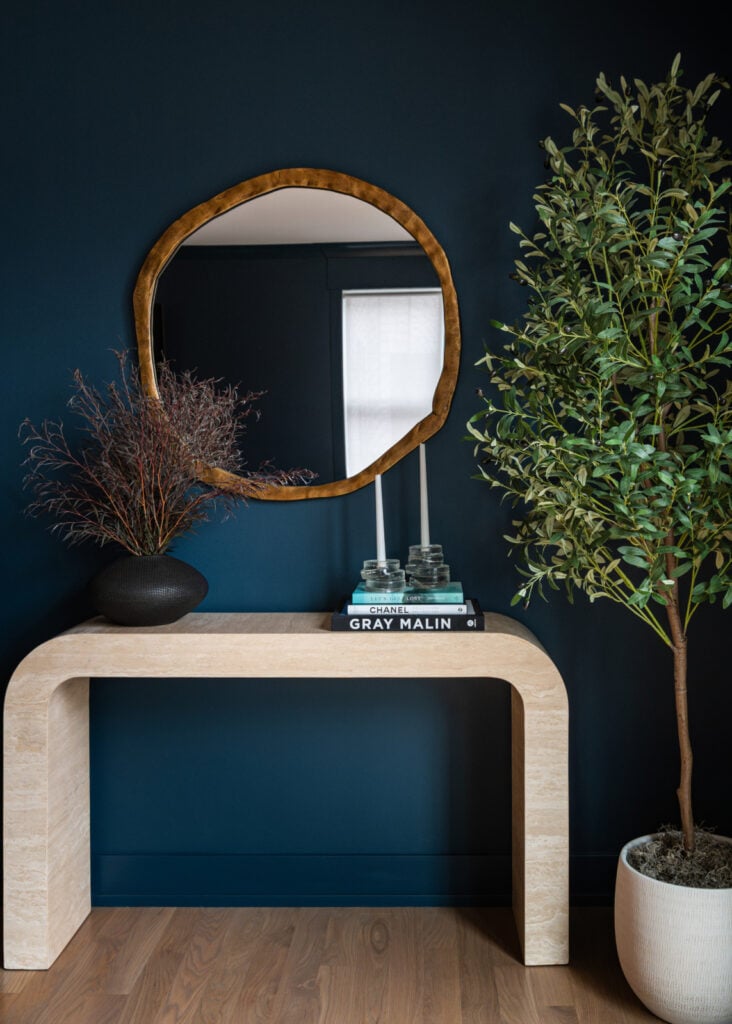
- Over furniture, the relationship to the piece below matters more than the absolute height. Four to eight inches of wall between them.
- Over a mantel, relate the mirror to the width of the fireplace opening rather than to the mantel shelf.
- In a bathroom, centre on the basin rather than on the wall, and set the height for the people who actually use it.
- A mirror facing a blank wall reflects a blank wall. Position is doing more work than height.
As a general rule, hang a mirror so its centre sits between 57 and 60 inches from the floor when it stands alone on a wall, and four to eight inches above a console, mantel or headboard when it hangs over furniture. In a bathroom, centre it on the basin rather than the wall, with the top a few inches above the tallest regular user’s eye line.
Those are starting points rather than answers, because a mirror is the one thing on your wall that is not really about itself. It is about what it reflects, and that decides the position long before height does.
Why gallery height is the wrong rule
The advice most people find is to centre a mirror at around 57 inches, which is the museum standard for hanging art at average eye level. It is a good rule for pictures and a poor one for mirrors.
A picture is looked at. A mirror is looked into, or it is doing a job in the room: bouncing daylight, extending a view, letting somebody check themselves on the way out. Each of those wants a different height, and none of them is reliably 57 inches.
Worse, a mirror hung at gallery height above a console frequently ends up reflecting the ceiling and the top of the far wall, which is the least interesting thing in the room. It looks correct on paper and does nothing.
Start with the purpose, then the reflection, then the height. In that order the number usually settles itself.
Check the reflection first
This is the step almost everybody skips, and it takes two minutes.
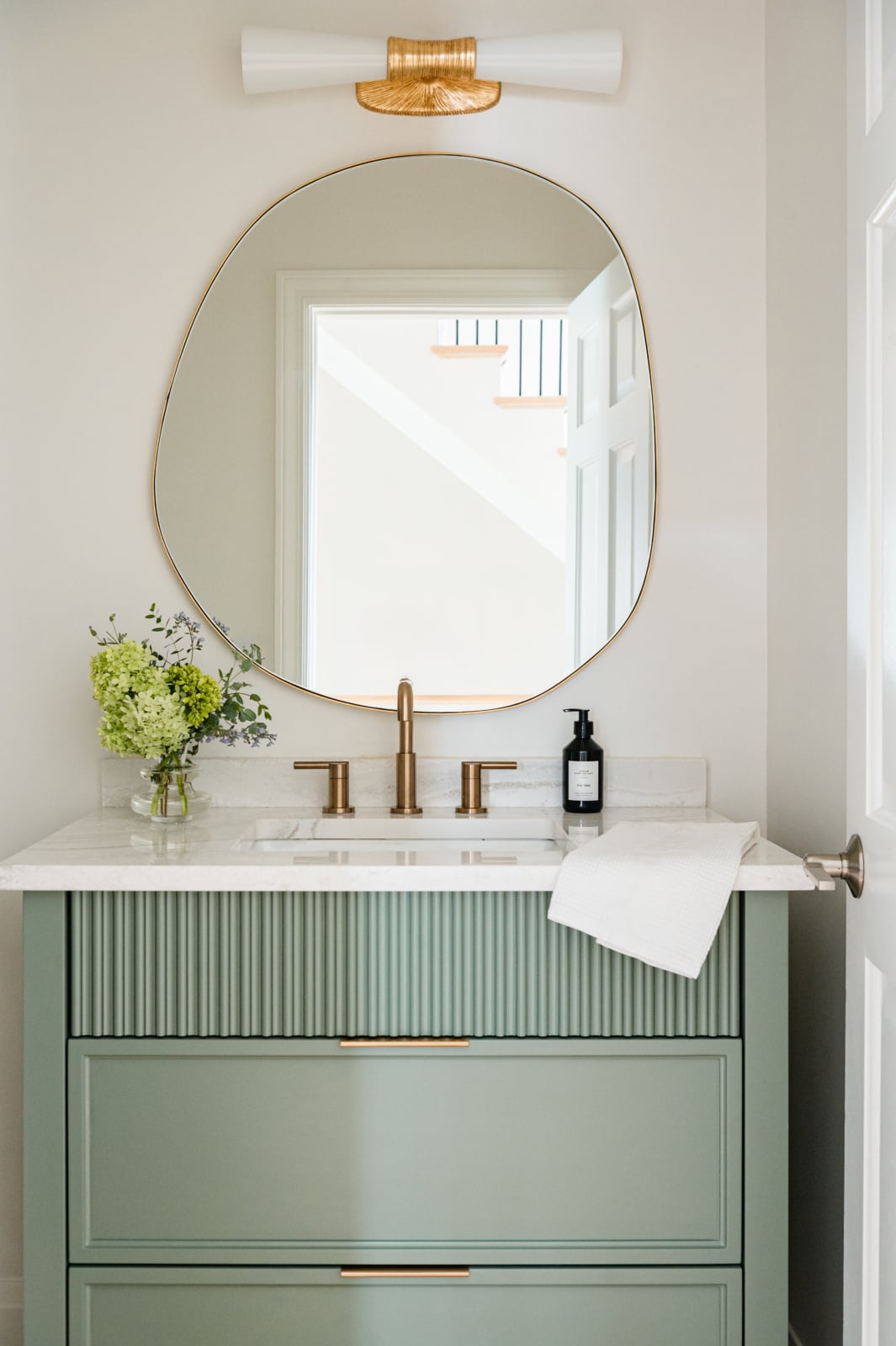
Before anything is marked, stand in the places you will actually see the mirror from: the doorway, the seat you use, the point where you walk past. Hold the mirror roughly where it might go and look at what appears in it. You are looking for a window, a light source, a piece of art, a view through to another room, something with depth.
What you want to avoid is the ceiling, the top third of a blank wall, a doorway into a cluttered room, or a direct view of a television. A mirror positioned to reflect any of those is decoration that has been given a job and failed at it.
Frequently this exercise moves the mirror to a different wall entirely, which is a much better outcome than getting the height right in the wrong place.
Heights by location
The situations that come up, and what governs each.
| Location | What governs the height | Rule of thumb | Common mistake |
|---|---|---|---|
| Over a console or sideboard The furniture, not the floor. |
Relationship to the piece below | Four to eight inches of wall showing between them | Hung at gallery height, floating too far above |
| Over a fireplace The fireplace opening. |
The opening width rather than the mantel shelf | Roughly the width of the opening, sitting a few inches above the shelf | Sized to the mantel, which makes it look too wide |
| Bathroom vanity The basin and the people using it. |
Centred on the basin, height set by the tallest regular user | Top a few inches above their eye line, bottom clear of the tap | Centred on the wall instead of the basin |
| Entry, standalone Being used on the way out. |
Head and shoulders visible for most of the household | Centre at 57 to 60 inches from the floor | Hung too high for shorter members of the household |
| Full length Whether it leans or is fixed. |
The tilt, which decides how flattering it is | Leaned with a slight backward tilt, or mounted flush and slightly high | Fixed dead flat, which is unflattering and shows the floor |
| Over a headboard The bed. |
Centred on the bed, not the wall | A few inches above the headboard, sized to it | Anything heavy hung directly over a bed |
| Above a bath Purely reflective, not functional. |
What it will reflect from the doorway | Height is free, so choose it for the reflection | Treating it as a vanity mirror and hanging it low |
Where a mirror hangs over furniture, measure from the furniture rather than the floor. The eye reads the gap between the two, not the distance to the ground.
Over a console or sideboard
The most common placement and the one where the standard rule does most damage.
Your eye reads the gap between the mirror and the furniture, not the height from the floor. If that gap is large the mirror looks stranded and unrelated to the piece below. If it is very tight the two read as one heavy block. Somewhere between four and eight inches usually looks intentional, closer to four for a small mirror and eight for a large one.
Width matters as much. A mirror should be narrower than the furniture beneath it, typically somewhere between two thirds and three quarters of its width. Wider than the console and the arrangement looks top-heavy; much narrower and it looks lost.
If there are lamps on the console, check the mirror clears them. A mirror overlapping a lampshade is a detail nobody notices in a photograph and everybody notices in the room.
Over a fireplace
A mirror over a mantel is a classic arrangement and it is very frequently sized wrongly.
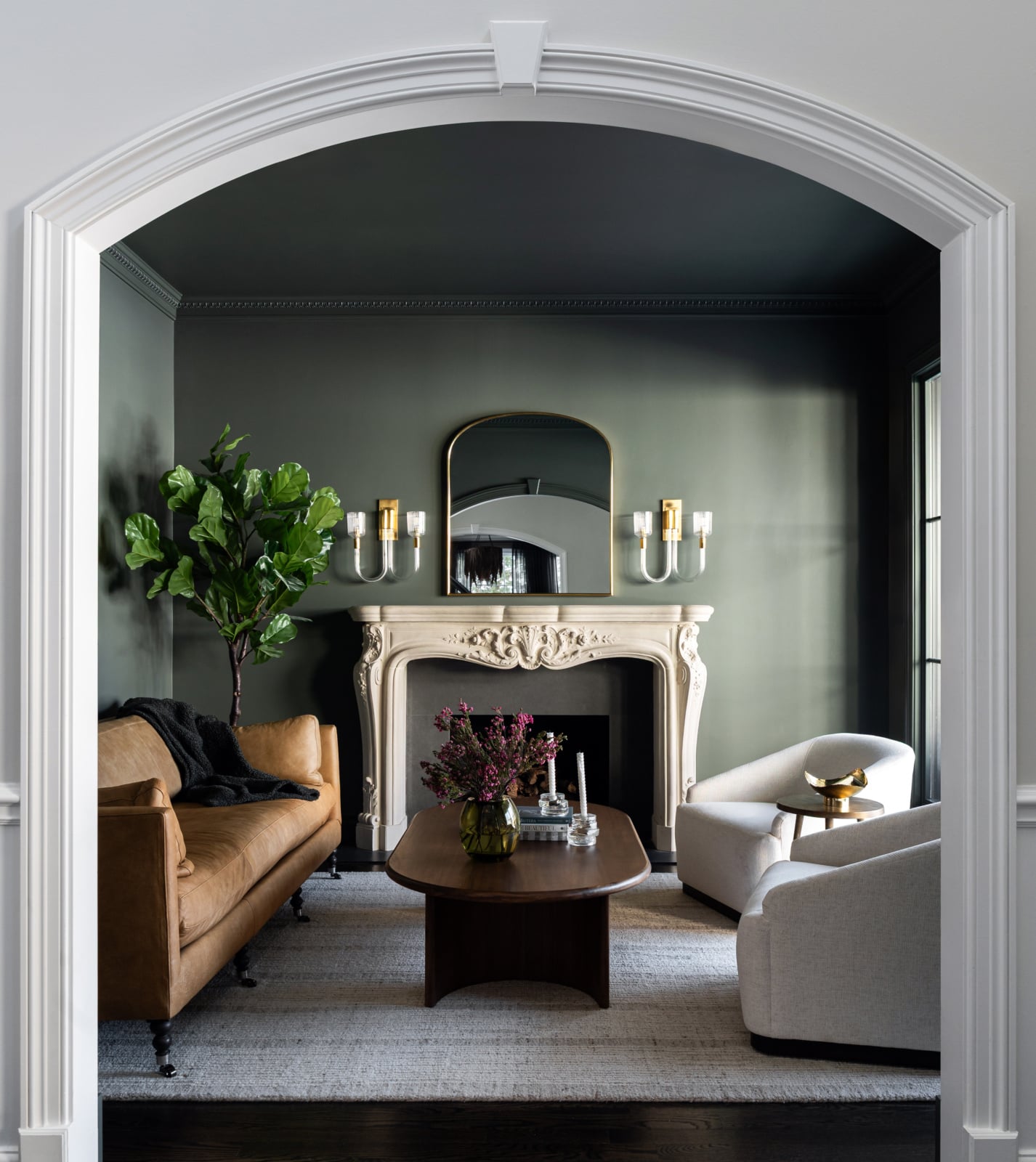
The instinct is to relate it to the mantel shelf, which is usually the widest element. In practice the eye relates it to the fireplace opening, which is narrower, and a mirror sized to the shelf reads as too wide and too dominant.
Roughly the width of the opening, or a little more, sits comfortably. Height above the shelf can be tight, a few inches, since the mantel gives the arrangement its base and a large gap breaks the relationship.
The reflection question matters here too. A mirror over a fireplace usually reflects the wall opposite, so if that wall is blank the mirror is doing nothing. In rooms where the fireplace faces a window it is one of the best positions in the house.
Bathrooms
The one place where function should win outright over proportion.
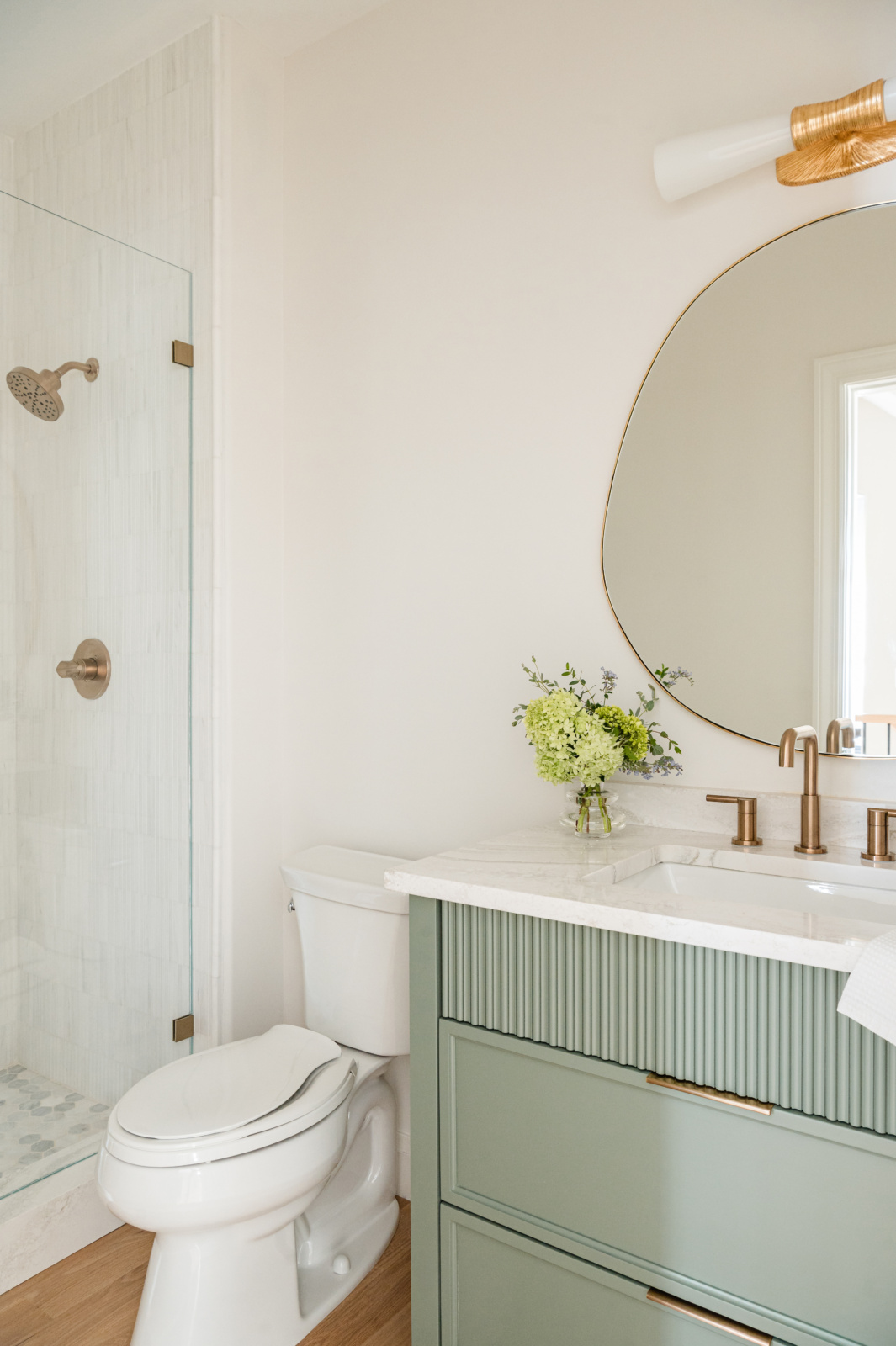
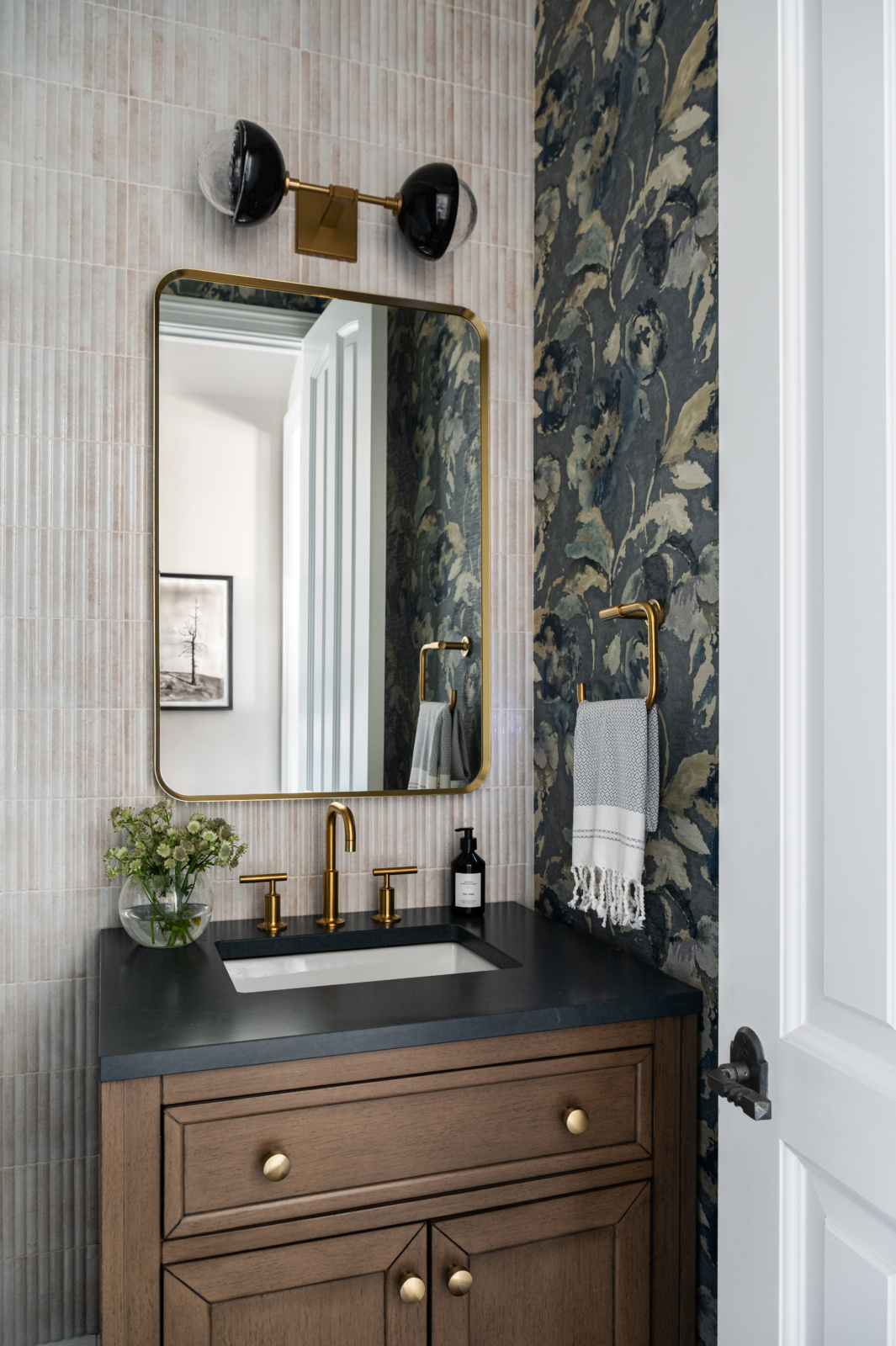
Centre the mirror on the basin rather than on the wall. They are often not the same, particularly where a vanity sits off-centre in a small room, and a mirror aligned to the wall while the basin sits to one side looks wrong every time it is used.
Height should suit whoever actually uses it. The top a few inches above the tallest regular user’s eye line, the bottom clear of the tap and any backsplash. In a family bathroom used by children, a taller mirror serves a wider range of heights than a small one hung at an average.
Sconces either side at roughly face height light a face far better than a single fitting above, which throws shadows downward. That is a lighting decision made at first fix, so it belongs in the plan rather than at the end.
Full length, and the tilt
A detail that decides whether a full-length mirror is pleasant to use.
A mirror mounted dead flat against a wall shows you a great deal of floor and foreshortens the reflection. A slight backward tilt at the top, which a leaned mirror produces naturally, gives a more flattering and more useful view.
Leaning also solves the practical problem, since a large heavy mirror needs proper fixing into something solid, and that is work for somebody who knows what is behind the plaster. A leaned mirror still needs securing so it cannot be pulled over, particularly with children in the house.
If it is being fixed rather than leaned, mounting it slightly higher than feels natural usually improves the view, and a small wedge behind the lower edge reproduces the tilt.
Mirrors as a light strategy
Worth separating from the decorative use, because it changes the placement entirely.
A mirror positioned opposite or adjacent to a window returns daylight into the room and acts as a second, softer opening. That is a genuine improvement in a dim room. A mirror positioned where it catches a lamp in the evening does the same for artificial light.
Scale matters more than in any other use: a small mirror moves very little light and a large one moves a great deal. And it needs to be positioned relative to the light source rather than to the furniture, which sometimes puts it somewhere that looks unconventional and works.
What does not work is a mirror hung opposite a front door, which gives everybody at the door a view of the whole room and gives you a view of yourself arriving. To the side of an entry, useful. Facing it, not.
Chicago rooms specifically
Two local factors that change mirror decisions.
Older city apartments and greystones have generous ceiling heights, which makes it tempting to hang everything high. A mirror hung high in a tall room usually reflects ceiling and cornice, which is exactly the wrong thing. In these rooms the mirror often wants to be larger and lower than the wall seems to suggest, so it reflects the room rather than the plasterwork.
The second is light. City rooms facing a lightwell or a neighbouring wall are short of daylight for much of the year, and a well-placed mirror opposite the window is one of the more effective interventions available. In western suburb houses with large windows and open outlooks, mirrors are usually doing decorative rather than light work, which frees the placement considerably.
Working through it with us
Mirrors are one of those decisions that look small and are surprisingly easy to get wrong, mostly because the reflection is never considered until the fixing is already in the wall. You can see how we work on our design process page, look through recent projects, or get in touch about your own home.
Related reading: filling a blank wall, brightening a living room, when the front door opens into the living room, decorating a room without windows and planning a lighting layout. We work across Chicago, Hinsdale and Elmhurst.
Frequently asked questions
How high should a mirror be hung?
About 57 to 60 inches to the centre when it stands alone on a wall, and four to eight inches above the furniture when it hangs over a console, mantel or headboard. Over furniture, measure from the furniture rather than the floor, because the eye reads the gap between the two.
Should a mirror be hung at the same height as art?
No. The 57 inch gallery standard is designed for pictures, which are looked at. A mirror is looked into or is doing a job, such as bouncing daylight or extending a view, and each of those wants a different height. Hung at gallery height above a console it often just reflects the ceiling.
How do I decide where to put a mirror?
Check the reflection before anything is marked. Stand where you will actually see it from and hold it roughly in place, looking for a window, a light source, art or a view through to another room. Avoid the ceiling, a blank wall or a television. This often moves the mirror to a different wall entirely.
How big should a mirror over a console be?
Narrower than the furniture beneath it, usually two thirds to three quarters of its width. Wider than the console and the arrangement looks top-heavy. Also check it clears any lamps, since a mirror overlapping a lampshade is invisible in photographs and obvious in the room.
How do you size a mirror over a fireplace?
To the width of the fireplace opening rather than the mantel shelf. The shelf is usually wider, so a mirror sized to it reads as too dominant. Sitting a few inches above the shelf works, because the mantel gives the arrangement its base.
Where should a bathroom mirror be centred?
On the basin, not on the wall. They are frequently not the same, especially where a vanity sits off-centre in a small room, and aligning to the wall looks wrong every time the mirror is used. Set the height for the tallest regular user, with the bottom clear of the tap.
Should a full-length mirror lean or be fixed?
Either works, but the tilt matters. Mounted dead flat, a full-length mirror shows a lot of floor and foreshortens the reflection. A slight backward tilt at the top gives a better view, which leaning produces naturally. A leaned mirror still needs securing so it cannot be pulled over.
Is it bad to hang a mirror opposite the front door?
Yes, in most rooms. It gives anyone standing at an open door a view of the whole room and gives you a view of yourself arriving. A mirror to the side of an entry is genuinely useful. Facing the door it is not.