
Last updated August 27, 2026
Key Takeaways
- Transitional is a style in its own right, not simply the absence of a decision between traditional and modern.
- It is defined by shape rather than period: classical proportions and silhouettes, stripped of ornament.
- The reason most transitional rooms are dull is that they were chosen to avoid committing, and it shows.
- What rescues it is a single point of view: one strong colour, one bold material, one piece with real character.
- Texture is doing the work ornament used to do, so the materials have to be genuinely good.
- If a room could belong to anybody, transitional has failed at exactly the thing it is supposed to be good at.
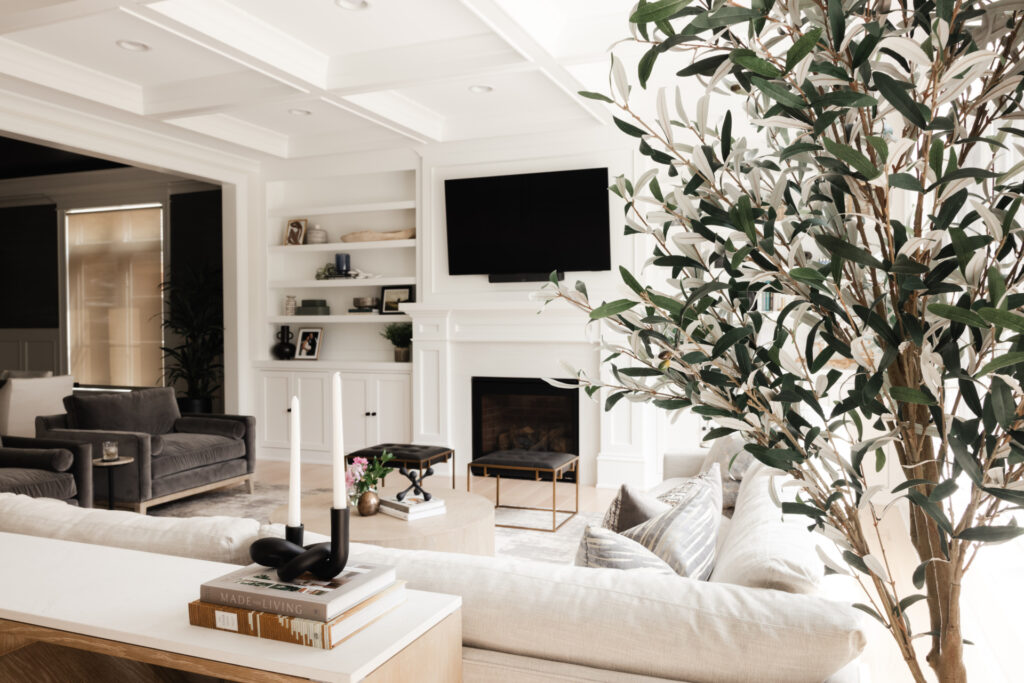
Transitional design takes the proportions and silhouettes of traditional furniture and strips the ornament from them. A rolled arm without carving, a panelled door without moulding, a classical shape in a plain material. It is not a halfway point between two styles, it is a style with its own logic, and it is the dominant look in American interiors.
It is also the style that produces the largest number of forgettable rooms, for a reason worth being honest about: most people choose it in order not to have to choose.
What transitional actually is
The definition matters, because the loose version, anything that mixes old and new, is too broad to be useful.
Transitional keeps traditional structure and discards traditional decoration. The proportions of a wing chair without the nailhead trim and the carved legs. Cabinetry with the rhythm of a panelled door but a flat face. A dining table with the presence of an antique and none of the turning. The bones are historical, the surface is contemporary.
That is different from putting an antique chest in a modern room, which is mixing. In a genuinely transitional piece the two influences are combined within the same object rather than placed next to each other.
It is also why transitional photographs so well and can disappoint in person. The shapes read as considered in an image, and in a room the absence of ornament means everything depends on the quality of what is left.
Why it became the default
Transitional dominates for reasons that are mostly practical, and understanding them explains its weaknesses too.
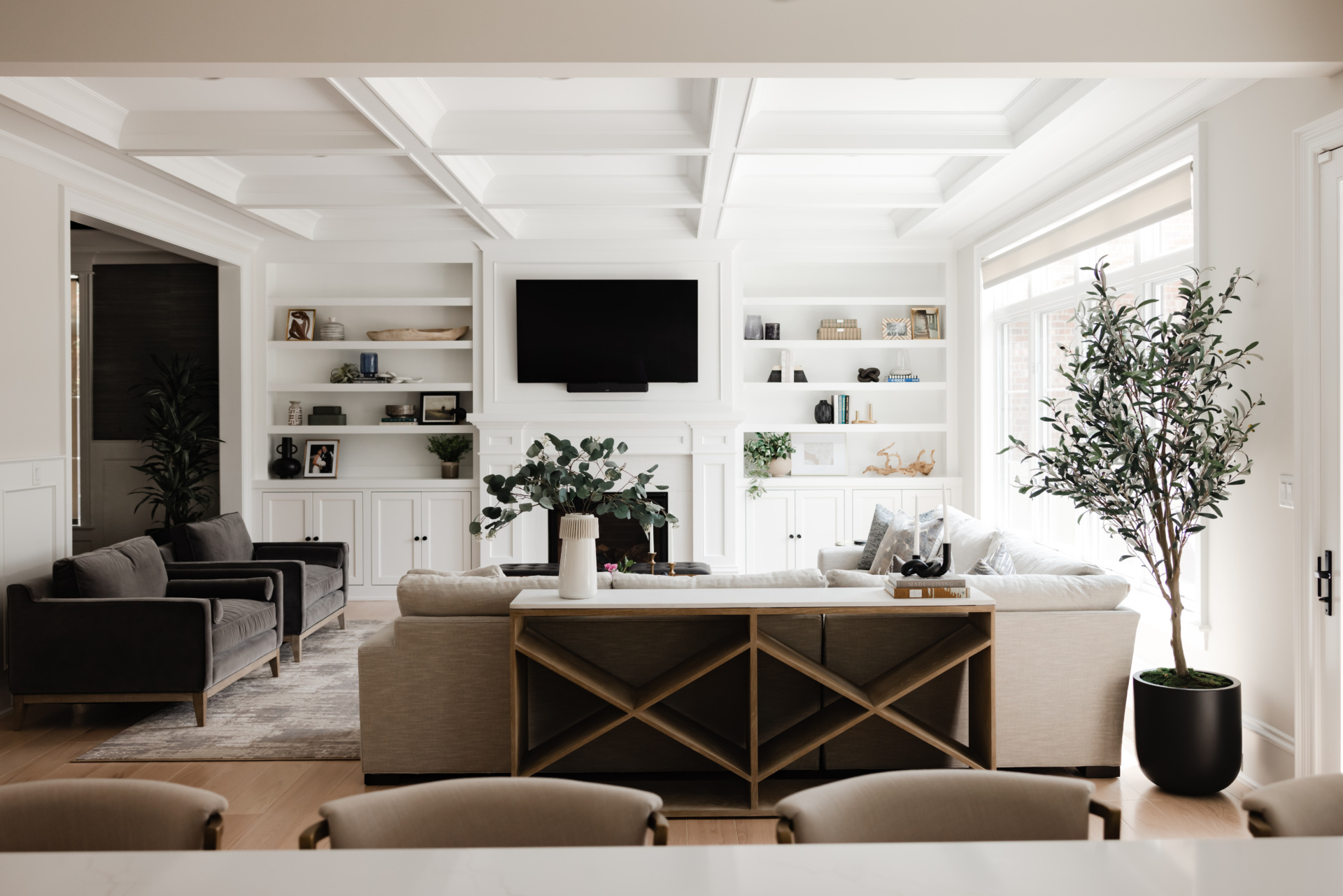
It suits the American housing stock, which is largely traditional in outline and contemporary in how it is lived in. It photographs well, which matters more than it should. It is easy for two people with different tastes to agree on. And it does not require anybody to commit to a position they might later regret.
Those last two are where the trouble starts. A style chosen because nobody objects to it tends to produce rooms nobody feels strongly about, and that is the condition most transitional interiors are in.
Where transitional goes wrong
The failures are consistent and they are all versions of the same thing: nothing in the room is committed to.
| The failure | What it looks like | Why it happens | The fix |
|---|---|---|---|
| No point of view Every element moderate. Nothing loud, nothing quiet. |
Pleasant, forgettable, could belong to anyone | Transitional was chosen to avoid deciding | One committed element: a colour, a material, a piece |
| Everything mid-tone No true dark, no true light. |
Flat. The eye has nowhere to travel | Every choice hedged toward the middle | Introduce a genuinely dark anchor |
| Ornament removed, nothing added Plain shapes in plain materials. |
Bare rather than restrained | The style strips decoration but nothing replaced it | Texture. It has to do what carving used to |
| Matched sets Sofa, chairs and tables all from one collection. |
Reads as a showroom floor | Buying a room rather than assembling one | Break the set. One piece from somewhere else |
| No personal objects Styled with decorative items bought to fill space. |
Anonymous. Nothing says who lives here | The objects were chosen for the shelf, not kept | Real things: books, art, objects with a history |
| Scale hedged Everything medium-sized. |
Nothing anchors the room | Safe choices at every turn | One piece larger than feels comfortable |
Every fix is the same instruction in a different place: commit to something. Transitional tolerates a great deal of restraint and none of it should be timidity.
Texture has to replace ornament
This is the technical consequence of the style’s own definition, and it is where most transitional rooms are underinvested.
Traditional interiors carry visual interest in decoration: carving, moulding, pattern, gilding, turned legs. Strip that away, as transitional does, and something has to occupy the eye instead. In practice that something is texture.
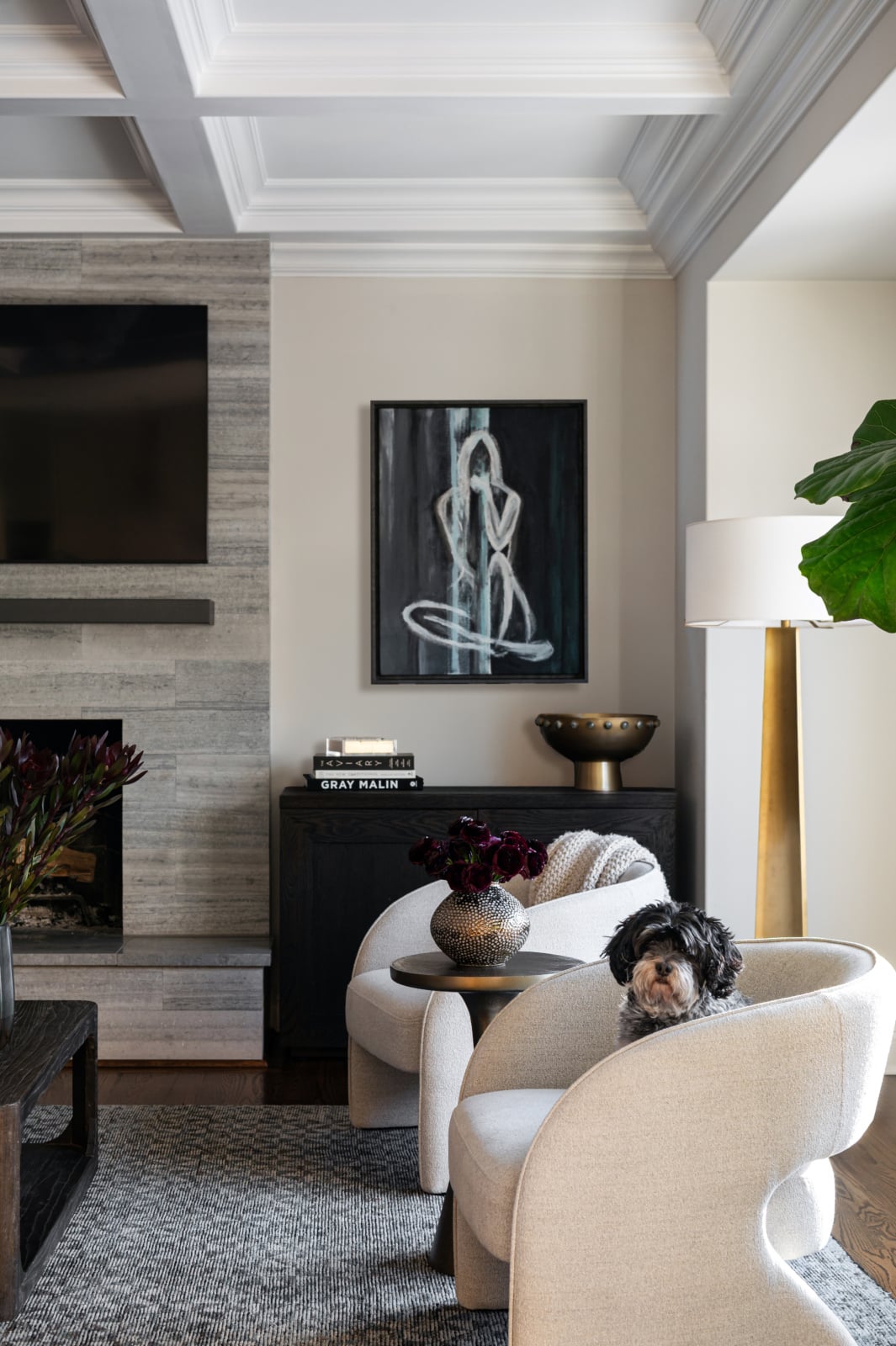
A boucle against a flat weave, a rough plaster beside polished stone, an unlacquered brass that shifts as it ages, timber with visible grain, a heavy wool underfoot. Each is doing the job that carving used to do. Get them right and a plain room reads as rich. Leave them flat and the same room reads as unfinished.
This is why transitional punishes poor materials more than a decorated style does. In a busy traditional room a mediocre fabric hides. In a plain one it is one of six things the eye has to look at, and it is very obvious.
Upholstery is the first place to spend more, and in this style it is doing more work than in any other.
What a point of view looks like
The rescue is always the same and it need not be dramatic.
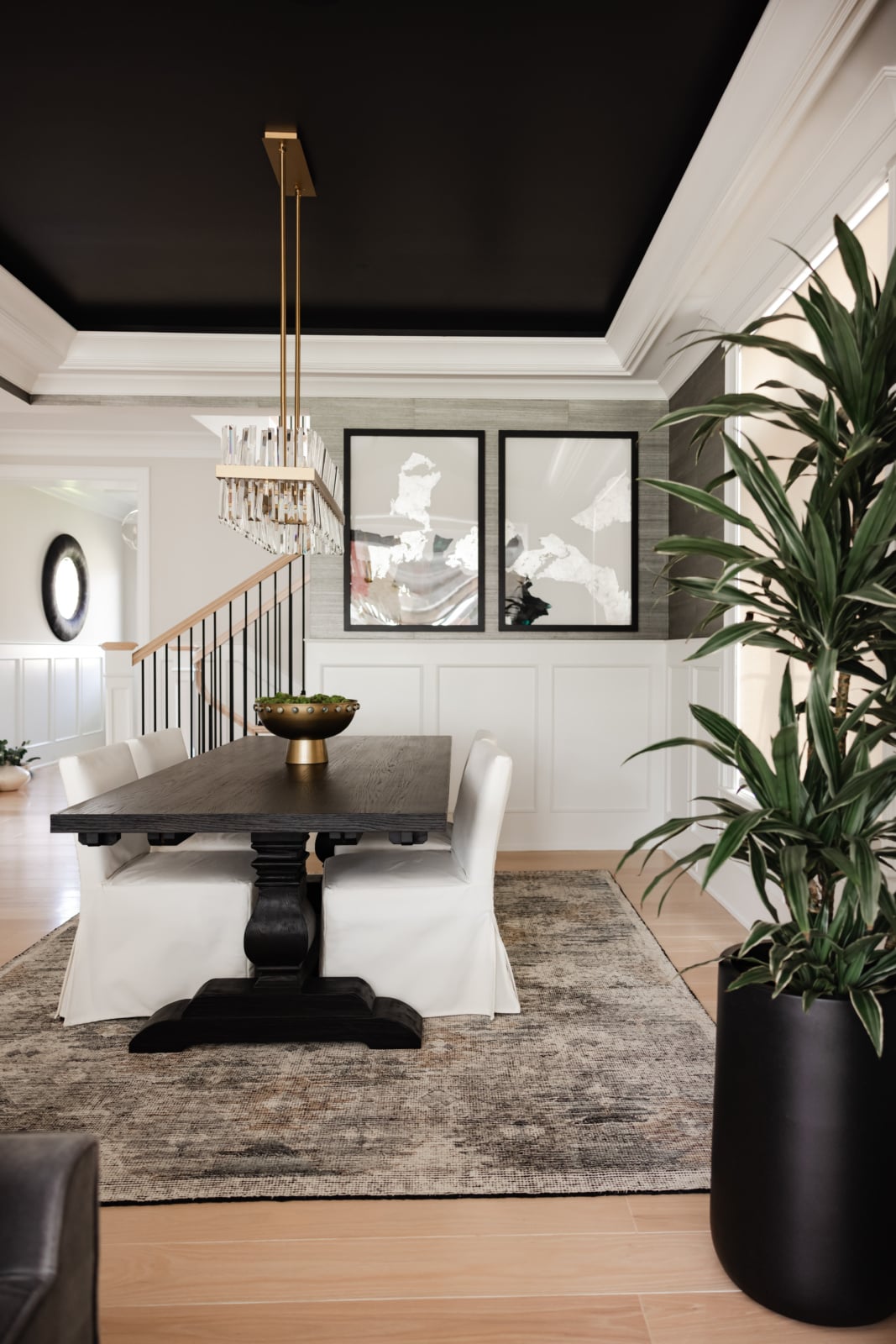
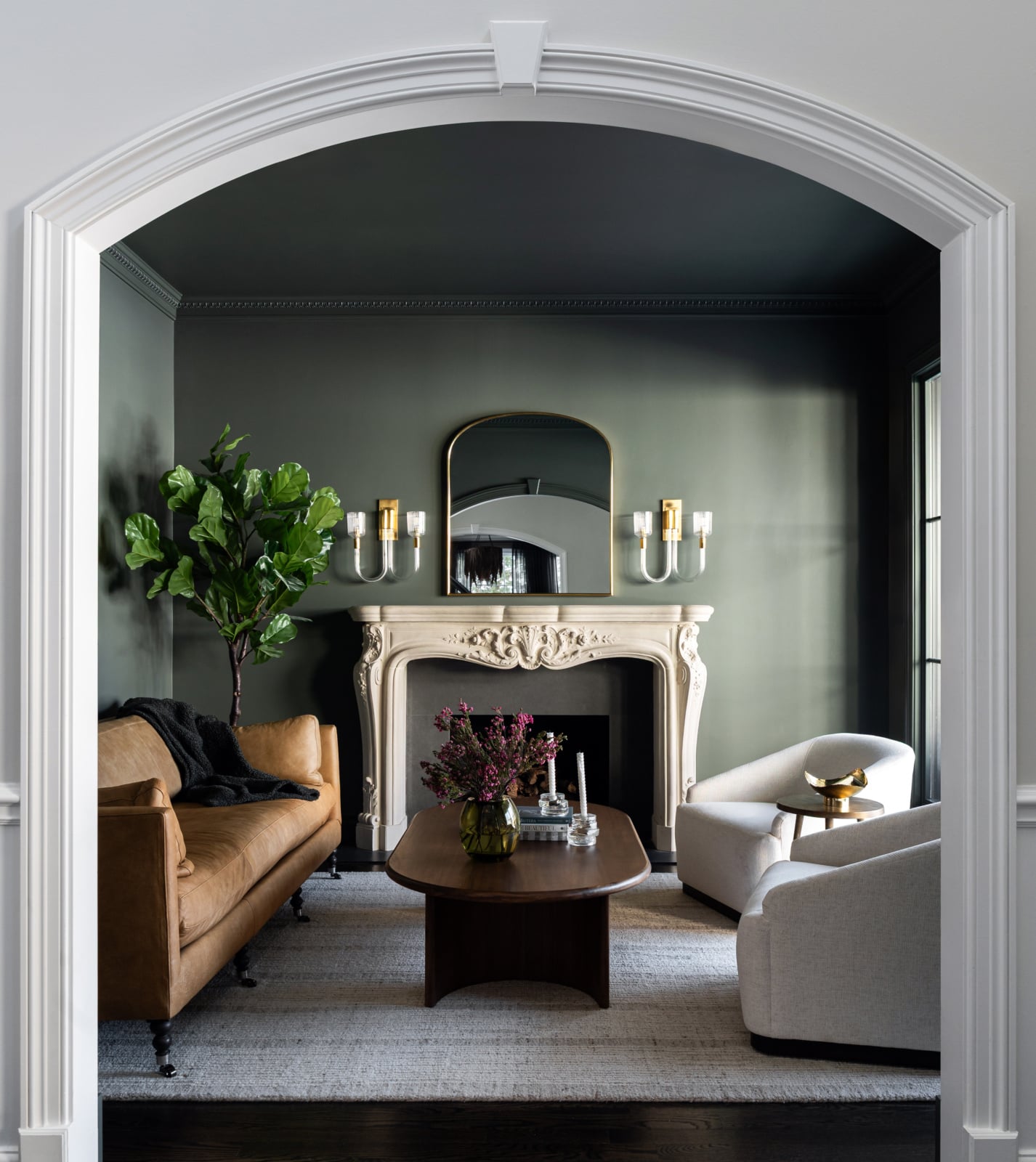
One strong colour, used properly rather than as an accent: a deep green study, an oxblood dining room, a genuinely dark fireplace wall. One bold material: a heavily veined stone, a dark timber, a tile with real character. Or one piece with a personality the rest of the room does not have, an antique with age on it, a modern chair with an unmistakable silhouette, a large piece of art somebody actually chose.
What matters is that it is singular. Three committed elements start competing and the room loses its calm, which was the point of transitional in the first place. One is usually enough, and it changes the whole reading of everything around it.
The restraint elsewhere is what makes the committed thing land. That is the actual art in transitional design.
Break the matched set
A specific and very common problem, easy to fix once named.
Transitional is sold in collections, so it is unusually easy to buy an entire room from one manufacturer in one afternoon. The result is coherent and lifeless: every piece shares the same leg, the same proportion, the same finish, and the room reads as a display rather than as somewhere people live.
Introduce something from outside the set. An older piece, a different timber, a chair that does not match anything, a rug that was not chosen to coordinate. One outsider is enough to make the rest look assembled rather than ordered.
This is also the simplest correction available for a room that already feels flat, because it usually means removing something and adding one thing rather than starting again.
The objects are not optional
Because transitional gives you fewer decorative elements by design, what you put on the surfaces carries more weight than it would elsewhere.
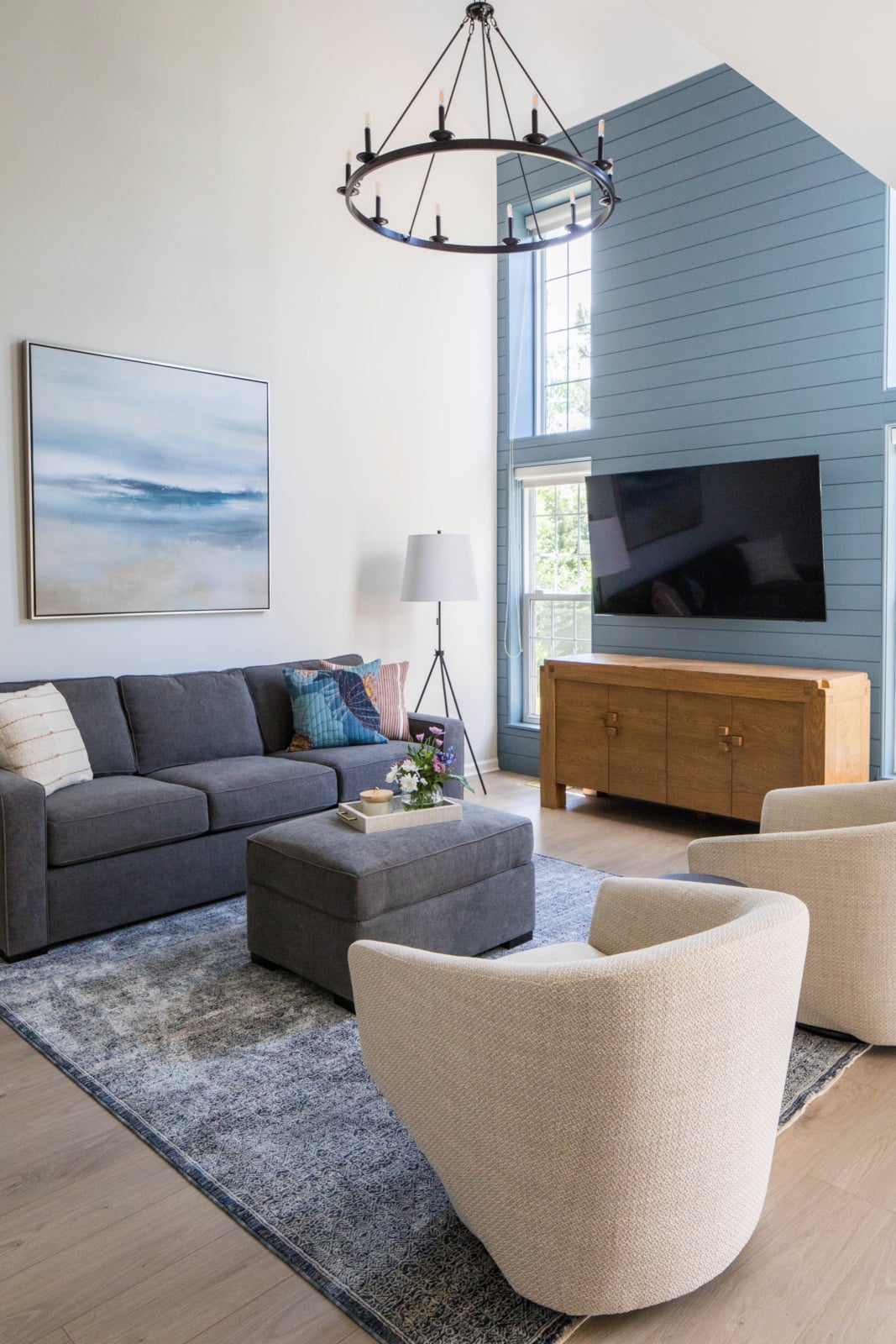
A room is not finished until it is styled, and accessories are what make it feel complete. Frequently when a room feels unfinished it is simply lacking them. In a transitional scheme, where the furniture has deliberately been kept quiet, they are also supplying most of the specificity.
They have to be real. A coffee table book says something about someone’s interests, their art says what they find beautiful, the objects on a shelf say where they have travelled or where they came from. Decorative items bought in one trip to fill a shelf say nothing at all, and the plainness of a transitional room makes that silence very audible.
The most common failure in homes that are beautiful and expensive is that they do not reflect the personality of the people in them, and transitional is the style most exposed to it.
Transitional is not the same as timeless
The two get conflated constantly, and the conflation is what produces the dull version.
Nothing is ever completely timeless. There is always some element of a piece that shows when it was chosen, in the same way clothes do. Every decade has produced its own transitional furniture and the differences are obvious in hindsight, so choosing the style in the belief that it will not date is a misunderstanding of what it offers.
What it actually offers is calm and flexibility: rooms that accept change, take new pieces easily, and do not fight the architecture. Those are real virtues. Permanence is not one of them.
Design everything to be timeless and everything ends up neutral, and boring. Use what you love.
Where it genuinely excels
Worth ending the criticism with the case in favour, because the style is popular for good reasons.
It handles awkward architecture better than either parent style. A house with some period features and some modern additions, which describes most renovated homes, is difficult to furnish in a committed traditional or committed modern way. Transitional absorbs both without looking confused.
It accommodates change. Households shift, pieces get added, tastes move, and a transitional room takes new arrivals more gracefully than a strongly themed one.
And it lets one thing be exceptional. A quiet room with a single remarkable element is a very effective way to show off a piece you love, and it is much harder to achieve in a room that is already busy.
Chicago houses specifically
Local housing stock explains why the style is so prevalent here and where it needs help.
Greystones, vintage walk-ups and older suburban houses in Hinsdale, Elmhurst and La Grange have genuine traditional architecture: deep trim, panelled doors, carved mantels. Transitional furnishing works well in these because the room supplies the ornament and the furniture does not need to compete. The mistake is going quiet on top of quiet, where the millwork has been painted out and the furniture is also restrained, leaving nothing to look at.
Newer construction in Naperville and Oak Brook has the opposite problem: large, plain rooms with no architectural character at all. Transitional furniture in a plain room with no committed element is where the style is at its weakest, and these are the houses that most need one strong decision. Scale matters here too, because large rooms swallow the moderate proportions transitional favours, and everything reads as underscaled.
Working through it with us
Transitional is easy to do adequately and genuinely difficult to do well, because the restraint only works if something in the room earns it. You can see how we work on our design process page, look through recent projects, or get in touch about your own home.
Related reading: mixing traditional and modern furniture, which covers the practical side of combining pieces, plus identifying your design style, warm neutrals in a living space, choosing a statement piece and high contrast rooms. We work across Chicago, Hinsdale and Naperville.
Frequently asked questions
What is transitional interior design?
A style that takes the proportions and silhouettes of traditional furniture and removes the ornament: a rolled arm without carving, cabinetry with the rhythm of panelling but a flat face. The bones are historical and the surface is contemporary, combined within the same piece rather than placed side by side.
Is transitional the same as mixing traditional and modern?
No. Mixing places an antique chest in a modern room, so the two influences sit next to each other. Transitional combines them within a single object. Both approaches work, and they can be used together, but they are different techniques.
Why do transitional rooms often feel boring?
Because the style is frequently chosen to avoid committing to anything, and that shows. Every element ends up moderate, every value mid-tone, and nothing anchors the room. The fix is one committed element: a strong colour, a bold material, or a piece with real character.
How do you make a transitional room feel less bland?
Introduce a single point of view. One deep colour used properly rather than as an accent, one material with real presence, or one piece with a personality the rest lacks. Keep it singular, because several committed elements start competing and the calm that made the style attractive is lost.
Why does texture matter so much in transitional design?
Because the style removes the ornament that traditional interiors use to hold the eye, so texture has to do that job instead. Boucle against flat weave, plaster beside polished stone, timber with visible grain. Without it a plain room reads as unfinished rather than restrained.
Should I buy a matching furniture collection?
No. Transitional is sold in collections, which makes it easy to buy a whole room in one afternoon, and the result is coherent and lifeless. Introduce one piece from outside the set, an older item or something that does not coordinate, and the rest reads as assembled rather than ordered.
Is transitional design timeless?
No style is. Every decade has produced its own transitional furniture and the differences are obvious in hindsight. What the style genuinely offers is calm and flexibility, rooms that accept change and do not fight the architecture. Permanence is not among its strengths.
When is transitional the right choice?
When the architecture is mixed, which describes most renovated houses, since it absorbs period features and modern additions without looking confused. It also suits households whose needs change, and it is an effective setting for one exceptional piece you want noticed.