
Last updated August 27, 2026
Key Takeaways
- Every kitchen is already a mix, because the function is unavoidably modern. The only real decision is whether the modern parts are concealed or expressed.
- One of the two has to lead. An even split reads as indecision rather than as balance.
- Cabinet door style and the reveal around it carry more of the traditional or modern reading than any other single element.
- Hardware is the smallest change that shifts the whole room, which makes it the safest place to experiment.
- The island is the natural place to switch, because it is read as a separate object.
- In older Chicago houses, decide early which original details you are honouring and which you are letting go. Keeping some and half-keeping others is what looks unresolved.
The usual framing of this question is which traditional elements to keep and which modern ones to add, as though a kitchen starts from neutral. It does not. A working kitchen contains a large steel appliance, mechanical ventilation, task lighting, outlets and a refrigerator, and none of those are traditional in any sense.
So the mix is already there. The decision is narrower and more useful than it first appears: are the modern parts concealed so the room reads as traditional, or expressed so it reads as contemporary? Answering that resolves most of the other choices.
Conceal or express
The question that organises everything else.
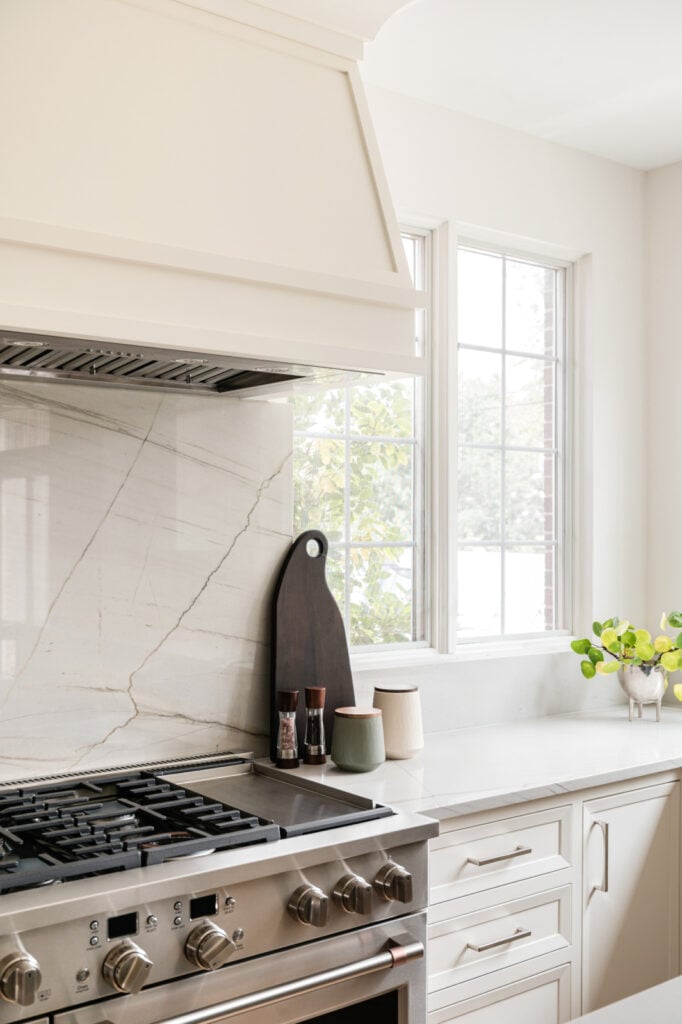
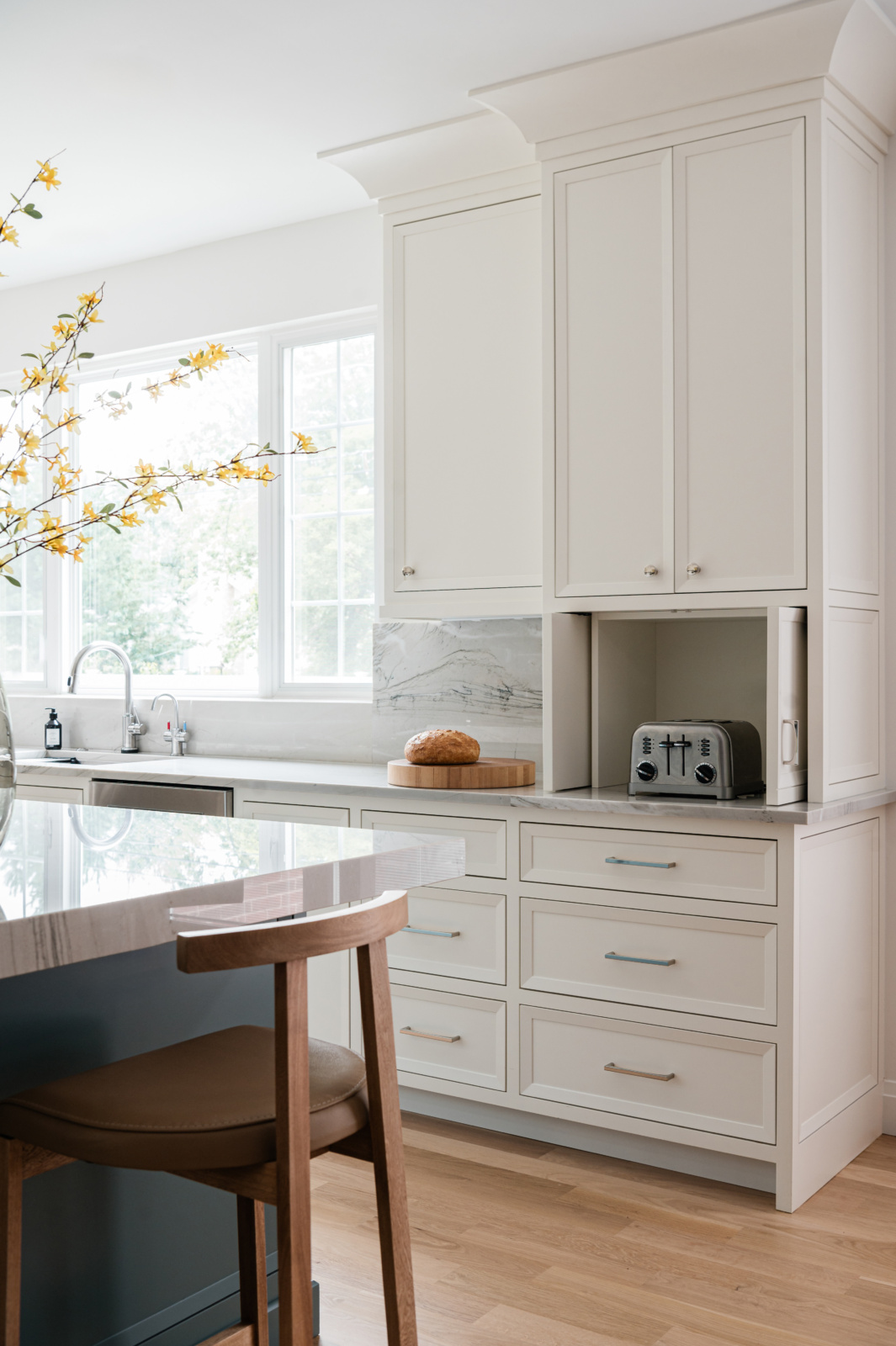
Concealing means panelled appliances, a hood built into joinery so it reads as architecture, an appliance garage for the small machines, and outlets moved into cabinet returns or under wall units. The room reads as a fitted, traditional space, and the modern equipment is present but not announced.
Expressing means a professional range left as steel, a hood that is deliberately a piece of metal, open shelving, and hardware and lighting that make no attempt to look old. The room reads as contemporary, and the traditional element becomes the architecture around it.
Both work. What does not work is doing half of each without deciding, which is how kitchens end up with a panelled dishwasher next to an exposed stainless range and a hood that cannot decide what it is.
One of them has to lead
The principle that separates a considered mix from a compromise.
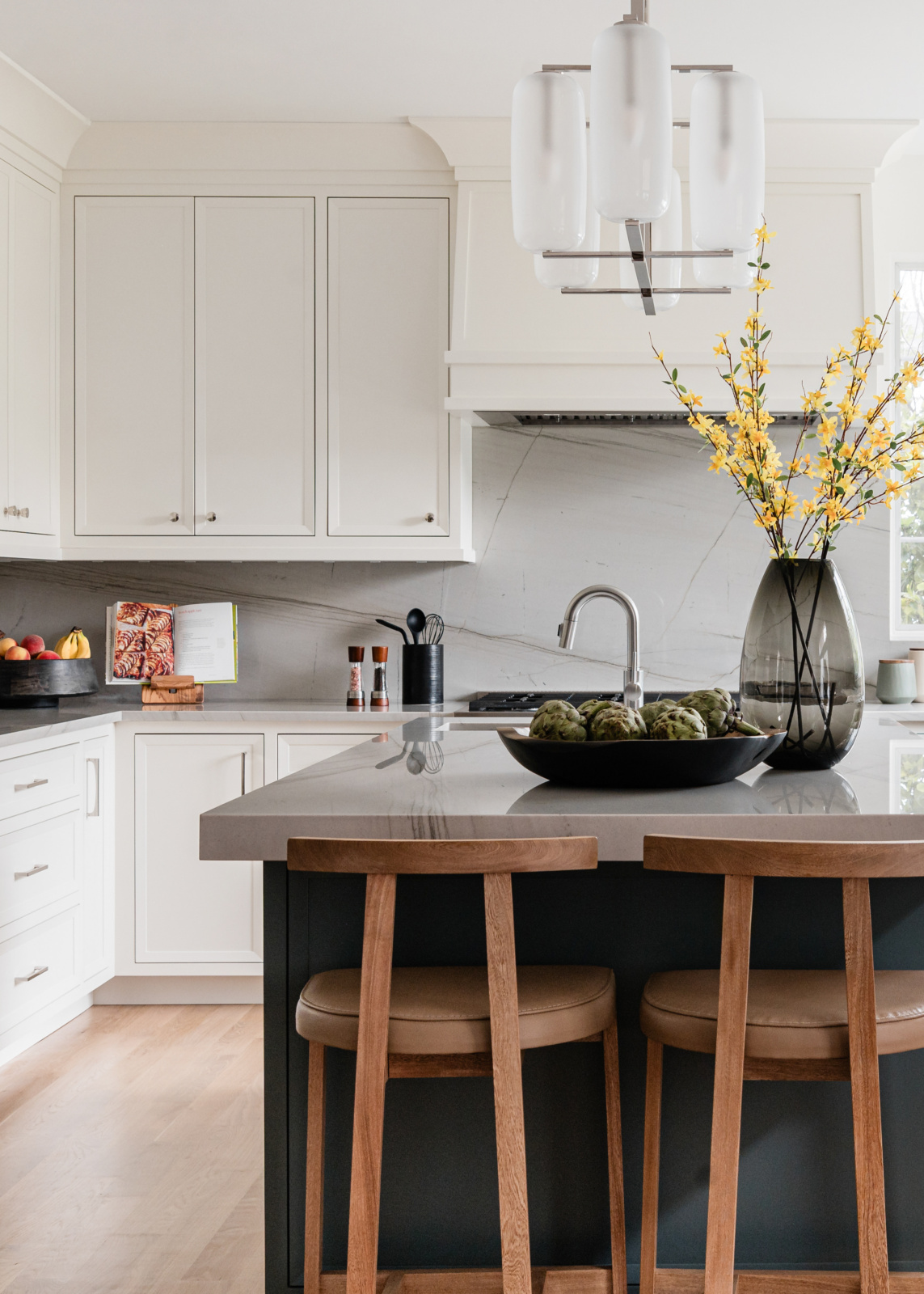
An even split between two languages reads as indecision. What reads as confidence is a clear majority in one direction, with the other appearing deliberately and in a limited number of places.
A useful proportion is roughly three quarters to one quarter. A traditional kitchen with modern lighting, modern hardware and a contemporary worktop is coherent. A contemporary kitchen in a house with original mouldings, where the trim and the ceiling detail are left alone, is equally coherent. Both have a clear lead voice.
The test is whether you can say in one sentence what kind of kitchen it is. If the honest answer is that it is half of each, the plan is not finished yet.
Where the reading actually comes from
Which elements carry the signal, and which ones people overestimate.
| Element | Reads traditional | Reads modern | How much it matters |
|---|---|---|---|
| Cabinet door | Inset doors, a beaded or moulded frame, visible hinges | Full overlay, flat or lightly reeded fronts, concealed hinges | The most, by a distance |
| The reveal | A generous, visible gap with the frame showing | A tight, even shadow line | More than people expect. It sets the whole feel |
| Hood | Plaster or joinery, built to look like architecture | Steel, glass, or a slim insert in a run of cabinets | A great deal, since it is at eye level |
| Worktop | Timber, honed stone, a shaped and moulded edge | A thin square edge, a large-format slab, a waterfall return | Moderate. The edge profile matters more than the material |
| Backsplash | Handmade tile with variation, a defined field behind the range | A continuous slab, or a large-format tile with minimal grout | Moderate, and highly visible |
| Hardware | Unlacquered brass, bin pulls, cup handles, knobs on doors | Long bar pulls, blackened or brushed finishes, or none at all | Small change, large effect. The easiest thing to revise |
| Lighting | A visible fitting with a shade, in a warm metal | Linear, sculptural, or recessed and unnoticed | High, and often the easiest place to bring in the other voice |
| Appliances | Panelled and integrated so they disappear | Expressed as equipment, in steel | Decisive. This is the conceal or express decision |
If you only get two of these right, make them the door style and the hood. Those two settle how the room reads before anyone notices the hardware.
The island is where to switch
Because it is read as a separate object rather than as part of the run.
An island in a different colour, a different material or a different timber does not look inconsistent, it looks intentional, which is why it is the most reliable place to introduce the second voice. A traditional painted perimeter with a contemporary island in timber or stone works, and so does the reverse.
The same is true of the worktop. Using a different surface on the island from the perimeter is a long-standing convention rather than a compromise, and it gives you somewhere to put a material that would be too much across the whole room.
What keeps it coherent is that something carries across: the hardware, a repeated timber tone, or the same edge profile. One shared element is enough, and without it the island reads as a piece of furniture that wandered in.
Hardware is the smallest lever
And the one most worth experimenting with.
Changing handles alters the read of a kitchen more than almost anything else you can do in an afternoon. The same shaker door with a cup handle in unlacquered brass and with a long matte black bar pull are two different kitchens.
It is also the lowest-commitment place to test whether you actually want more of one voice. If a traditional kitchen feels heavy, modern hardware lightens it immediately, and if a contemporary kitchen feels cold, a warmer metal and a more articulated shape soften it without touching the joinery.
Because it is reversible, there is little reason to be cautious here. Buy one handle, put it on one door, and live with it for a week before ordering forty.
Older Chicago houses specifically
Where most of these kitchens are, and where the decision is sharpest.
Houses across Elmhurst, Hinsdale, Oak Brook and the city itself frequently have genuine detail worth keeping: deep trim, original flooring, a bay, plaster cornices, a back stair. They also usually have a kitchen that was reconfigured at some point in a way nobody would repeat.
The decision worth making early is which of those details you are honouring and which you are letting go. Matching new trim to the original throughout is coherent. Ignoring the original entirely and doing something frankly contemporary is also coherent. What looks unresolved is keeping some, half-matching others, and leaving a joint where the two meet with no thought given to it.
Practically, that means deciding at the drawing stage where the new work stops and the original resumes, and detailing that junction deliberately rather than letting the joiner decide it on the day.
What we would not do
Three things that consistently produce the muddled version.
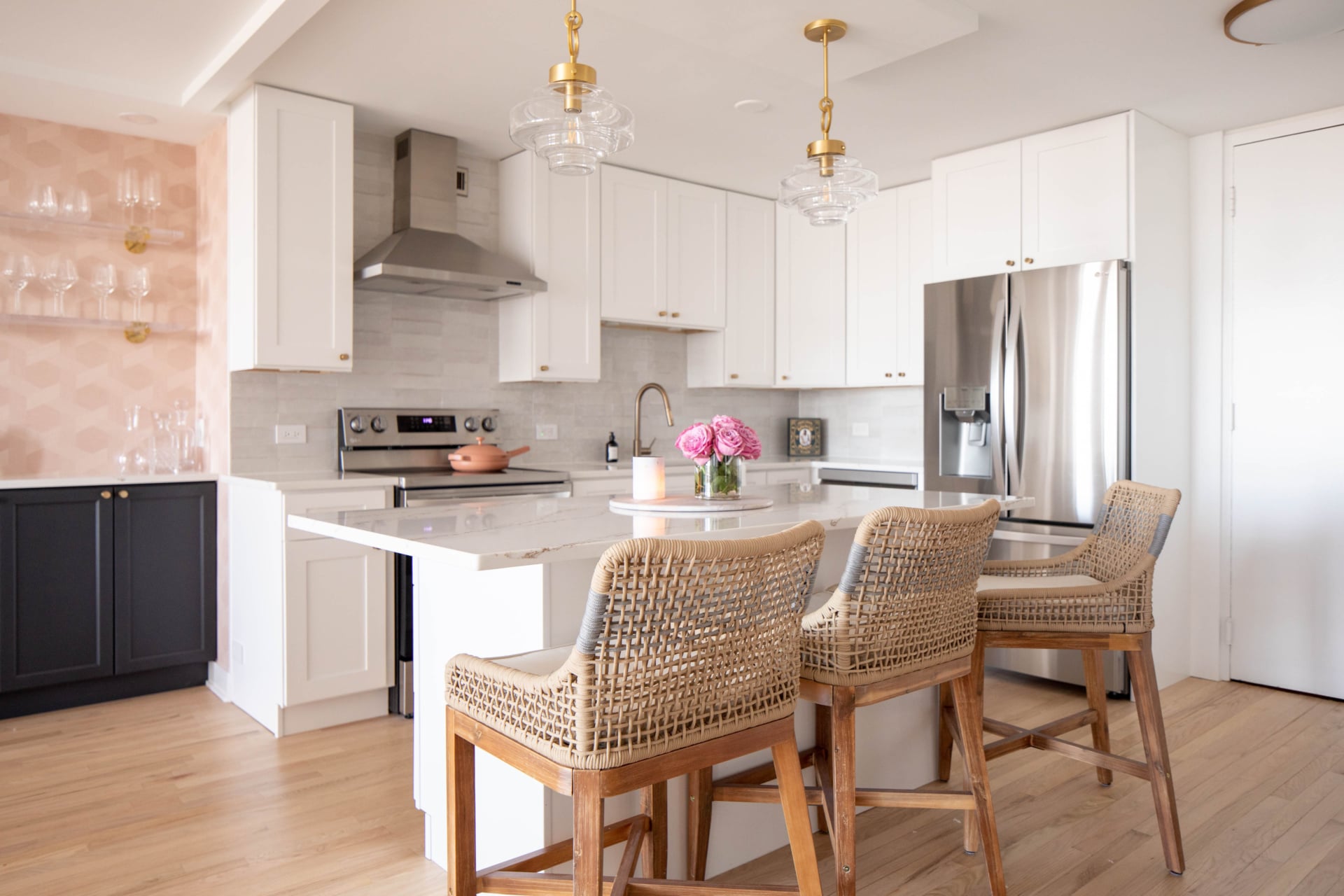
Buying a traditional door style and then specifying every other element to be as contemporary as possible, which cancels both.
Treating transitional as a style you can order rather than as the result of deciding what leads. It is a description of an outcome, not a specification, and asking for it directly tends to produce the neutral, unmemorable version.
And choosing the mix to appeal to a future buyer. A kitchen designed to offend nobody is the one most likely to be replaced, because there is nothing in it anyone would defend.
Then use what you like
Which is the part the framing of this question tends to lose.
The mix is a method for making two things sit together, not a reason to choose either. If you love inset doors and unlacquered brass, that is a real reason to have them, and the modern equipment can be concealed around it. If you want a steel range on show and a slab backsplash, the architecture of an older house will hold that perfectly well.
Dara’s position applies here as everywhere: use what you love, because life is too short to live with a kitchen chosen to be defensible. You will stand in it every day, and a room assembled to be broadly acceptable is one you will be quietly ready to change.
Working through it with us
The useful conversation about a kitchen like this is which voice leads and where the other one appears, and it is settled long before anything is ordered. You can see how we approach it on our kitchen design page, read about our design process, look through recent projects, or get in touch.
Related reading: the art of transitional design, what to know before a kitchen redesign, how long kitchen renovations take, choosing a kitchen floor and rich woods and warm metals. We work across Elmhurst, Hinsdale and Oak Brook.
Frequently asked questions
How do you mix modern and traditional in a kitchen?
Start by recognising the kitchen is already a mix, since the appliances, ventilation and lighting are unavoidably modern. The real decision is whether those parts are concealed so the room reads as traditional, or expressed so it reads as contemporary.
Should the split be even?
No. An even split reads as indecision. What reads as confidence is a clear lead, roughly three quarters in one direction, with the other voice appearing deliberately in a limited number of places. If you cannot say in one sentence what kind of kitchen it is, the plan is not finished.
Which element decides whether a kitchen looks traditional or modern?
The cabinet door style, and after it the reveal around the door. Inset doors with a visible frame read traditional, full overlay with a tight shadow line reads modern. The hood is next, because it sits at eye level.
Can I have a traditional kitchen with modern appliances?
Yes, and that is the most common version. Panel the dishwasher and refrigerator, build the hood into joinery so it reads as architecture, and move outlets into cabinet returns. The equipment is present without being announced.
Where should I introduce the second style?
The island, because it is read as a separate object rather than part of the run. A different colour, material or timber there looks intentional. Keep one element carrying across, such as the hardware or a repeated timber tone, or it reads as furniture that wandered in.
What is the easiest thing to change?
Hardware. The same shaker door with a brass cup handle and with a long matte black bar pull are two different kitchens. It is reversible, so buy one handle, put it on one door and live with it for a week before ordering forty.
How do I handle original details in an older home?
Decide early which you are honouring and which you are letting go. Matching new trim to the original throughout is coherent, and so is doing something frankly contemporary alongside it. What looks unresolved is keeping some, half-matching others and leaving the junction unconsidered.
Should I choose a mix that appeals to future buyers?
A kitchen designed to offend nobody is the one most likely to be replaced, because there is nothing in it anyone would defend. You stand in this room every day, so it is worth choosing what you actually like.