
A guest room is used a handful of nights a year, which is exactly why it tends to become storage. The rooms that work are the ones designed for a specific, honest brief: someone arrives late, does not know where anything is, and should not have to ask.
We design guest rooms that are genuinely comfortable to stay in and useful the rest of the year, often doubling as an office, a reading room, or a second sitting room without looking like a compromise.
Bed, storage, and circulation resolved for a room that has a second daily use.
Blackout drapery or shades, because guests sleep on a different schedule than you do.
A surface, a light each guest can control, and accessible power for charging.
Somewhere to hang and unpack, so guests are not living out of a suitcase.
Desks, shelving, or seating that serve the room between visits.
Layered so guests can adjust warmth themselves.
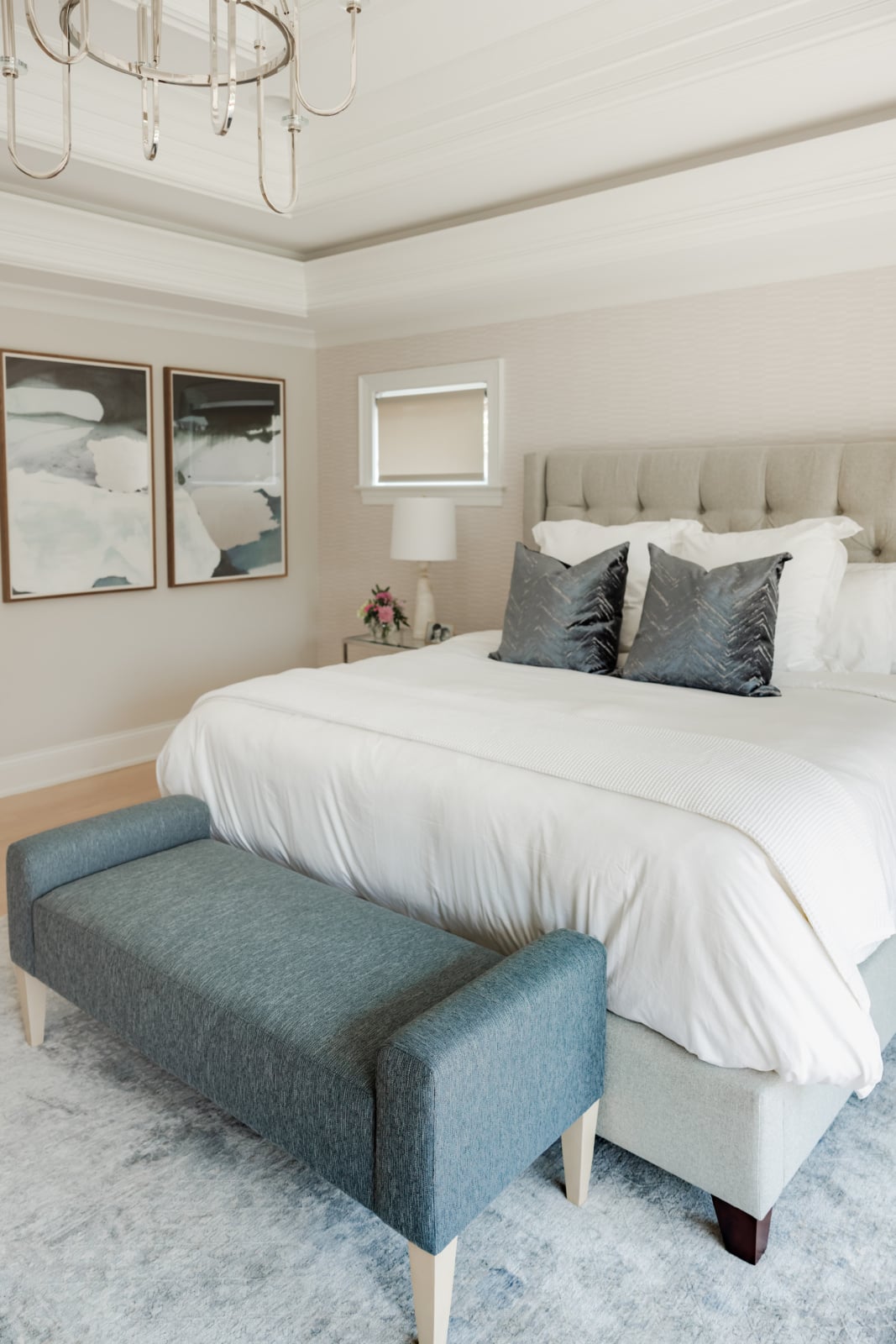
What makes a guest room feel considered is a short and unglamorous list: a place to set down a glass of water, a light reachable from the bed, power within arm's reach, a hook or a hanger, a mirror, and a blind that actually blocks the morning sun.
Almost every guest room that feels lacking is missing three or four items from that list, regardless of how well it is furnished.
Most guest rooms are asked to be something else for 350 days a year. Designed deliberately, that dual use is an advantage rather than a compromise.
A well-planned desk that is cleared for visits, a daybed or a proper sleeper that reads as seating, and closet space kept genuinely available all let a room serve both roles without either feeling like an afterthought.
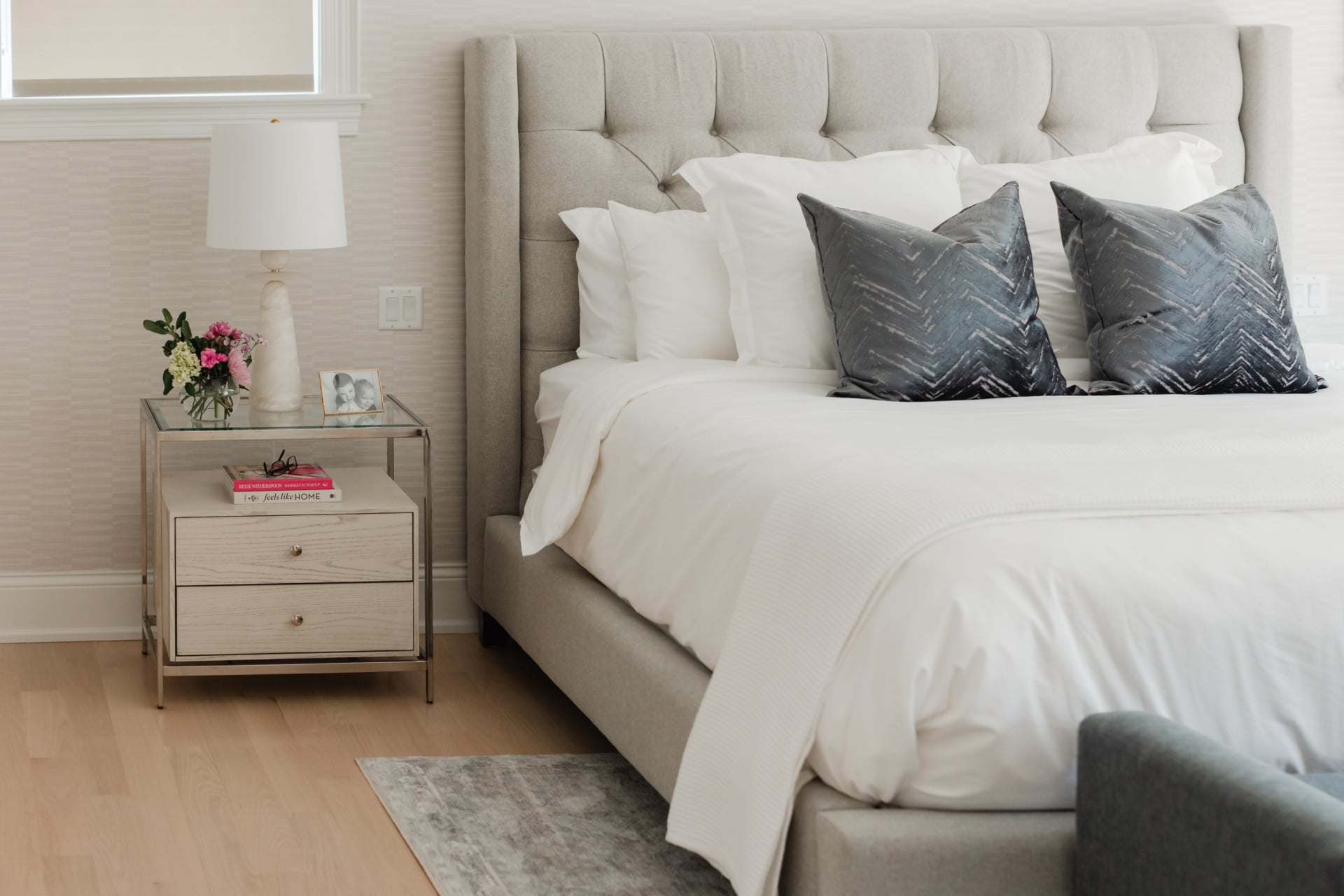
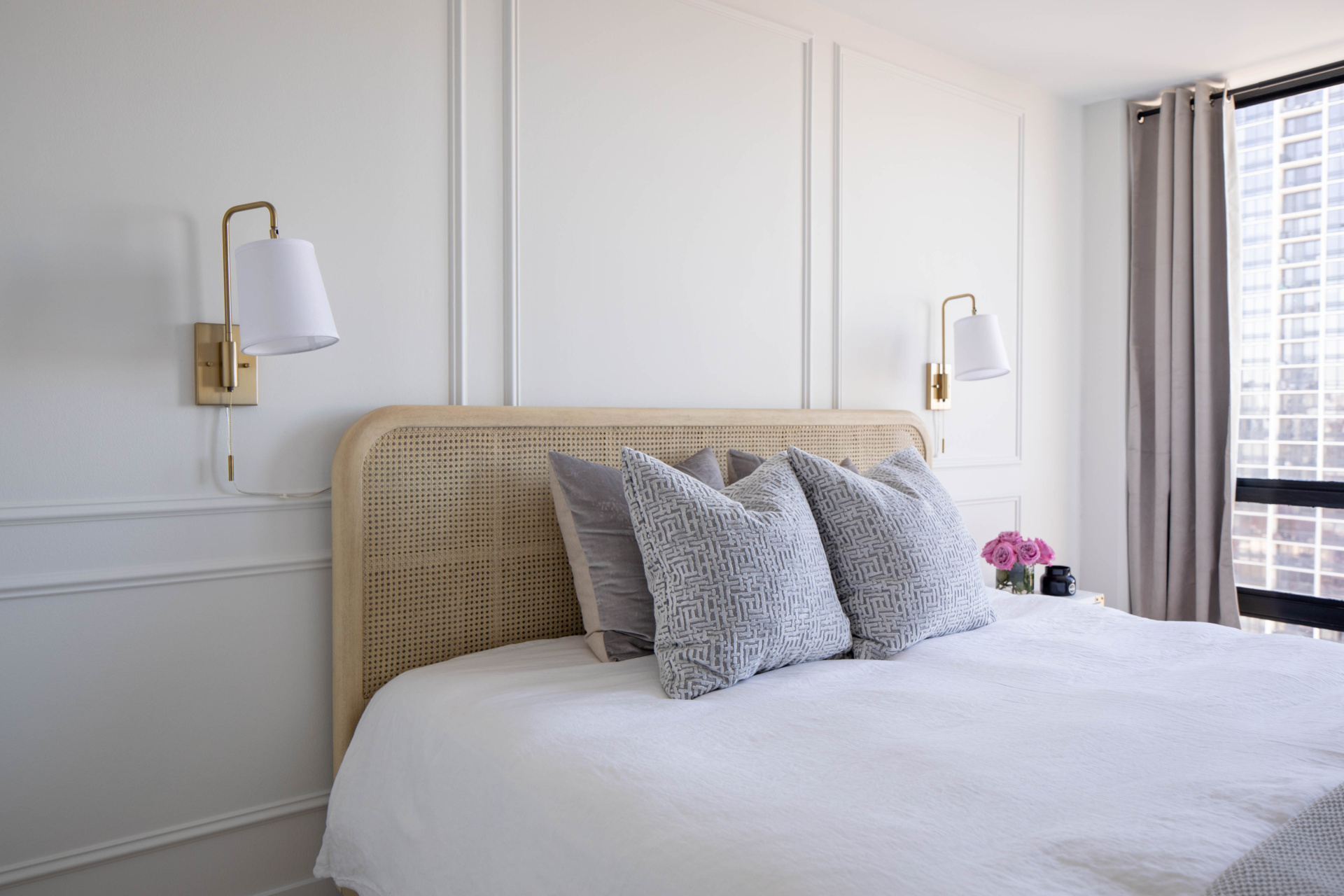
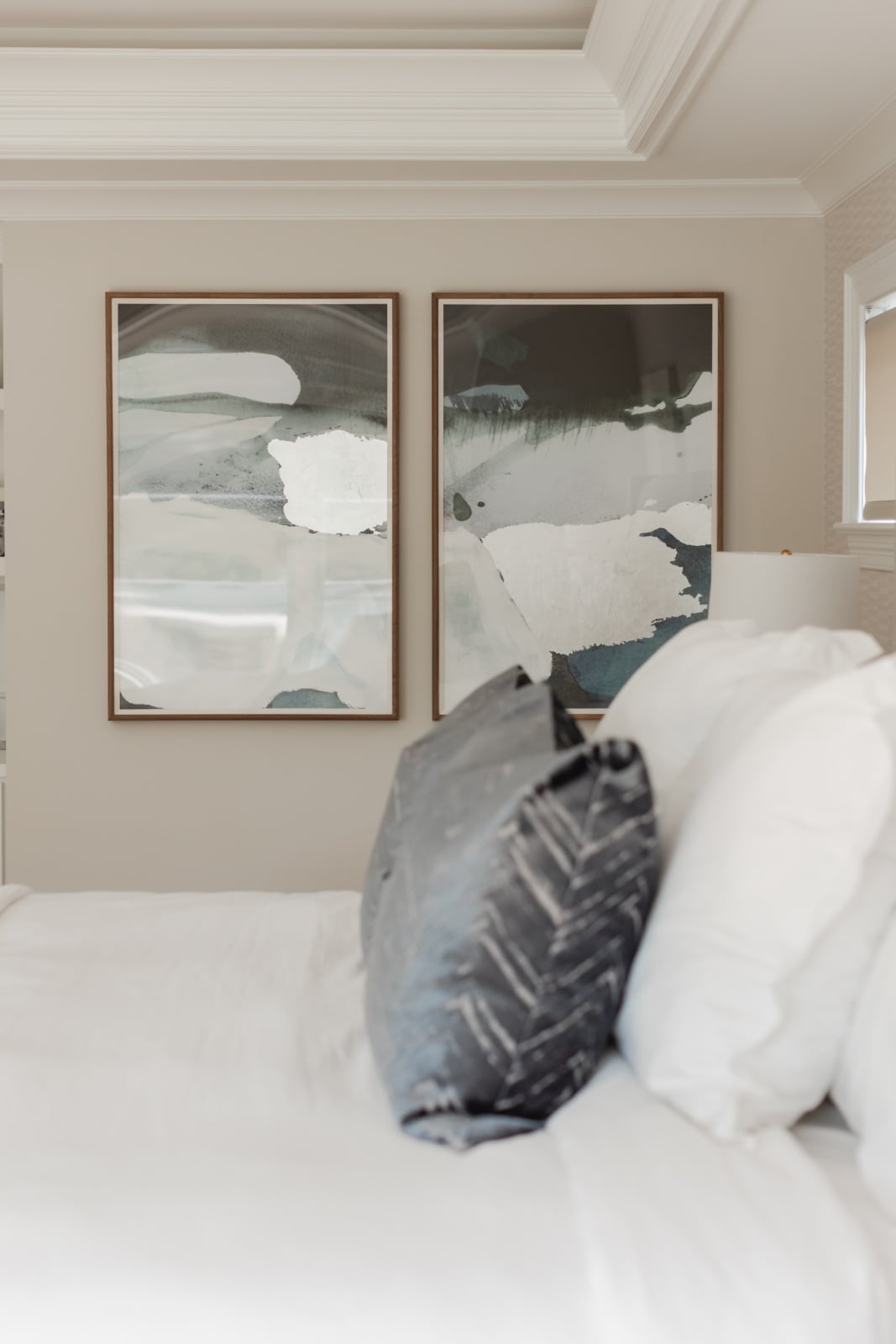
A guest room shares its brief with a bedroom, so this is bedroom work from recent projects. See more in the full portfolio.
A queen suits most guest rooms and accommodates couples comfortably. Two twins that can be joined are worth considering where the room hosts a mix of single guests and couples, provided the plan allows the clearance.
A bedside surface, a light each guest can switch off from the bed, accessible power for charging, somewhere to hang clothes, a mirror, and effective light control at the window. That short list accounts for most of the difference between a comfortable guest room and a lacking one.
Yes, and most should. A proper desk that clears for visits, storage that stays partly empty, and a bed that reads as furniture rather than an obstruction let one room do both jobs well. We plan it as a dual-use room from the outset rather than adding a bed later.
A high-quality sleeper or daybed works well when the room genuinely needs to be something else most of the year. Mattress quality is what determines whether guests sleep well, so it is the part of the specification we do not economize on.
Through art, textiles, and a few considered objects rather than accumulation. Guest rooms benefit from restraint, and empty drawer and closet space is what signals a room is genuinely ready for someone.
Tell us about your home and how you want to live in it. We will walk you through our design process and what working together looks like.