Last updated August 31, 2026
Key Takeaways
- Most mantel shelves land between 54 and 60 inches from the finished floor, and roughly 12 inches above the top of the firebox opening.
- The firebox sets the mantel height, not the ceiling. A 10 foot ceiling changes what happens above the shelf, not where the shelf goes.
- Anything combustible has to clear the firebox opening by a set distance. That is a code matter your contractor confirms, not a styling choice.
- Before touching the masonry, work out what is actually dated. Very often it is the mantel, the hearth or the wall color rather than the stone.
- Painting masonry is effectively permanent. Limewash and mineral paint soak in instead of coating, so they keep the texture and age far better.
- Most fireplaces that look wrong are undersized for the wall rather than made of the wrong material.
A fireplace mantel usually sits between 54 and 60 inches from the finished floor to the top of the shelf, which on a standard firebox works out to roughly 12 inches above the opening. That is the number you came for, and it is right often enough to be useful.
It is also the number we override most. The shelf height follows the firebox, the surround and the proportions of the wall it sits on, and when those are unusual the standard answer produces a fireplace that measures correctly and still looks wrong. What follows is where the numbers come from, when to ignore them, and what to change if the fireplace is dated rather than badly proportioned.
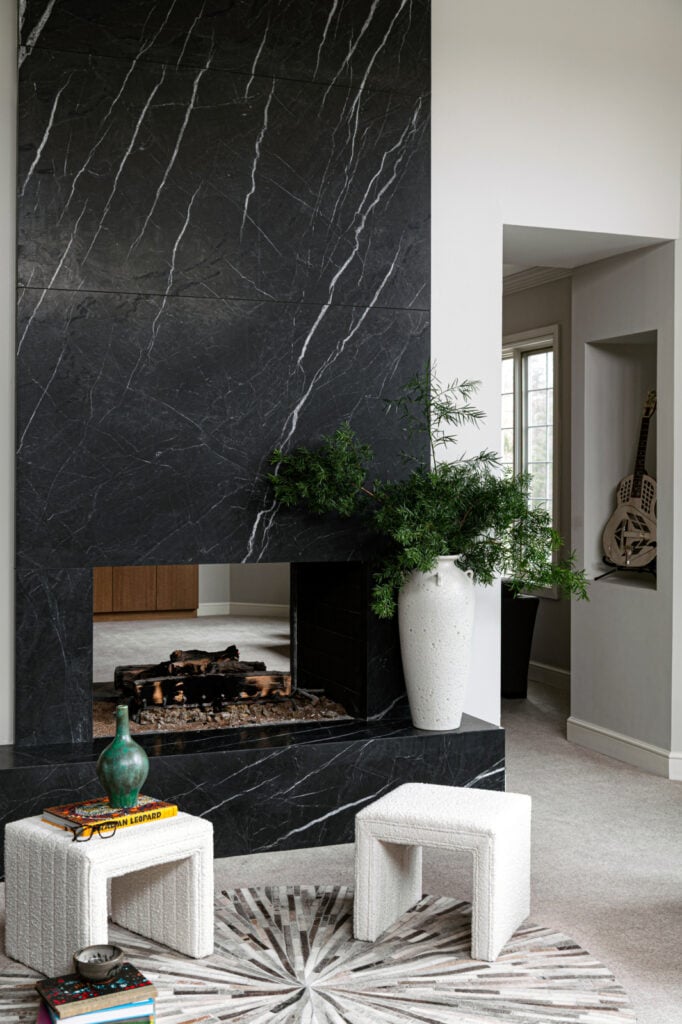
Where the mantel actually sits
Every dimension on a fireplace is set by the firebox opening. Get that relationship right and the rest follows. Here are the measurements people ask us about most, with the range we work within and the thing that actually decides it.
| Measurement | Usual range | What actually decides it |
|---|---|---|
| Mantel shelf height Finished floor to the top of the shelf. |
54 to 60 inches | The top of the firebox opening, plus the clearance the shelf depth requires |
| Shelf above the opening The gap between firebox and shelf. |
About 12 inches | Code clearance first, then how heavy you want the surround to read |
| Mantel depth How far the shelf projects from the wall. |
5 to 7 inches | Deeper shelves need more height above the opening. Depth and height are one decision |
| Mantel width Overall length of the shelf. |
Varies | The surround, not the shelf. It should overhang the surround slightly on each side, not float wider than the masonry |
| Firebox opening height The starting point for everything else. |
Around 30 inches | The existing masonry or the appliance. Measure it before anything else |
| Hearth height Flush with the floor, or raised. |
Flush, or up to 18 inches | Mostly era. Raised hearths date a room faster than almost anything else on the fireplace |
Ranges reflect what we specify most often. Your firebox, your surround and your local code decide the final numbers, so confirm them with whoever is building the work.
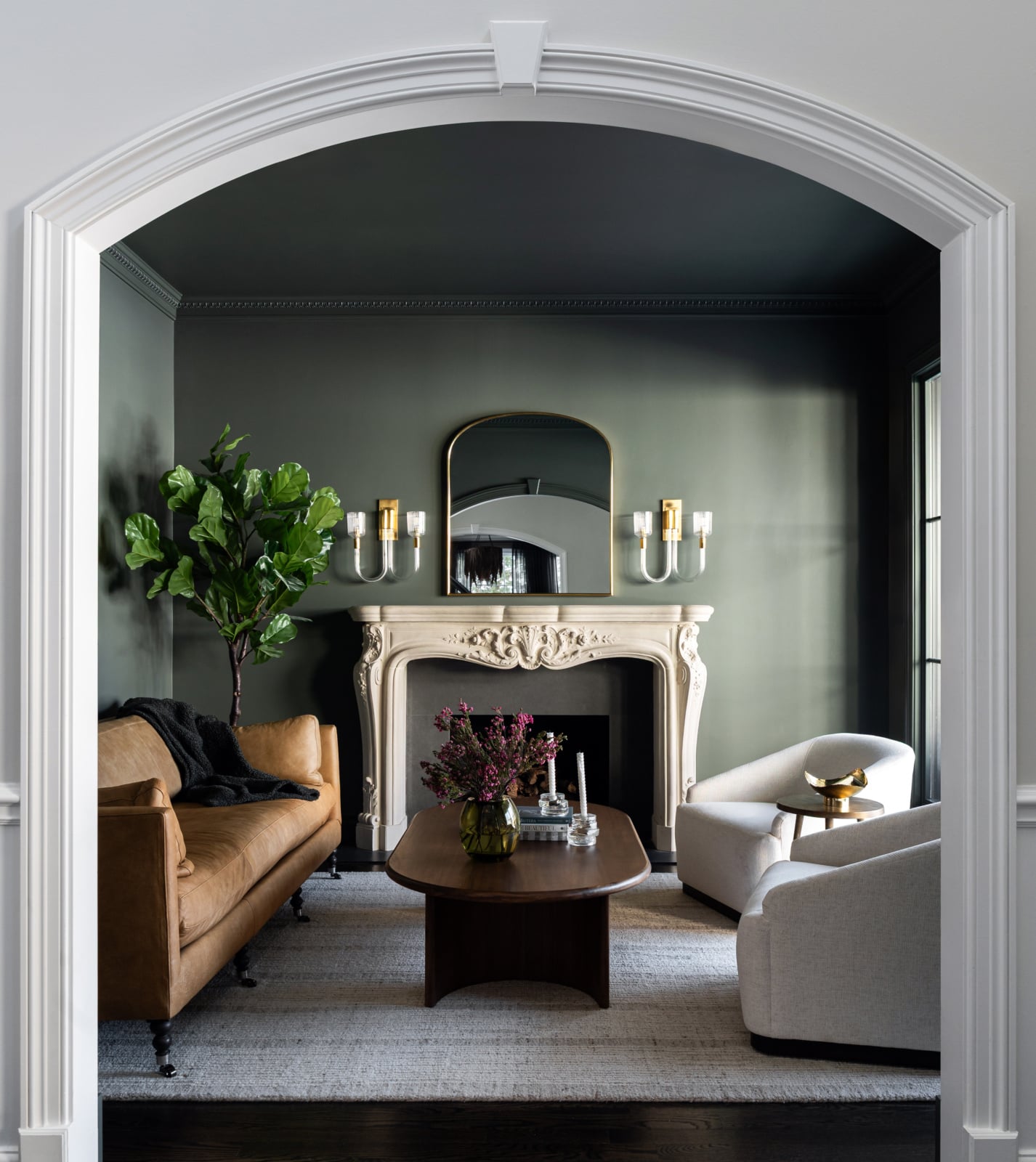
Why the standard number is often wrong for your room
The most common question we get on this is some version of what the mantel height should be for a 9 or 10 foot ceiling. The answer surprises people: it does not change.
The mantel relates to the firebox, and the firebox has not moved. Raising the shelf to keep pace with a tall ceiling pulls it away from the fire it belongs to, and you end up with a shelf stranded halfway up a wall with an awkward gap underneath. What a tall ceiling changes is everything above the shelf. That is where the surround can carry on upward, where an overmantel or a taller stone face earns its keep, and where a larger piece of art does the work that raising the shelf cannot.
Two other cases override the standard range. A firebox set unusually high, which is common in mid-century houses and in some inserts, pushes the whole assembly up with it. And a very deep shelf needs more space above the opening, so depth and height get decided together rather than one after the other.
This is the same argument we make about furniture. A number that is correct in the abstract can still be wrong in the room, because scale is judged against what surrounds it, not against a chart.
Clearance is a code question, not a style one
There is a limit to how close combustible material can sit to a firebox opening, and it is not a matter of preference. The residential code sets it, and it is the reason a deep timber mantel cannot simply be dropped wherever it looks best.
The principle is straightforward. Nothing combustible belongs within about 6 inches of the opening at all. Between there and roughly 12 inches, how far a piece is allowed to project increases with its distance from the opening, which in practice means a shelf projecting more than an inch and a half wants to be a full 12 inches clear. That is where the familiar 12 inch figure comes from. It is a safety rule that happens to produce good proportions.
Codes vary by municipality and a gas insert comes with its own manufacturer’s clearances that override the general rule. Your contractor confirms the numbers against local code before the mantel is fabricated. We plan the design around them from the start, which is a great deal cheaper than discovering the conflict after the millwork is built.
Diagnose before you treat the masonry
If your fireplace looks dated rather than badly proportioned, this is the step that saves the most regret.
Stand back and look at it as a set of parts rather than one object. There is the surround or chimney breast, the mantel shelf, the hearth, the firebox opening and whatever trims it, and the wall around all of it. Each was made at a different time and any of them can be the thing that looks wrong.
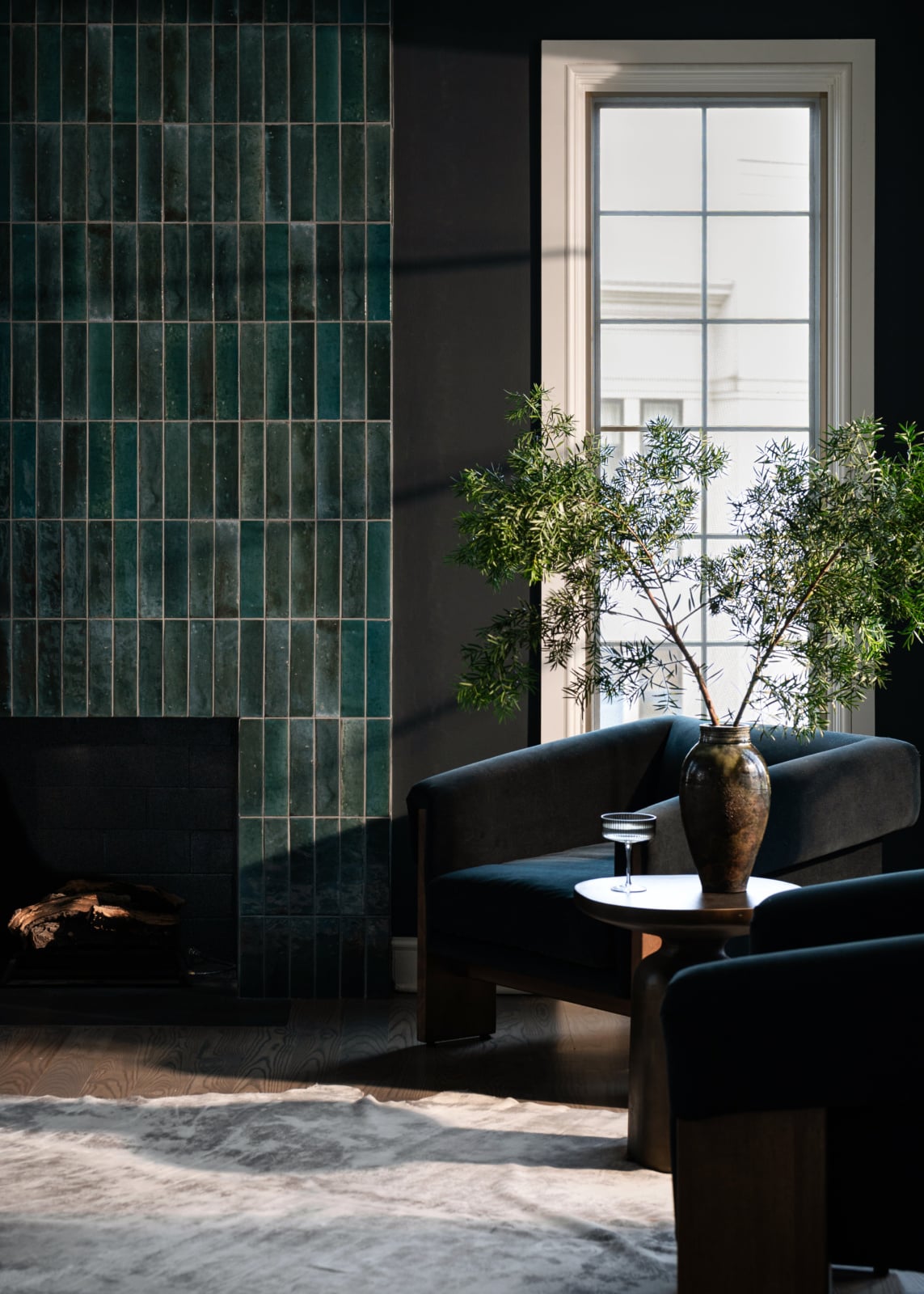
The mantel is the most common culprit: a heavy timber shelf added in the eighties or nineties, frequently in a different color and profile from anything else in the house. Replacing it changes the fireplace completely and leaves the masonry untouched. The hearth is next, and a raised tiled hearth in a color nobody would choose now dates a room decisively. Then the trim around the firebox, usually brass. Then the wall color, which does an enormous amount of work: the same stone against a cool gray wall and against a deep green wall reads as two different fireplaces.
Work through those before touching the stone. If the wall color is the lever, building the palette properly is a better use of the effort than painting masonry you cannot unpaint.
The options, from reversible to permanent
Ordered by how much of the decision you can take back.
| Option | What it does | Reversible? | Suits |
|---|---|---|---|
| Change the wall color Paint the wall around it, not the fireplace. |
Alters how the masonry reads without touching it | Completely | Almost every case. Try this first |
| Replace or remove the mantel New shelf, different profile, or none at all. |
Frequently the single biggest improvement available | Yes | Fireplaces that feel heavy or dated at the top |
| Rework the hearth New material, or lowering a raised hearth. |
Removes one of the most dating elements in the room | Mostly | Raised tiled hearths in dated colors |
| Refinish the firebox trim New surround trim, or refinishing the existing. |
Small change, disproportionate effect | Yes | Brass trim that no longer suits the room |
| Limewash or mineral paint A breathable finish that soaks in. |
Softens and lightens while keeping texture and variation | Partly. It weathers back and can be adjusted | Brick and rough stone with too much color variation |
| Paint the masonry A film that sits on the surface. |
Unifies the surface completely and flattens the texture | No | Masonry that is already painted, or genuinely unattractive stone |
| Reface or render New stone, tile or plaster over the existing. |
Replaces the surface entirely and can change the proportions | No | Fireplaces that are the wrong size or shape, not just the wrong color |
Reversibility is the column worth reading twice. Ask about it before agreeing to anything in the bottom two rows.
Limewash, and why it behaves differently
Limewash and mineral paint are worth separating from paint, because they are not the same kind of product. Ordinary paint forms a film over the masonry. Limewash is absorbed into it and cures as part of the surface.
The practical differences matter. It stays breathable, which is the right behavior on old masonry that needs to move moisture rather than trap it behind a film. It keeps the texture, so the stone still reads as stone. It varies across the surface instead of delivering one flat tone, which on a fireplace is a feature. And it ages by softening and wearing back at the edges rather than by peeling.
It is also less final. Limewash can be adjusted, layered further or worn back. That is not true of paint, and it is the reason we reach for it first on brick and rough stone.
What goes above the mantel
A fireplace is rarely finished by the fireplace. What sits above the shelf decides whether the whole wall reads as deliberate.
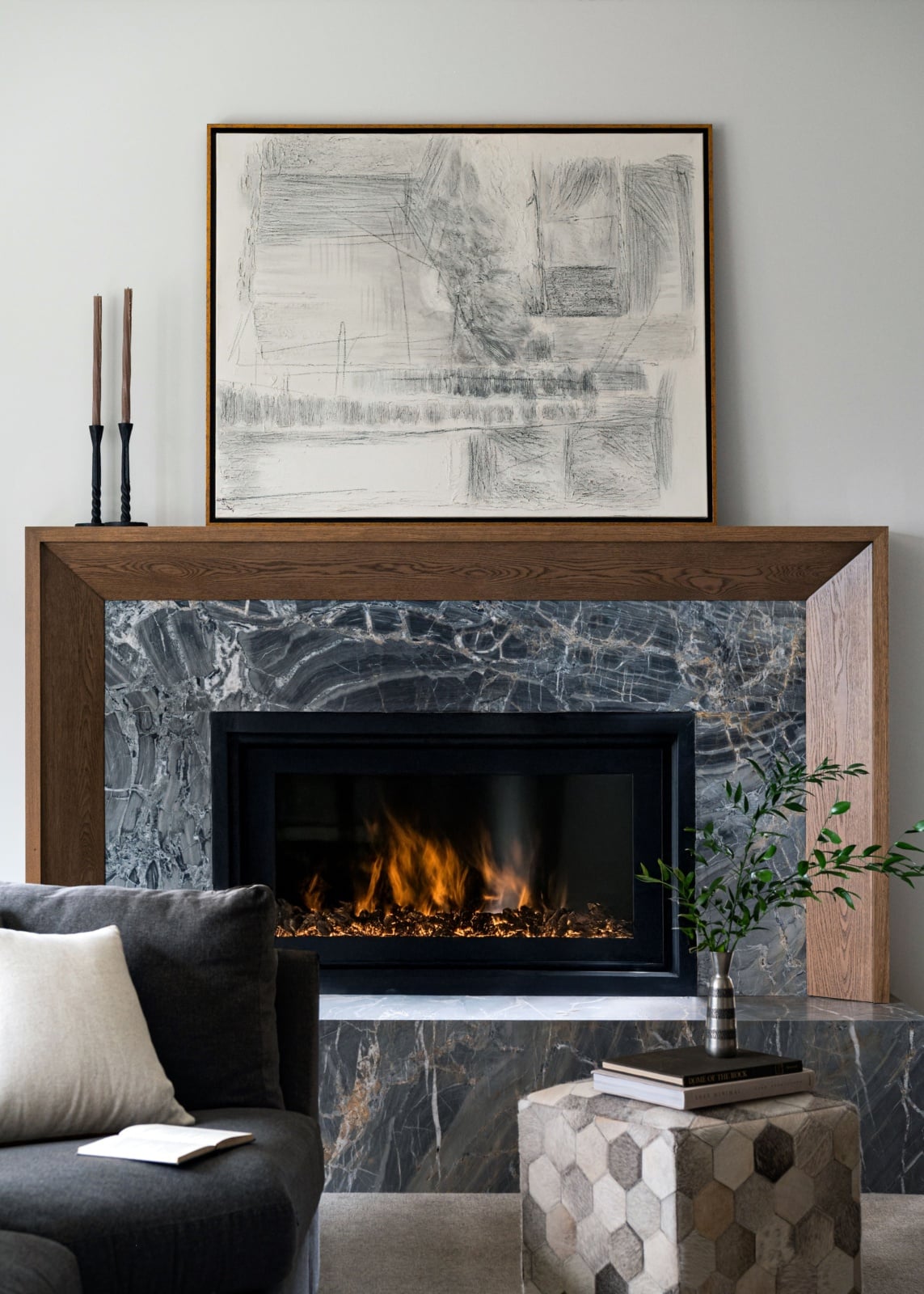
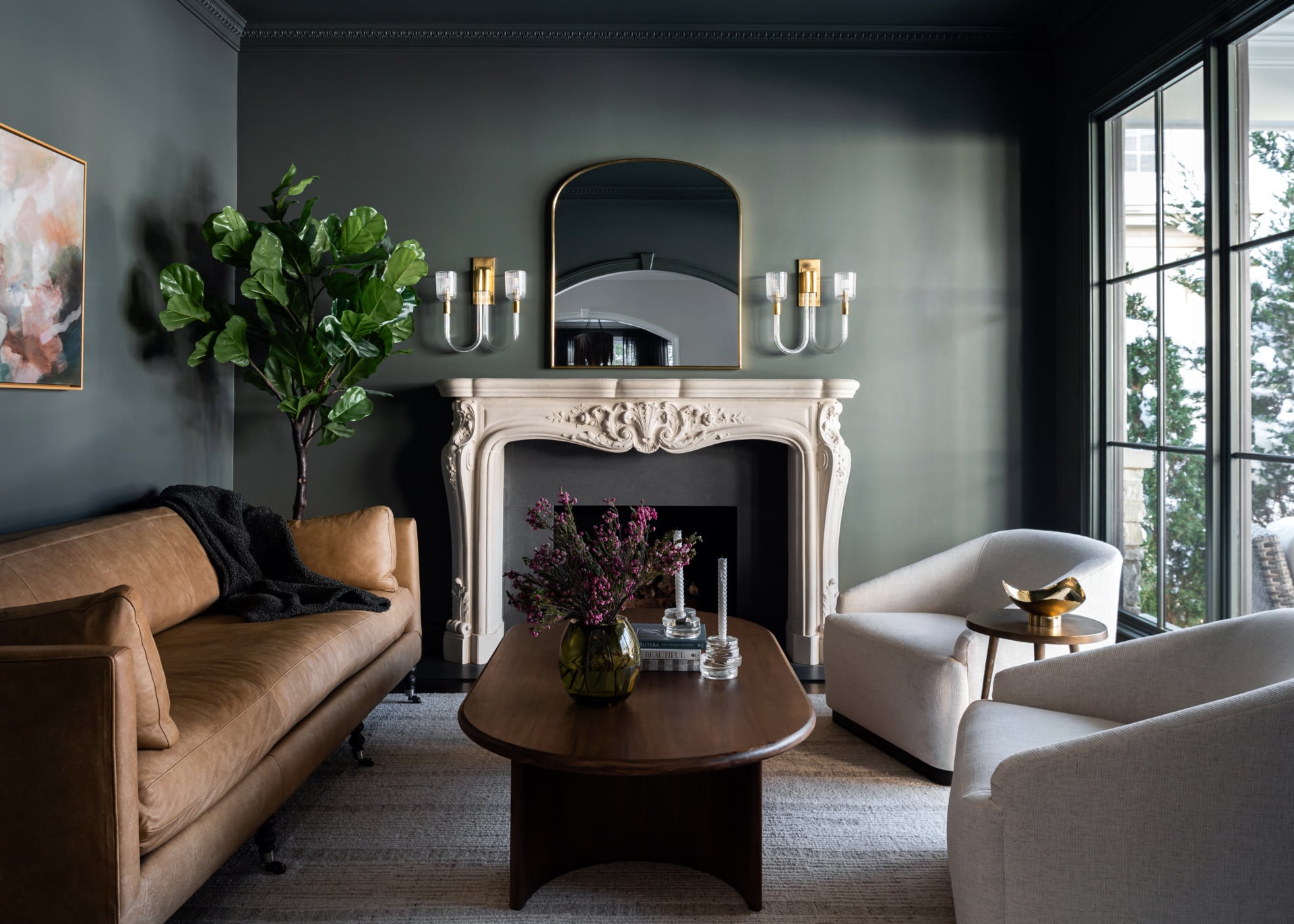
A mirror wants its bottom edge a few inches clear of the shelf, close enough to belong to it rather than floating separately, and it should reflect something worth seeing. That is the part people skip. A mirror positioned perfectly that reflects a blank ceiling has been hung for the wall rather than for the room, which is the same argument we make about mirror height everywhere else in the house.
Art follows the surround rather than the shelf, and generally wants to be somewhere between two thirds and three quarters of the mantel width. Too small is the far more common error, and on a tall wall a single larger piece beats a cluster. If the wall above is the problem rather than the fireplace, the options for filling it are worth working through first.
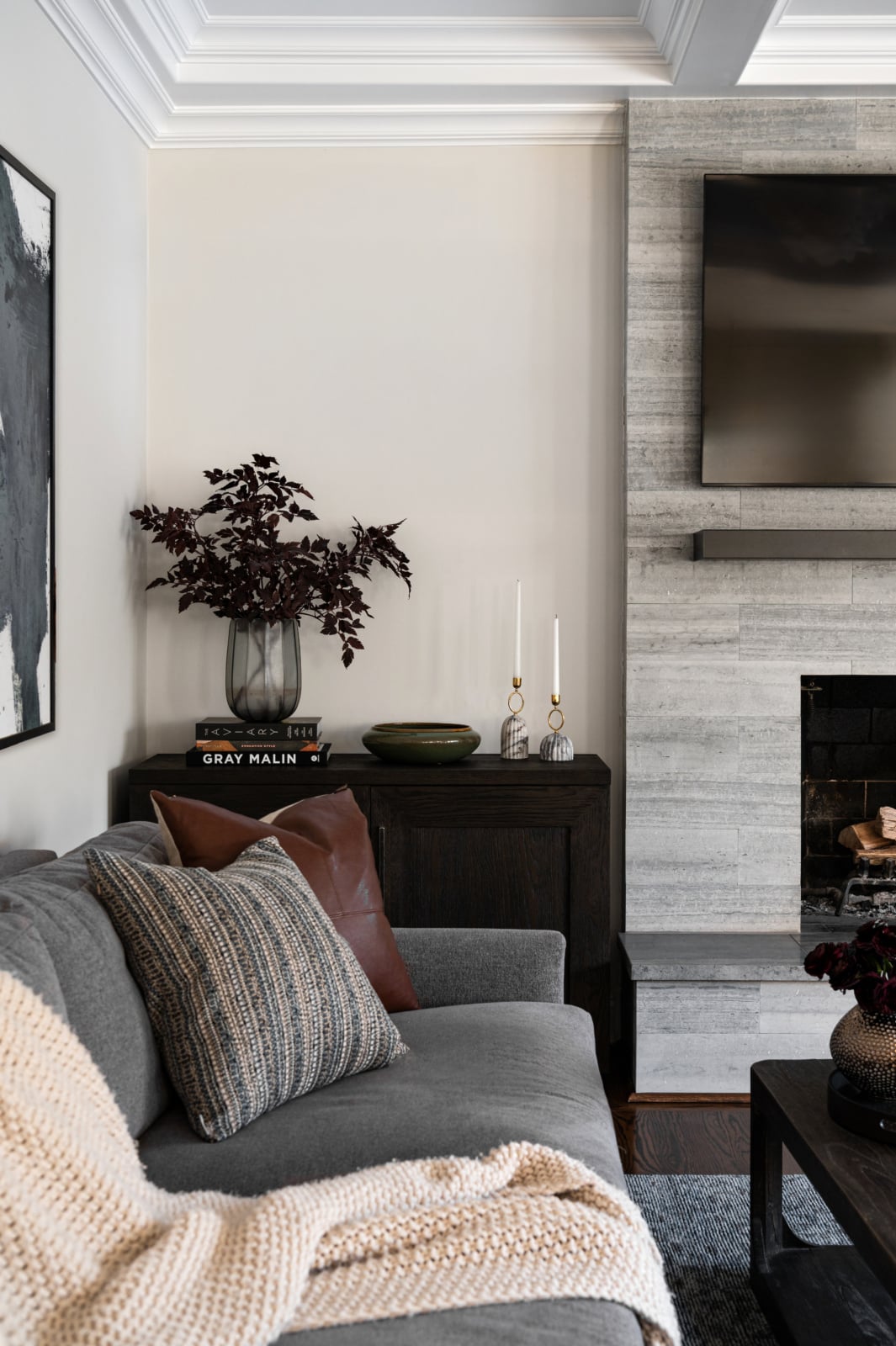
On televisions we will give you our honest position, which is that above a mantel is almost always too high for comfortable viewing. A screen centered for a seated viewer sits well below where a mantel puts it, and the neck angle is the price. It can be done, and we have done it where the room genuinely offers nowhere else, but it is a compromise rather than a solution and it is worth naming as one before the bracket goes in.
Chicago fireplaces specifically
The housing stock here creates its own version of this problem. City greystones and vintage walk-ups often still have their original fireplaces, sometimes decorative rather than working, frequently with tile or stone worth keeping and a mantel that has been changed at least once since. In those houses the original fireplace is usually the best thing in the room, and the right move is almost always to restore rather than replace.
Old buildings also hold surprises. On a 100 year old house we worked on in downtown Chicago, combining a multi unit building back into a single family home, the contractors gutted the primary bathroom and found the floor had been insulated with sand. They carried it out of the house in buckets. The hard part is usually the interesting part, and it is why we plan for discovery on any building of that age rather than assuming the drawings tell the whole story.
Out in the western suburbs the issue reverses. Larger rooms and taller ceilings in Hinsdale, Elmhurst and the surrounding towns mean a fireplace built to a standard size can look stranded on a big wall. The masonry is fine. The fireplace is simply too small for the room it is in, and the fix is scale rather than surface.
Think hard before removing character
Original tile, a carved surround, an unusual brick, a firebox with proportions nobody builds now. These are the things that make a room feel like it belongs to a particular house rather than to a particular year. Removing them takes an afternoon and getting them back is not possible.
We are not arguing for keeping everything. Some fireplaces are genuinely poor, and some were added later and add nothing. But the question is worth asking properly rather than assumed away, because the elements people most regret losing are the ones that were hardest to replace.
Chasing a fireplace that will never look dated is the wrong goal anyway. Nothing is completely timeless, and designing everything around that idea produces a room that is neutral and dull. Use what you love. Life is too short to live in a house you chose defensively.
Working through it with us
A fireplace is rarely a standalone project. It sits in a room, and the mantel height, the surround, the wall color and what hangs above it are one decision made four times. We handle it as part of the room rather than as a piece of trim, which is what full service design means in practice: the millwork drawn, the clearances confirmed with the contractor, the finishes specified and the whole thing installed together.
If you are working out where to start, our design process lays out how a project runs, and the portfolio shows how these decisions land in finished rooms. When you are ready, get in touch.
Frequently asked questions
What is the standard fireplace mantel height?
Most mantel shelves sit between 54 and 60 inches from the finished floor to the top of the shelf. On a typical firebox with an opening around 30 inches high, that works out to roughly 12 inches of clearance above the opening. Treat it as a starting range rather than a rule, because the firebox and the surround decide the final number.
What mantel height works with a 10 foot ceiling?
The same as with an 8 foot ceiling. Mantel height is set by the firebox, not the ceiling, and raising the shelf to chase a tall ceiling leaves it stranded away from the fire it belongs to. What a taller ceiling changes is the treatment above the shelf, where a taller surround, an overmantel or a larger piece of art does the work instead.
How deep should a fireplace mantel be?
Usually 5 to 7 inches of projection from the wall. Depth and height are a single decision rather than two, because a deeper shelf has to sit higher above the firebox opening to meet clearance requirements. If you want a substantial shelf, plan for it to sit higher.
How far does a mantel need to be from the firebox opening?
Far enough to satisfy the residential code, which restricts how close combustible material can sit to the opening and limits how far it can project as it gets closer. In practice a shelf of normal depth wants a full 12 inches of clearance above the opening. Local codes vary and a gas insert carries its own manufacturer’s clearances, so your contractor confirms the figure before anything is fabricated.
How high should a hearth be?
Flush with the floor reads as more current, and raised hearths run up to around 18 inches where they exist. Height here is mostly a question of era rather than function, and a raised tiled hearth is one of the fastest ways for a room to announce the decade it was last touched. Lowering one is a smaller job than reworking the surround.
How do I update a dated stone or brick fireplace?
Work out which part is actually dated before choosing a treatment. In most cases it is the mantel shelf, the hearth, the firebox trim or the wall color rather than the masonry itself, and each of those can be changed without touching the stone. If the masonry genuinely is the problem, limewash keeps the texture and paint does not.
Should I paint my brick or stone fireplace?
Only if you are prepared for it to be permanent. Paint forms a film that cannot be removed from masonry without damaging the surface, so it is a one way decision. Limewash or mineral paint gives you most of the visual change while staying breathable, keeping the texture and remaining adjustable later.
Why does my fireplace look wrong even though the stone is fine?
It is usually scale. A fireplace built to a standard size can look undersized on a large wall or in a room with a tall ceiling, and no change of material fixes that. The answer is to extend the surround, take the masonry higher or rebalance what sits around it, rather than to resurface what is already there.