
Last updated August 27, 2026
Key Takeaways
- A room with classic architecture already has a module: the height of the mouldings, the width of the bays, the size of the fireplace opening. Furniture either answers it or ignores it.
- Most furniture sold today is designed for new-build rooms with lower ceilings and no trim. In a period room it reads as undersized.
- The failure is almost never that a piece is too large. It is too small, and more often than that, too low.
- Height is the dimension nobody checks. Sofa backs, chair backs, case pieces and lamps all have to answer a taller wall.
- Fewer and larger beats several and smaller. A classic room is spoiled by scatter more reliably than by anything else.
- Check the route in before the room. In Chicago walk-ups and vestibules, the piece that suits the room sometimes cannot reach it.
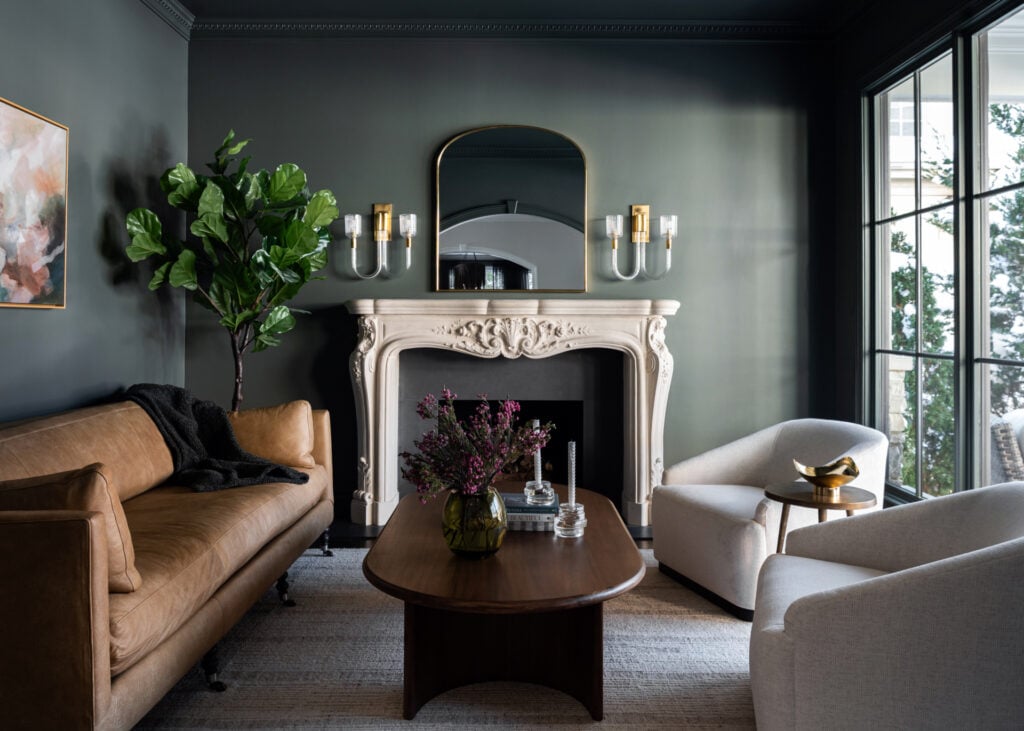
Walk into a Chicago greystone, a Hinsdale foursquare or a 1920s Oak Park colonial furnished from a contemporary showroom and something is off before you can name it. The furniture is good. The room is beautiful. Together they look like two unrelated decisions.
What has usually happened is a scale mismatch. The architecture is setting one measure and the furniture is answering a different one, and no amount of styling on top will reconcile them.
The room already has a module
Classic architecture is proportional, and it establishes a set of measurements the eye reads whether or not anyone is thinking about it.
The height of the baseboard and the depth of the crown set a weight. The height of the picture rail, where there is one, draws a line across the room that everything else is measured against. The width of a window bay defines a natural furniture zone. The fireplace opening and its surround give a reference for the size of everything nearby.
None of this is decoration. It is a system, and it was designed at a time when furniture was made to sit inside it. That is why a period room furnished with period-scaled pieces looks effortless, and why the same room with contemporary seating can feel like a stage set.
The point is not that you must use antiques. It is that the module exists, and that furniture chosen without reference to it will be fighting the room rather than sitting in it.
Furniture is now made for a different house
The reason this problem has become more common rather than less.
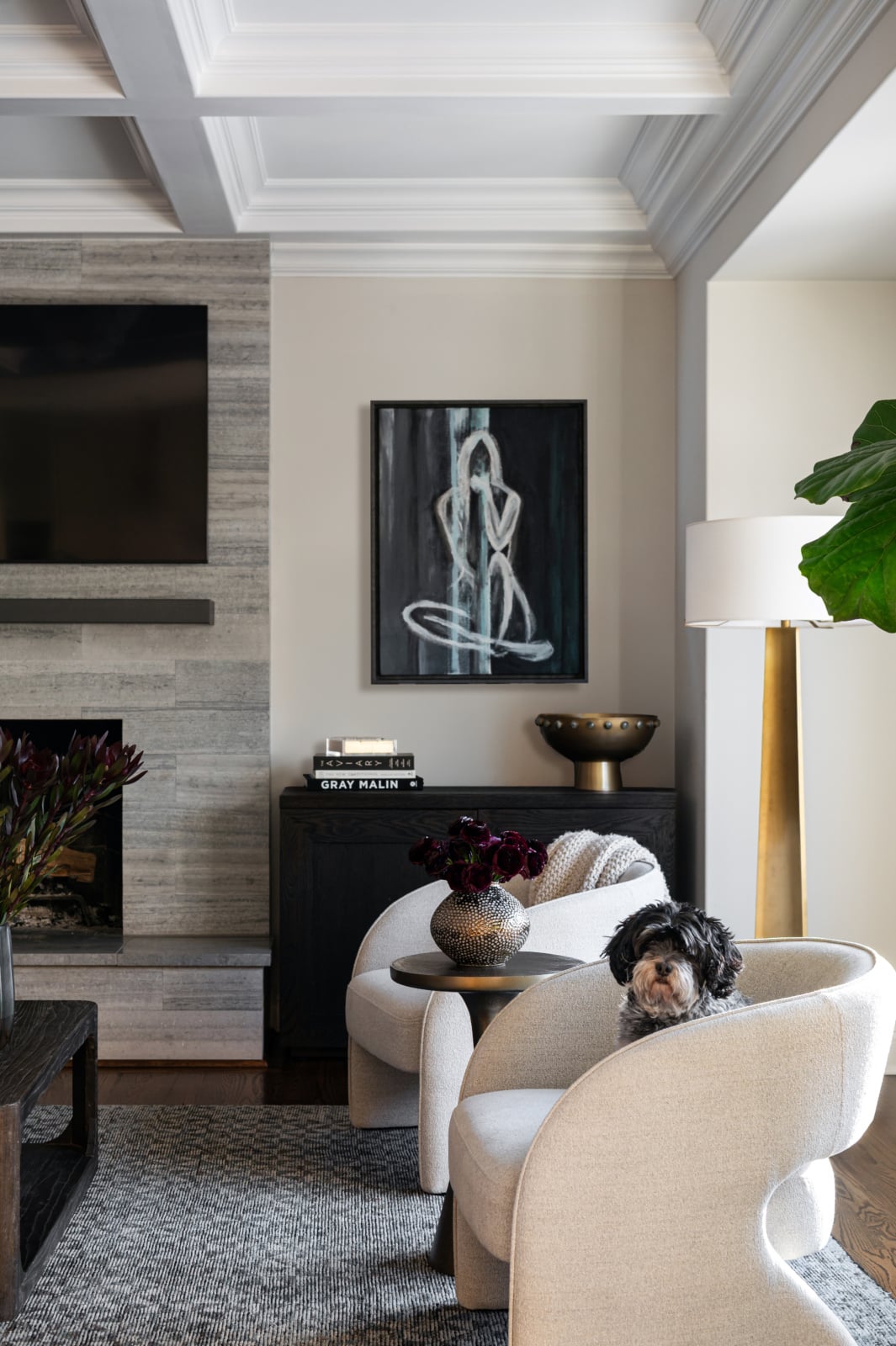
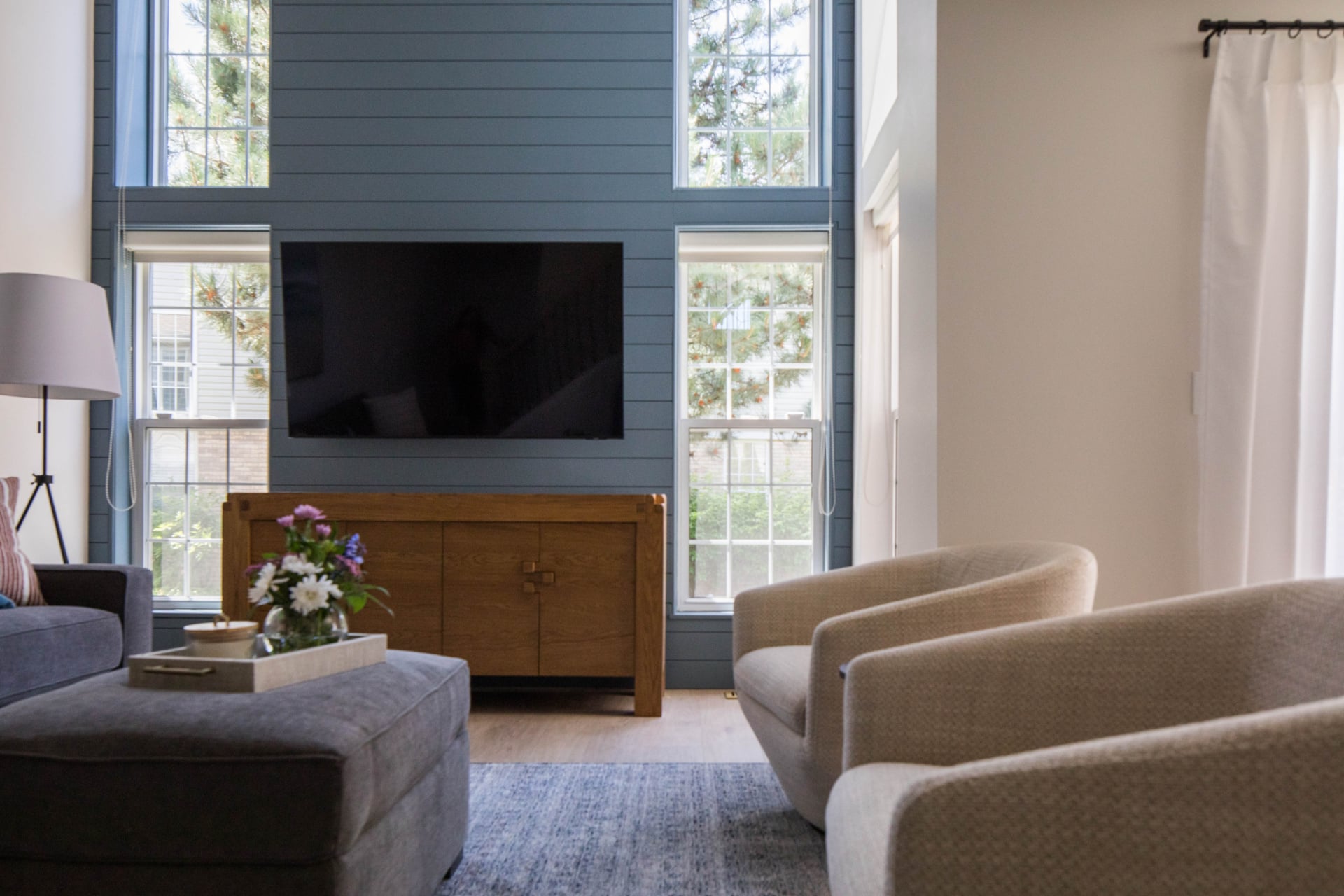
The majority of furniture manufactured today is designed for new construction: ceilings around eight or nine feet, minimal trim, open plan rooms and a low horizon. Seating has become lower and shallower in back, case pieces have become shorter, and the overall look is calibrated for a room without much vertical architecture.
Put that furniture in a room with ten foot ceilings, a deep cornice and a picture rail, and it does not read as sleek. It reads as undersized, and it leaves a band of empty wall above the seating that the eye keeps returning to.
This is worth knowing before shopping rather than after, because the pieces that suit a period room are a narrower selection than the catalogue suggests, and they are frequently found by looking at back height and overall dimensions rather than at the photograph.
The failure is almost always too small
Contrary to what people fear when they are standing in a showroom.
Almost nobody buys a sofa that is too large for a period living room. A great many people buy one that is too small, because a large piece feels risky in the shop and modest feels safe. In a generously proportioned room the modest choice looks lost, and the instinctive response is to add more furniture around it, which makes the room busier without making it feel any fuller.
Height compounds it. A low modern sofa in a tall room reads as furniture that has sunk. Raising the back height of the seating, or choosing a piece with more presence, resolves what looked like a room problem.
The reliable rule is fewer and larger. One substantial sofa and two properly sized chairs will do more for a classic room than a sofa, a loveseat, two small chairs and three occasional tables, and it will leave the architecture legible rather than crowded.
What each architectural feature is asking for
The features that most often set the scale, and what answers them.
| Feature | What it sets | What fails against it | What answers it |
|---|---|---|---|
| Ceiling above nine feet | The vertical measure for everything | Low seating, short case pieces, small lamps | Taller sofa backs, a tall bookcase or armoire, generous lamps |
| Deep crown and tall baseboard | The visual weight of the room | Fine legged furniture used throughout | A mix, with some pieces grounded to the floor |
| Picture rail | A horizontal line across every wall | Art hung ignoring it, and low furniture beneath it | Art related to the rail, and furniture with real back height |
| Fireplace and surround | The reference object for the whole room | A small mirror or a modest painting above it | Something sized to the surround, not to the mantel shelf |
| Window bays | Natural zones for furniture groups | Floating a sofa across a bay | Working with the bay, one group per zone |
| Wide cased openings | Sight lines between rooms | Tall pieces blocking the view through | Keeping the sight line clear, height at the perimeter |
| Original hardwood with a border | A defined field within the room | A rug too small to reach the furniture | A rug that at least catches the front legs of everything |
| Tall casement or double hung windows | The height of the room, repeated | Curtains hung at the frame | Hanging high and wide, so the window keeps its scale |
Read the right hand column together and it describes a consistent approach: work up the wall, keep the number of pieces low, and let the architecture stay visible.
Height is the neglected dimension
Because plans are drawn in two dimensions and rooms are not.
Almost every conversation about furniture size is about footprint: will it fit, how much floor does it take, can we get around it. Those are answerable with a tape measure and they are rarely what makes a room feel wrong.
What makes a period room feel wrong is a flat horizon. When everything stops at the same modest height, the upper half of the room is empty and the lower half is crowded. The fix is vertical: a tall bookcase or a secretary, a mirror that occupies real wall, art hung as a group that climbs, a floor lamp with genuine height, curtains taken up towards the cornice rather than to the top of the frame.
Lamps in particular are habitually too small. In a room with a high ceiling, a table lamp of ordinary size disappears, and the light it throws sits too low to do anything for the room.
The fireplace is the reference object
In a classic room it is the thing everything else is judged against.
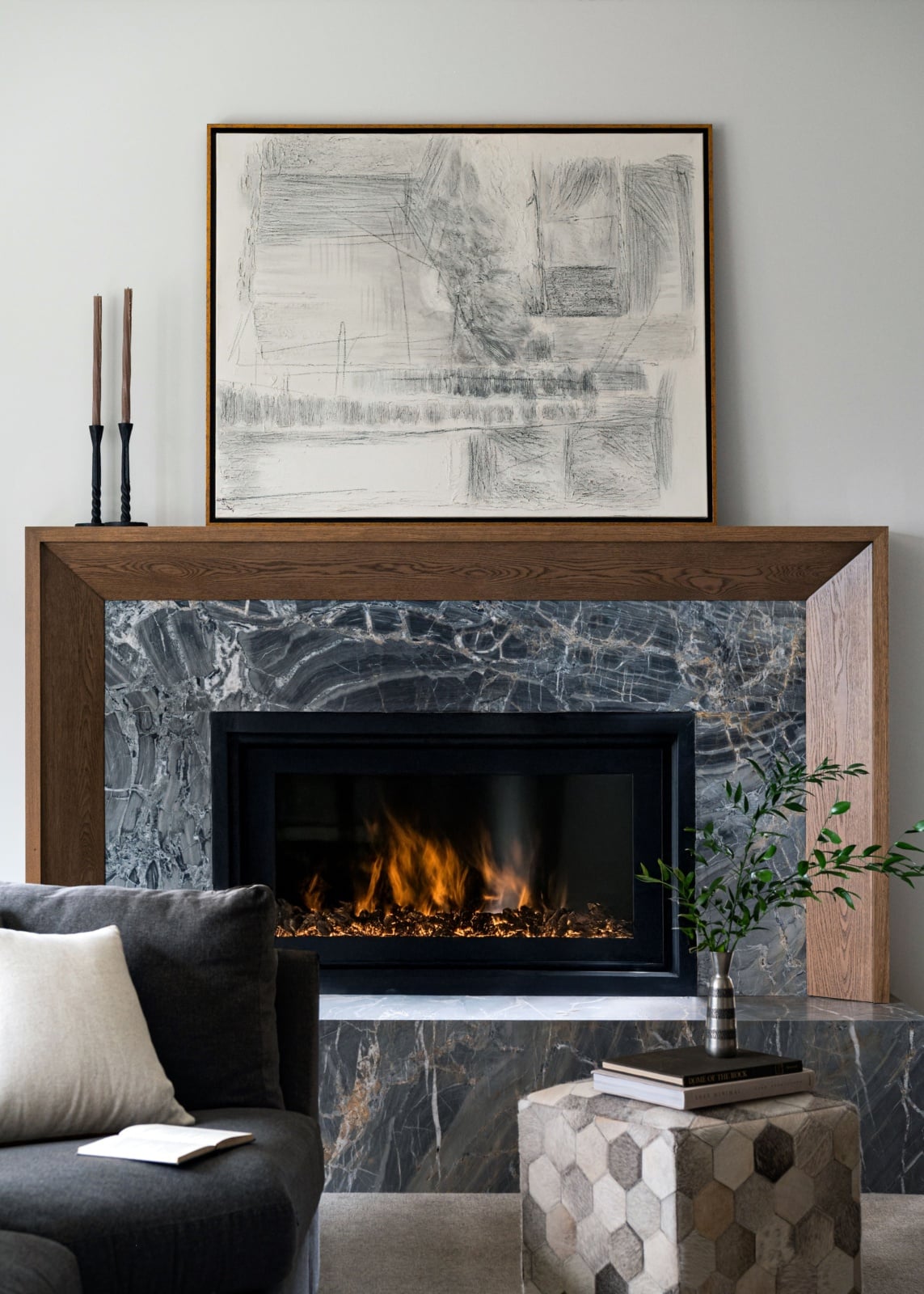
Whatever hangs above a fireplace is read in relation to the whole surround, not to the mantel shelf. This is why a mirror or a picture that looked substantial on its own so often looks apologetic once it is up. It is being compared to a much larger object.
The same applies to seating. A sofa placed opposite an imposing surround has to have enough presence to hold the other end of the room, and a modest one makes the fireplace look like it belongs to a different house.
Where the fireplace is original and elaborate, it is usually best to let it lead and to keep the rest quieter. Where it has been simplified or replaced, the furniture can carry more of the weight.
Visual weight, not just dimensions
Two pieces of identical size can behave completely differently.
A sofa on slim exposed legs and an upholstered sofa running to the floor may measure the same and read as entirely different objects. The first is light and lets the floor run underneath; the second is solid and anchors its corner of the room.
In a room with heavy architecture, all light furniture looks flimsy and all heavy furniture looks oppressive. The rooms that work have a mix: something grounded near the fireplace, something lifted where the floor should show, and a difference in weight between the pieces that face each other.
Material does the same work. Upholstery reads heavier than timber, dark reads heavier than pale, and a large piece in a receding colour can sit comfortably where the same piece in a strong one would dominate.
Getting it into the house
The practical constraint that catches people in this housing stock specifically.
Chicago and the older western suburbs are full of narrow vestibules, doors with a return immediately behind them, tight stair turns and third floor walk-ups. A generously scaled sofa is exactly the piece that will not make the turn, and it is discovered on delivery day.
Measure the route, not just the room: the width of the entry, the swing of the door, the diagonal at the turn of the stair, and the ceiling height above it. Where the route is genuinely impossible, the answer is usually a sectional that arrives in parts, a piece with legs that come off, or something made to size, and all three need to be decided at the point of ordering rather than after.
This is one of the more common reasons a room ends up under-furnished. The right piece was chosen and could not be delivered, so a smaller one was bought instead, and the room has been slightly wrong ever since.
Where to put the effort
If scale is the diagnosis, the seating is the treatment.
Dara’s view on this is consistent: upholstery is the thing worth spending more on than instinct suggests. It is what you sit in every day, it is what holds the scale of the room, and it is the piece whose failure you notice most. A sofa that has gone lumpy after three years was not a good decision, whatever it seemed at the time.
In a classic room that argument is stronger, because the seating is doing structural work in the composition. It has to hold its end of a tall space and stand up to architecture that was built to last. That is a frame and a fill specification as much as a fabric one, and it is the difference between a room that still reads correctly in a decade and one that has quietly sagged out of proportion.
Working through it with us
Scale is the thing most often wrong in a beautiful room, and it is much easier to resolve with the architecture in front of you. You can read about our design process, look through recent projects, or get in touch about your own home.
Related reading: why custom furniture, choosing a statement piece, mixing traditional and modern furniture, what sets apart a curated living room and mirror height. We work across Chicago, Hinsdale and Oak Brook.
Frequently asked questions
Why does furniture scale matter more in older homes?
Because classic architecture is proportional and sets its own module: the depth of the crown, the height of the picture rail, the width of the bays, the size of the fireplace surround. Furniture either answers those measurements or visibly ignores them.
Why does my new furniture look small in my old house?
Most furniture made today is designed for new construction with lower ceilings and minimal trim. Seating has become lower and shallower in back. In a room with ten foot ceilings and a deep cornice, that reads as undersized and leaves a band of empty wall above the seating.
Is it worse for furniture to be too big or too small?
Too small, by a wide margin. Almost nobody buys a sofa that is too large for a period living room, and a great many buy one that is too modest because large feels risky in the showroom. The instinct is then to add more pieces, which crowds the room without filling it.
What should I check besides length and depth?
Height, which is the dimension nobody measures. Sofa and chair back heights, the height of case pieces, lamp height and where the curtains are hung. A flat horizon across the room is what makes a tall space feel wrong, and it is fixed vertically.
How big should art above a fireplace be?
Sized to the whole surround rather than to the mantel shelf, because that is what the eye compares it to. A mirror or picture that looked substantial on its own frequently looks apologetic once hung, for exactly this reason.
How many pieces should a classic living room have?
Fewer and larger. One substantial sofa and two properly sized chairs will do more than a sofa, a loveseat, two small chairs and several occasional tables, and it leaves the architecture legible rather than crowded.
Do two sofas of the same size always look the same?
No. A sofa on slim exposed legs and one upholstered to the floor can measure identically and behave completely differently, one light and one anchoring. Rooms with heavy architecture need a mix, since all light looks flimsy and all heavy looks oppressive.
What should I measure before ordering a large piece?
The route, not only the room. The width of the entry, the door swing, the diagonal at the stair turn and the headroom above it. In Chicago walk-ups and vestibules this is a real constraint, and it is the reason many rooms end up under-furnished.