
Last updated August 27, 2026
Key Takeaways
- A bedroom needs three different kinds of light: bright and even for dressing, directional for reading, and very low for moving at night.
- Overhead light is the wrong answer for a room where people lie down. It is useful for dressing and almost nothing else.
- For reading in bed, the bottom of the shade should sit at roughly shoulder height when you are sitting up, about twenty to twenty-four inches above the mattress.
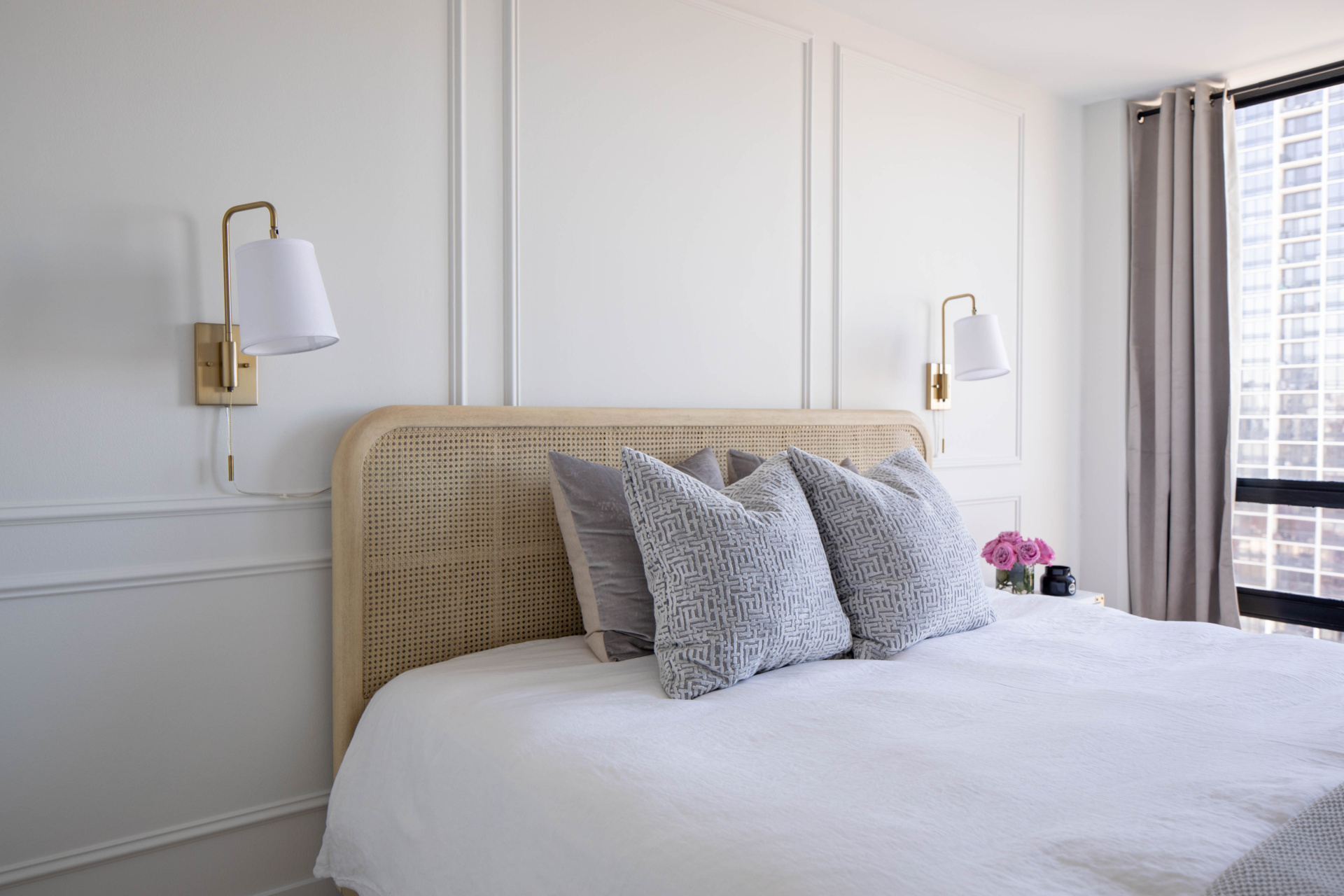
- Wall-mounted or pendant bedside lights free the nightstand and can be positioned exactly. Table lamps rarely land in the right place.
- Two-way switching, from the door and from the bed, is the single most appreciated thing in a bedroom.
- Warm and dimmable throughout. Cool light in a bedroom works against the room’s only real job.
A bedroom needs three separate lighting solutions: something bright and even for getting dressed, something directional at the right height for reading in bed, and something very low and warm for moving around at night. A single ceiling fitting does the first job adequately and the other two badly.
The two decisions that matter most are where the reading light sits and whether the lights can be switched from the bed as well as the door.
Why overhead light is the wrong default
Worth explaining, because every bedroom gets one and it is rarely the right primary source.
A bedroom is the one room in a house where people spend significant time lying down, looking up. A fitting in the middle of the ceiling is then directly in your field of view, and even switched off it is the thing you are looking at. Switched on, it lights you from above at the least flattering angle, and it lights the whole room when you almost never want the whole room lit.
It is genuinely useful for one thing: getting dressed, where you want even light and enough of it to tell navy from black. That is a real requirement and worth serving.
The mistake is treating that fitting as the room’s lighting rather than as one of three, and then wondering why the bedroom feels like a hotel corridor in the evening.
The reading light, and the height nobody gets right
The single most useful specification in a bedroom, and it is almost always slightly wrong.
For reading in bed you want light coming from behind and slightly above your shoulder, falling on the page without shining in your eyes or in the eyes of the person beside you. That means the bottom of the shade needs to sit at roughly shoulder height when you are sitting up against the headboard, which in practice is somewhere around twenty to twenty-four inches above the mattress surface.
Too high and the light spills across the whole bed and into your partner’s face. Too low and the shade blocks the page and lights only the sheets.
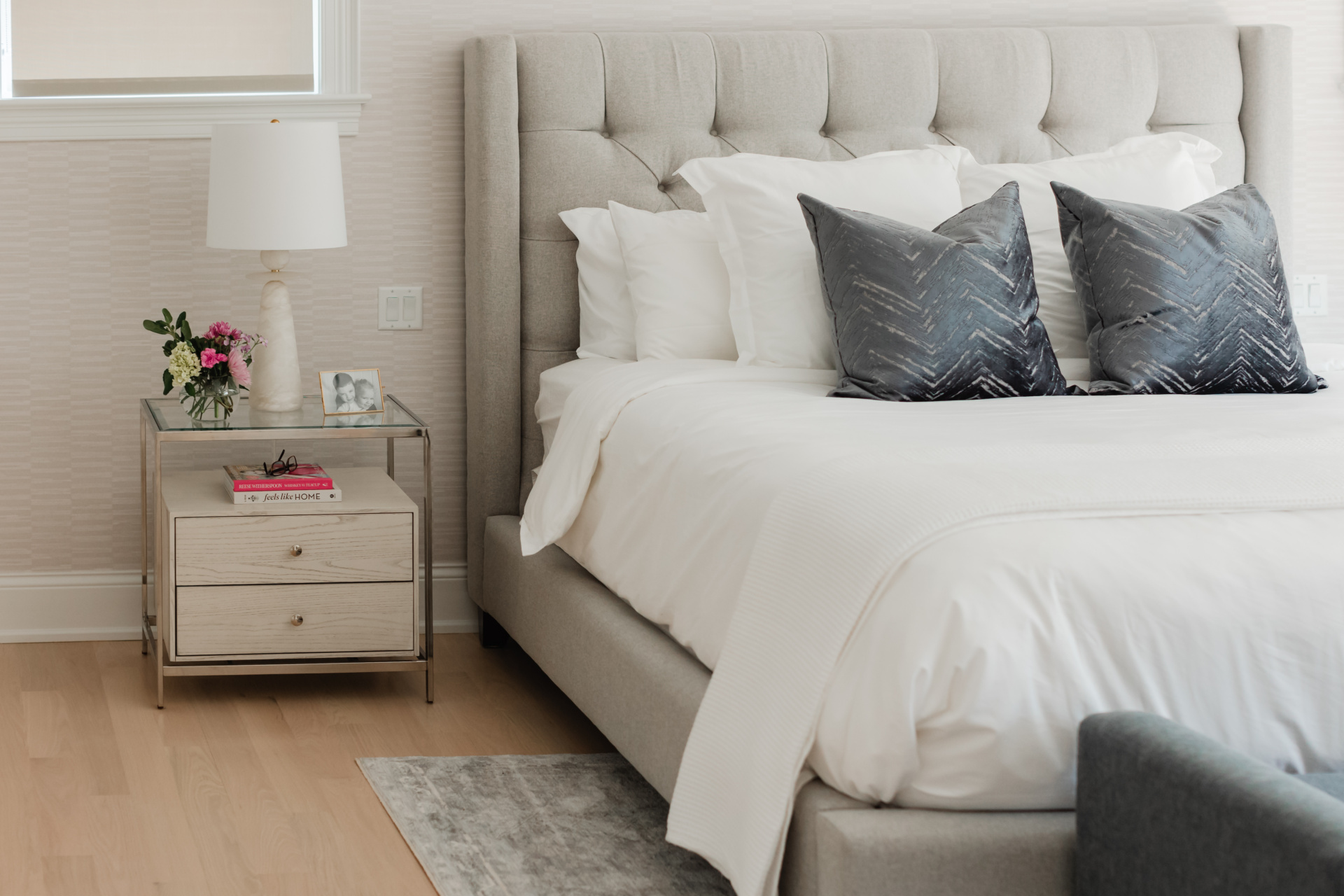
Because the correct height depends on the mattress and the headboard, it has to be worked out for the actual bed rather than assumed. That is one reason wall-mounted fittings tend to beat table lamps: they can be positioned exactly, whereas a lamp sits wherever the nightstand puts it.
Directional matters as much as height. An adjustable arm or a shade that throws light downward lets one person read while the other sleeps, which is the whole point.
The three jobs, and what serves each
Specified separately, because they genuinely are separate.
| Job | What it needs | Best served by | Avoid |
|---|---|---|---|
| Getting dressed Even light, enough of it to distinguish colours. |
Bright, general, not directional | A ceiling fitting, or wall lights if the room is small | Relying on bedside lamps, which leave shadows |
| Reading in bed Directional light at shoulder height. |
Contained, so it does not disturb anyone beside you | Wall-mounted adjustable fittings or a pendant beside the bed | A tall table lamp with a wide shade |
| Moving at night Very low warm light, minimal. |
Enough to see, not enough to wake you fully | A dimmed circuit, or low-level lighting near the floor | Any bright light on a single switch |
| Dressing table or mirror Light on the face rather than the top of the head. |
Even, from both sides | Sconces either side at roughly face height | A downlight above, which shadows the eyes |
| Wardrobe interiors Light inside the storage. |
Sees what is actually in there | Lit shelving or a fitting inside the cupboard | Relying on room light, which you stand in front of |
| Atmosphere Low pools rather than general level. |
What makes the room feel restful in the evening | Lamps, dimmed, at different heights | One central fitting on a dimmer, which is still one direction |
Each row is a separate circuit if possible. A bedroom where everything comes on together has one setting, which is the problem being solved.
Two-way switching
The detail people appreciate most and remember to ask for least.
Being able to switch the lights from the door and from the bed removes the single most irritating thing about a bedroom: getting into bed and then having to get out again to turn the light off, or crossing a dark room to reach the bed.
It is straightforward to specify and disruptive to add afterwards, since it needs the wiring at first fix. In a renovation this belongs in the earliest lighting conversation.
Where rewiring is not on the table, there are wireless and smart alternatives that achieve the same result, and they are worth considering rather than accepting the inconvenience for the life of the room.
Two people, two sides, two independent reading lights is the other half of it. Shared switching for bedside lights means one person’s reading is the other person’s problem.
Warm, and dimmable to very low
Two specifications that matter more in a bedroom than anywhere else.
Colour temperature should be warm, 2700K or lower. Cooler light is alerting, which is precisely the opposite of what a bedroom is for, and the difference is genuinely felt in the hour before sleep.
Dimming needs to go lower than most schemes allow. A bedroom wants a setting that is barely on, enough to cross the room safely without becoming properly awake. Many fittings dim adequately down to a moderate level and then flicker or cut out, so the combination of lamp, driver and dimmer needs to be specified together rather than assumed.
Ask about the bottom of the dimming range specifically. It is the part that fails most often and the part a bedroom needs most.
What to do about the ceiling fitting
Since most bedrooms have one, the question is what it should be.
If it is providing the dressing light, it can be plain and unremarkable and that is fine. Its job is functional and it should be on its own switch, used when needed and off the rest of the time.
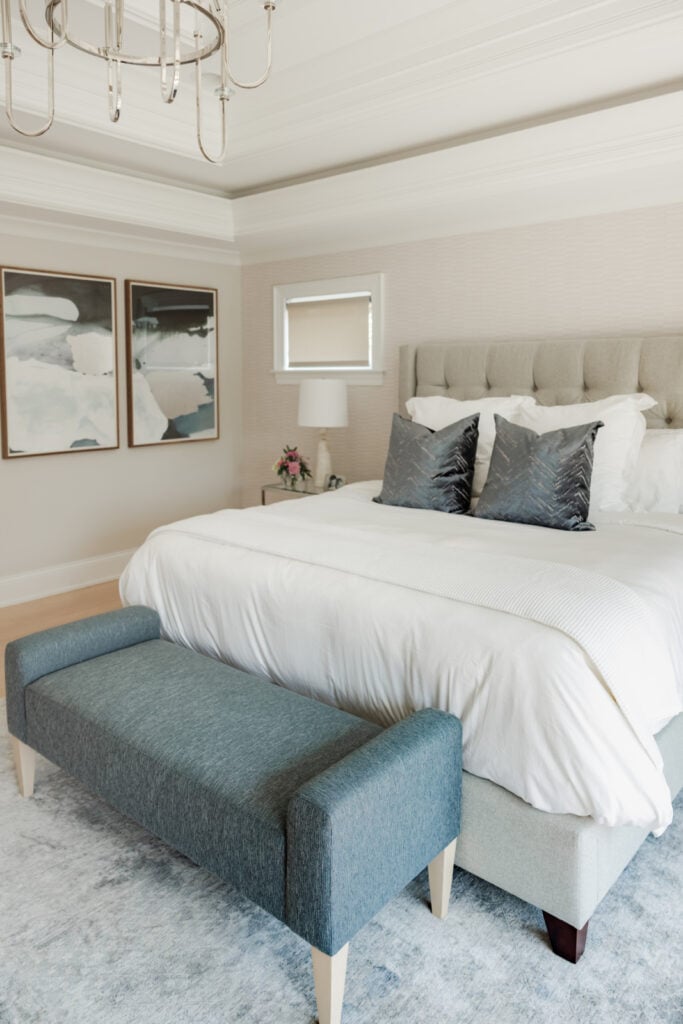
If the room has good ceiling height and the fitting is going to be looked at from the bed, it is worth it being something you like. A pendant or small chandelier in a bedroom is one of the few places where a decorative fitting is genuinely seen at leisure, which is an argument for spending on it.
What does not work is a grid of downlights across a bedroom ceiling. It flattens the room, it puts lights directly above the bed, and it is the arrangement that most makes a bedroom feel like accommodation rather than a room in a house.
Where downlights are already there, moving them out of the sleeping zone and adding wall lights and lamps changes the room considerably without rewiring the whole ceiling.
Curtains are part of the lighting
Easy to treat separately and genuinely the same problem.
The lighting scheme controls the room at night; the window treatment controls it in the morning. A bedroom with excellent artificial lighting and no blackout still wakes you at five in June.
A blind inside the reveal does the actual light blocking, and curtains supply softness, warmth and the visual weight the wall needs. Asking curtains alone to deliver darkness is what produces the complaint that a room is never properly dark, particularly where the bed sits in front of the window.
The full argument is in types of pleats for curtains and beds in front of windows.
Chicago bedrooms specifically
Two local factors that change the specification.
Winter days are short and heavily overcast, so bedrooms here are used under artificial light for a large share of the year, at both ends of the day. That raises the value of getting the layers right and of specifying lamps with good colour rendering, since for months they are the only thing showing the colours in the room.
Summer is the opposite problem. Early sunrise and long evenings make blackout more important than in a lower latitude, particularly in east-facing rooms, which is worth deciding at the same time as the lighting rather than afterwards.
In older city apartments there is a third factor: original ceilings, sometimes with plasterwork worth keeping. Cutting downlights into those is a poor trade, and wall lights and lamps generally give a better result as well as leaving the ceiling intact.
Working through it with us
Bedroom lighting is decided at first fix, months before anybody sees the room, which is why it so often ends up as one fitting and two lamps. Settling it alongside the furniture layout is what makes the difference. You can see how we work on our design process page, look through recent projects, or get in touch.
Related reading: planning a lighting layout, beds in front of windows, types of pleats for curtains, choosing throw pillows and decorating a room without windows. We work across Chicago, Hinsdale and Elmhurst.
Frequently asked questions
How should a bedroom be lit?
With three separate solutions: something bright and even for dressing, something directional at the right height for reading in bed, and something very low and warm for moving around at night. A single ceiling fitting does the first adequately and the other two badly.
How high should a bedside reading light be?
The bottom of the shade should sit at roughly shoulder height when you are sitting up against the headboard, which is usually about twenty to twenty-four inches above the mattress. Too high and it spills across the bed; too low and the shade blocks the page.
Are wall lights better than bedside lamps?
Generally yes. Wall-mounted fittings can be positioned exactly at the right height for the actual bed, whereas a table lamp sits wherever the nightstand puts it. They also free the surface, which in a small bedroom matters.
Is overhead lighting bad in a bedroom?
As the primary source, yes. A bedroom is where people lie down looking up, so a ceiling fitting is directly in your field of view and lights you from the least flattering angle. It is genuinely useful for getting dressed and for very little else.
What is two-way switching and do I need it?
Switching the same lights from the door and from the bed. It removes the most irritating thing about a bedroom, which is getting into bed and having to get out again to turn the light off. It needs wiring at first fix, so it belongs in the earliest lighting conversation.
What colour temperature suits a bedroom?
Warm, at 2700K or lower. Cooler light is alerting, which is the opposite of what a bedroom is for, and the difference is genuinely noticeable in the hour before sleep.
Why do my bedroom lights not dim low enough?
Because the combination of lamp, driver and dimmer was not specified together. Many fittings dim to a moderate level then flicker or cut out, and a bedroom needs a setting that is barely on. Ask about the bottom of the dimming range specifically.
Should a bedroom have recessed downlights?
A grid across the ceiling is the worst arrangement for a bedroom, since it flattens the room and puts lights directly above the bed. Where they already exist, moving them out of the sleeping zone and adding wall lights and lamps changes the room without rewiring the ceiling.