

Last updated August 27, 2026
Key Takeaways
- Putting the bed in front of a window is not a mistake. It is often the only arrangement that respects the proportions of the room.
- Centre the bed on the window rather than on the wall. If the two disagree, the window wins almost every time.
- Leave four to six inches between the headboard and the glass so the drapery can hang and you can still make the bed.
- Mount the drapery track at ceiling height and wider than the opening, so the fabric stacks clear of the bed rather than behind it.
- Solve blackout with a roller or roman blind inside the reveal. Curtains alone will not do it with a bed in the way.
- A low or open headboard keeps the window readable. A tall solid one turns the window into a backdrop you cannot see.
A bed in front of a window works, and in a lot of rooms it is the correct layout rather than a compromise. The four things to solve are draught and cold at the head of the bed, blackout at head height, a headboard that does not swallow the window, and drapery mounted so it stacks clear of the bed. Solve those and the arrangement is not a problem at all.
The rule against it exists because the four issues above are real and are usually left unsolved. The rule itself is not the useful part.
Why the layout keeps coming up
Bedrooms are usually smaller than the furniture in them wants, and a bed is the largest object most people own. Once you have allowed for door swings, a wardrobe, a route to the bathroom and space to walk both sides, the number of walls that can actually take a bed is often one. Frequently that wall has the window in it.
The alternative is usually worse: a bed jammed against a side wall so one person climbs over the other, or floating awkwardly in a way that leaves no wall for anything else. Given the choice between an inconvenient window and a room that does not function, take the window.
The layout is also common in older housing, where windows were placed for daylight and cross-ventilation long before anyone was arranging a king-size bed underneath them.
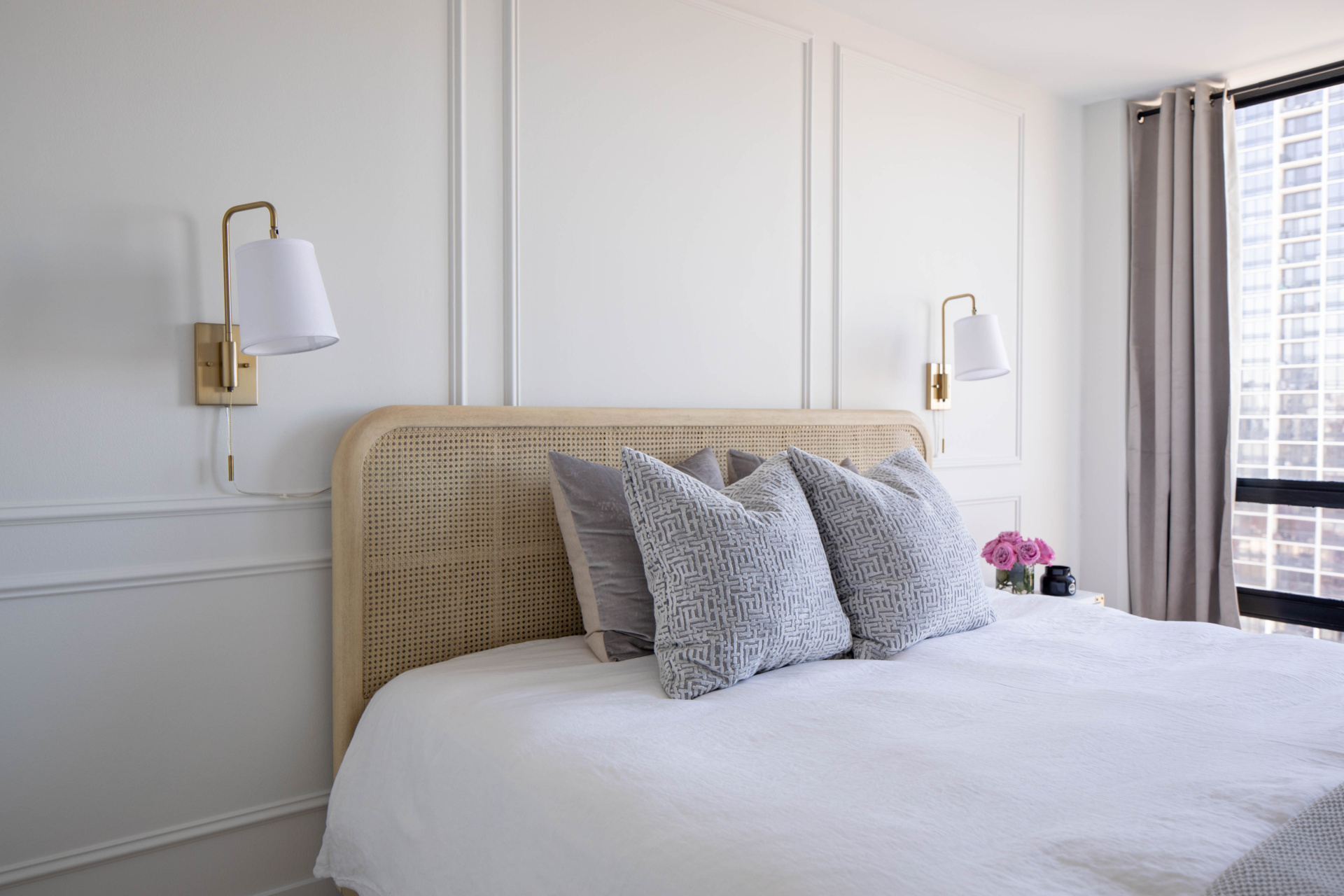
Centre on the window, not the wall
This is the decision that most often gets made backwards, and it is very visible once you know to look.
If the window is centred in the wall, the question does not arise. If it is off-centre, which is common, you have to choose what the bed lines up with. People almost always centre the bed on the wall, because that is what a plan drawing suggests, and the result is a bed that sits visibly off-centre against the window behind it.
Centre it on the window instead. The window is the strongest architectural element in that wall, it has a frame that draws a rectangle around whatever sits in front of it, and your eye reads the relationship between the bed and the window long before it notices the gap at either end of the wall. Uneven bedside space is much less noticeable than a bed that is off-centre in its own frame.
Where the two are badly misaligned, asymmetric bedsides are the answer: a table on one side and something narrower or wall-mounted on the other.
The four problems, and what actually fixes them
Each of these has a real solution. None of them require moving the bed.
| Problem | The fix | Why it works | What people do instead |
|---|---|---|---|
| Cold and draught at the head Upholstered headboard, lined drapery, and a gap behind the bed. |
Glass is the coldest surface in the room and it is now next to your head | An upholstered headboard insulates and the drapery adds a second layer | Push the bed hard against the glass, which makes it worse |
| Light at head height Roller or roman blind inside the reveal, behind the bed. |
Curtains alone cannot seal around a bed that is in the way | A blind sits flat in the opening and is unaffected by the bed | Rely on curtains, then wake at five in June |
| Headboard blocking the window Low headboard, or an open frame such as cane or slats. |
You keep the daylight and the window still reads as a window | Light passes through or over rather than being stopped | A tall solid headboard, which turns the window into a wall |
| Drapery with nowhere to stack Track at ceiling height, extended well past the opening. |
The fabric gathers on the wall either side rather than behind the bed | Nothing is trapped, and the window reads taller | A pole the exact width of the window, so curtains bunch behind the bed |
| Making the bed Four to six inches of clearance behind the headboard. |
Sounds trivial and is the thing people complain about daily | You can reach behind to tuck bedding and clean | Bed pushed flush, so the bedding is untuckable |
| Condensation on the glass Air gap behind the bed, plus ventilation. |
Blocked airflow against cold glass produces damp and mould | The gap lets air move across the window face | Sealing the bed against the window and finding mould in spring |
These compound. A tall headboard pushed flush against a single-glazed window with a too-narrow curtain pole produces all six at once.
Headboard height is the whole aesthetic question
Everything else on this list is technical. This one decides whether the room looks considered or looks like the bed ended up there by accident.
A tall solid headboard in front of a window is fighting the architecture. It blocks the lower part of the glass, casts the bed into its own shadow and makes the window look like something you are hiding. From the doorway it reads as an obstruction.
What works is a headboard that lets the window stay legible: a low upholstered one that sits below the sill, or an open frame in cane, spindles or slats that you can see through. If the window is high enough, a tall headboard can work by finishing cleanly below the glass, but that requires the sill to be higher than most.
Scale is the failure to watch. A headboard sized for a large room, placed in front of a modest window, unbalances everything, and no amount of styling recovers it.
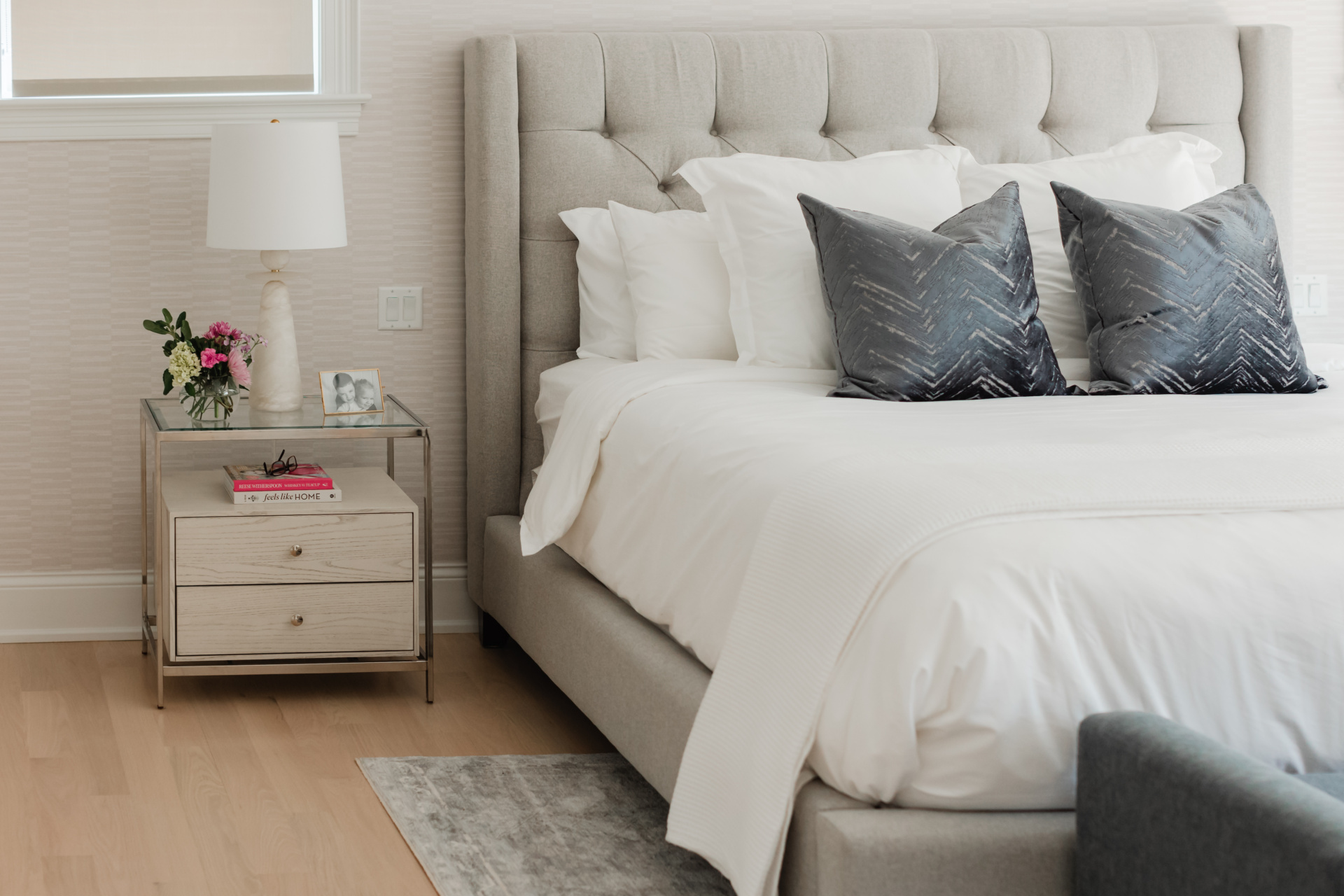
Getting the drapery right
Window treatment is where this layout is usually lost, and it is entirely solvable at specification stage.
Mount the track at or near the ceiling rather than just above the frame. It makes the window read taller, it lifts the drapery clear of the bedhead, and it gives a cleaner line across the whole wall. Then extend the track well beyond the opening on both sides, so when the curtains are open the fabric stacks on the wall rather than piling up behind the bed where it will be crushed.
Behind that, a blind inside the reveal does the actual light control. Curtains give you softness, warmth and the visual weight the wall needs. The blind gives you darkness. Asking curtains to do both around a bed is what produces the complaint that the room is never properly dark.
Choose a fabric that can take being brushed against, because it will be, every day.
Radiators, sills and the practical furniture
Three physical obstacles that decide what is possible, all worth checking before anything is ordered.
A radiator under the window is the common one. A bed pushed in front of it blocks the heat and, in an older house, can bake the mattress edge while the rest of the room stays cold. Sometimes the radiator can move. Where it cannot, the bed needs to sit clear of it, which eats into the room more than people expect.
A deep sill can be an advantage: it becomes the shelf the bedside tables cannot be. A shallow one usually just interferes with the headboard.
Bedside lighting changes too. Table lamps compete with the window and clutter a wall that is already busy. Wall-mounted or pendant reading lights keep the surfaces clear and, more usefully, do not have to be moved every time the curtains are drawn.
When not to do it
It is worth being straight about the cases where the objection holds.
A window that opens inward, or a fire escape window that must stay clear, rules it out on safety grounds and that is not negotiable. Single glazing in a cold climate makes the head of the bed genuinely unpleasant in winter, and while an upholstered headboard and lined drapery help, they do not fully compensate. And a window running to floor level leaves nothing for a headboard to sit against, which usually reads badly.
Short of those, the arrangement is a design problem rather than a rule violation. Plenty of very good bedrooms have the bed under the window, and the ones that fail are the ones where nobody addressed the drapery or the blackout.
Chicago bedrooms specifically
Local housing stock produces this constantly, in two different forms.
Vintage city apartments and greystones tend to have tall windows placed centrally in the outside wall, often with a radiator beneath and original single glazing behind a storm window. Here the cold at head height is a real consideration through a Chicago winter, and the upholstered headboard is doing insulation work as well as visual work. Ceiling-mounted drapery is particularly effective in these rooms because the ceilings are generous.
Newer suburban bedrooms more often have wider, lower windows and a bed wall that is genuinely the only option once the closet and bathroom doors are accounted for. The issue there is rarely cold and almost always light, because those windows are large and frequently face east. Blackout at the reveal matters more than anything else on the list.
Working through it with us
Bedroom layouts are settled at the space planning stage, before a single item is chosen, and this is one of the arrangements where the order of decisions really matters: plan, then window treatment, then furniture. You can see how we work on our design process page, look through recent projects, or get in touch about your own home.
Related reading: types of pleats for curtains, a designer’s guide to curtain lengths, paint colors for north facing rooms, choosing throw pillows and decorating a room without windows. We work across Chicago, Hinsdale and Naperville.
Frequently asked questions
Is it bad to put a bed in front of a window?
No. It is often the only arrangement that respects the proportions of the room, and the objections to it are all solvable. Address draught at the head of the bed, blackout at head height, headboard height, and drapery that stacks clear of the bed, and the layout works well.
Should a bed be centred on the window or on the wall?
On the window. The window frame draws a rectangle around whatever sits in front of it, so a bed that is off-centre within that frame is far more noticeable than uneven space at the ends of the wall. Where the two disagree badly, use asymmetric bedside tables.
How much space should be left between the bed and the window?
Four to six inches behind the headboard. It lets the drapery hang properly, allows air to move across the cold glass so condensation does not form, and means you can reach behind the bed to tuck bedding in. Pushing the bed flush is the most common regret.
How do you get blackout with a bed in front of the window?
Fit a roller or roman blind inside the window reveal, behind the bed, and use curtains for softness and warmth rather than for darkness. Curtains cannot seal around a bed that is in the way, which is why rooms in this layout are so often not properly dark.
What kind of headboard works in front of a window?
A low upholstered headboard that sits below the sill, or an open frame in cane, spindles or slats that light passes through. A tall solid headboard blocks the lower glass, shadows the bed and makes the window look like something you are concealing.
How should curtains be hung when the bed is under the window?
Mount the track at or near the ceiling and extend it well past the opening on both sides, so the fabric stacks on the wall rather than piling up behind the bed. Ceiling mounting also makes the window read taller and lifts the drapery clear of the bedhead.
Is a bed in front of a window cold in winter?
It can be, because glass is the coldest surface in the room and it is now beside your head. An upholstered headboard, lined drapery and a gap behind the bed all help considerably. With single glazing in a Chicago winter it remains a genuine consideration rather than something design alone solves.
What about a radiator under the window?
Check it before ordering anything. A bed pushed in front of a radiator blocks the heat into the room and can overheat the edge of the mattress. Either move the radiator, or set the bed clear of it, which takes more floor space than most people allow for.