
Last updated August 27, 2026
Key Takeaways
- Buy the insert one size larger than the cover. A 22 inch insert in a 20 inch cover is the single biggest difference between limp and full.
- Down or a good down alternative holds shape and can be plumped. Polyester inserts flatten and never recover.
- Fewer and larger reads as considered. Many small pillows read as clutter.
- Scale to the furniture. A deep sofa needs larger pillows than a shallow one, and a bed needs larger again.
- If you have to move pillows to sit down, there are too many of them.
- Vary the texture more than the pattern. Texture is what makes a quiet arrangement look deliberate.
The most useful rule about throw pillows has nothing to do with colour or pattern: buy the insert one size larger than the cover. A 22 inch insert in a 20 inch cover gives you a full, firm pillow with defined corners, while a 20 inch insert in the same cover looks limp within a week.
After that, choose down or a good down alternative rather than polyester, use fewer and larger pillows than feels right, and vary texture more than pattern. Almost everything else people worry about matters less than these.
Size the insert up
This is the difference between arrangements that look resolved and arrangements that look tired, and it is almost never mentioned.
Covers are sold in nominal sizes and inserts are sold to match, so the obvious thing is to buy both at 20 inches. The result is a pillow that is slightly underfilled from the start. The corners are soft, the face sags, and after a few weeks of use it looks deflated no matter how often it is plumped.
Put a 22 inch insert into that same 20 inch cover and the cover is filled properly. The corners are defined, the face is taut, and it holds its shape between uses. On an 18 inch cover use a 20 inch insert, on a 24 use a 26.
It is the least glamorous purchase in the room and it changes the result more than the fabric does. If a set of pillows you already own looks sad, this is almost certainly why, and it is fixable without replacing the covers.

What the insert is filled with
The second decision, and the one that determines whether the pillow still looks right in two years.
Feather and down inserts compress when leaned on and can be shaken back into shape. That is exactly what you want in something meant to be used: it flattens while you sit against it and recovers when you get up. Down also gives the soft, slightly slumped look that reads as comfortable rather than staged.
Polyester fibre inserts do the opposite. They start firm, then mat down permanently, and once matted no amount of plumping helps because the fibres have tangled rather than compressed. A pillow with a polyester insert has a fairly short life as a good-looking object.
A down alternative made from finer fibres sits between the two and is the sensible choice in a household with allergies. It is worth asking specifically rather than accepting whatever comes with the cover, which is usually whichever option costs the seller least.
Fewer and larger
The instinct is to add pillows until the sofa looks full. It rarely improves past the first few.
A small number of generously sized pillows reads as deliberate. A large number of small ones reads as clutter, and it also makes the sofa itself look smaller, because the eye divides the seat into a row of little objects rather than one substantial piece.
On a standard three-seat sofa, two large pillows in the corners and one smaller in the middle is usually enough. On a sectional, three or four total, grouped rather than spread evenly along the whole length. On a bed, the pillows you sleep on plus two or three decorative, not the six or eight that appear in photographs of hotel rooms.
The practical test settles it. If anybody has to move pillows before sitting down, there are too many. A sofa is for sitting on.
Sizes and combinations that work
Starting points rather than rules, and all of them scale with the furniture.
| Furniture | Pillow sizes | How many | Notes |
|---|---|---|---|
| Three-seat sofa, standard depth The most common arrangement. |
Two at 22 inches, one at 20 or a lumbar | Three total | Corners plus one off-centre reads better than a symmetrical row |
| Deep sofa or sectional Deeper seats swallow small pillows. |
Two or three at 24 inches, plus a lumbar | Three or four total, grouped | Anything under 20 inches disappears against a deep back |
| Loveseat or small sofa Limited width. |
Two at 20 inches | Two total | A third makes the seat unusable |
| Armchair One pillow, or none. |
One lumbar, around 12 by 20 | One | A square pillow in a chair usually gets moved to sit down |
| Bed, queen Layered from back to front. |
Two 26 inch Euro, two 20 inch, one lumbar | Three decorative in front of the sleeping pillows | Euro squares at the back give the arrangement its height |
| Bed, king Wider, so the back layer grows. |
Three 26 inch Euro, two 20 inch, one lumbar | Three decorative | Scale up the back row rather than adding more small ones |
Every size here assumes the insert is one size larger than the cover. Sizing the cover correctly and the insert incorrectly gets you nowhere.
Texture before pattern
Most advice on combining pillows is about mixing patterns at different scales. Texture does more work and is much harder to get wrong.
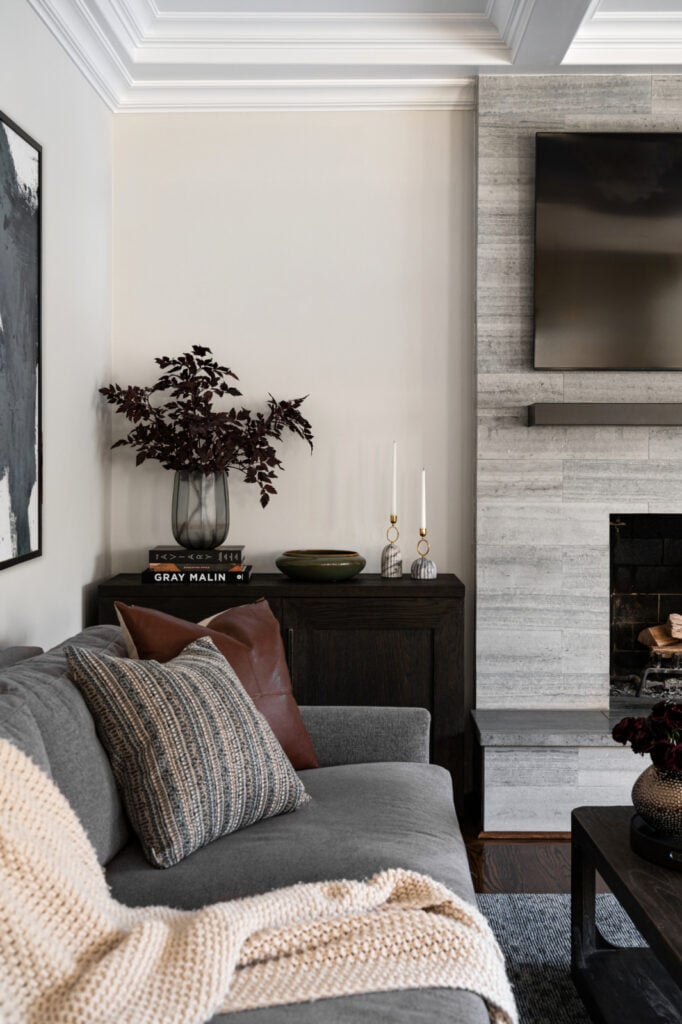
A linen, a boucle, a velvet and a fine wool sitting together are visibly different from one another even if every one of them is the same colour. That variation reads as considered. Four smooth cottons in four patterns often reads as busy, because the only thing distinguishing them is decoration.
If you want pattern, one patterned pillow among plain ones is usually enough, and it is better placed where the eye already goes rather than distributed for balance. Two patterns can work when their scales are genuinely different, a large loose print with a small tight weave, but that is harder to judge than it looks in a shop.
In a neutral room this matters more, since texture is doing the job colour would otherwise do.
Fabric that survives being used
Pillows take more handling than any other textile in a room, so the cloth matters practically as well as visually.
Tightly woven fabrics wear far better than loose ones, and anything with a visible loop will snag, particularly with pets or children in the house. Boucle is fashionable and is a poor choice where claws are involved.
Removable covers with a proper zip are worth insisting on, since pillows are the textile most likely to meet food, feet and animals. A cover that can be cleaned is the difference between refreshing an arrangement and replacing it.
Where a pillow will sit in direct sun, the same rule applies as to upholstery: ultraviolet light fades dye regardless of quality, and the pillow nearest the window will go first.
Beds, and how the layers work
Bed pillows follow a different logic because they build backward in layers rather than sitting in a row.
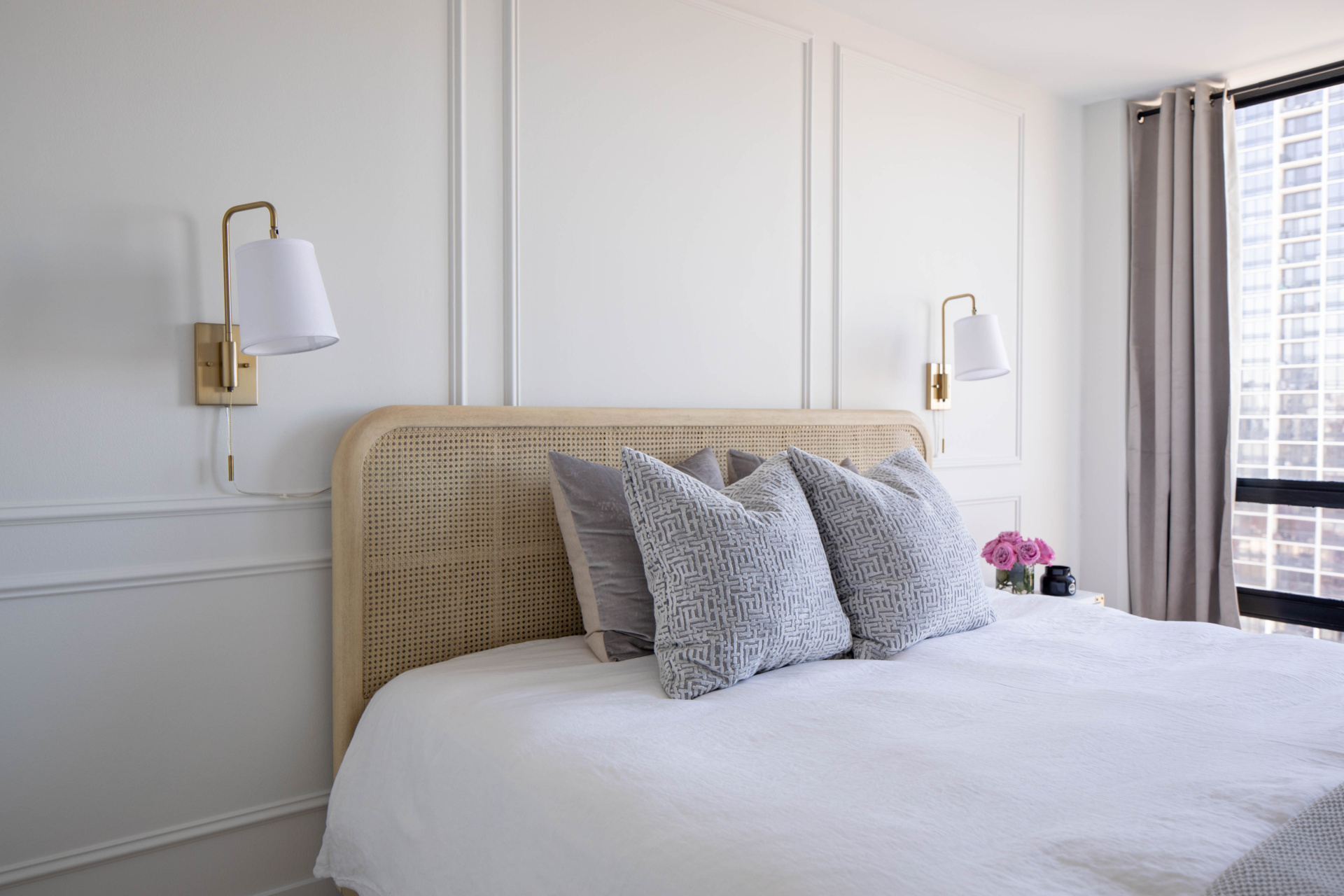
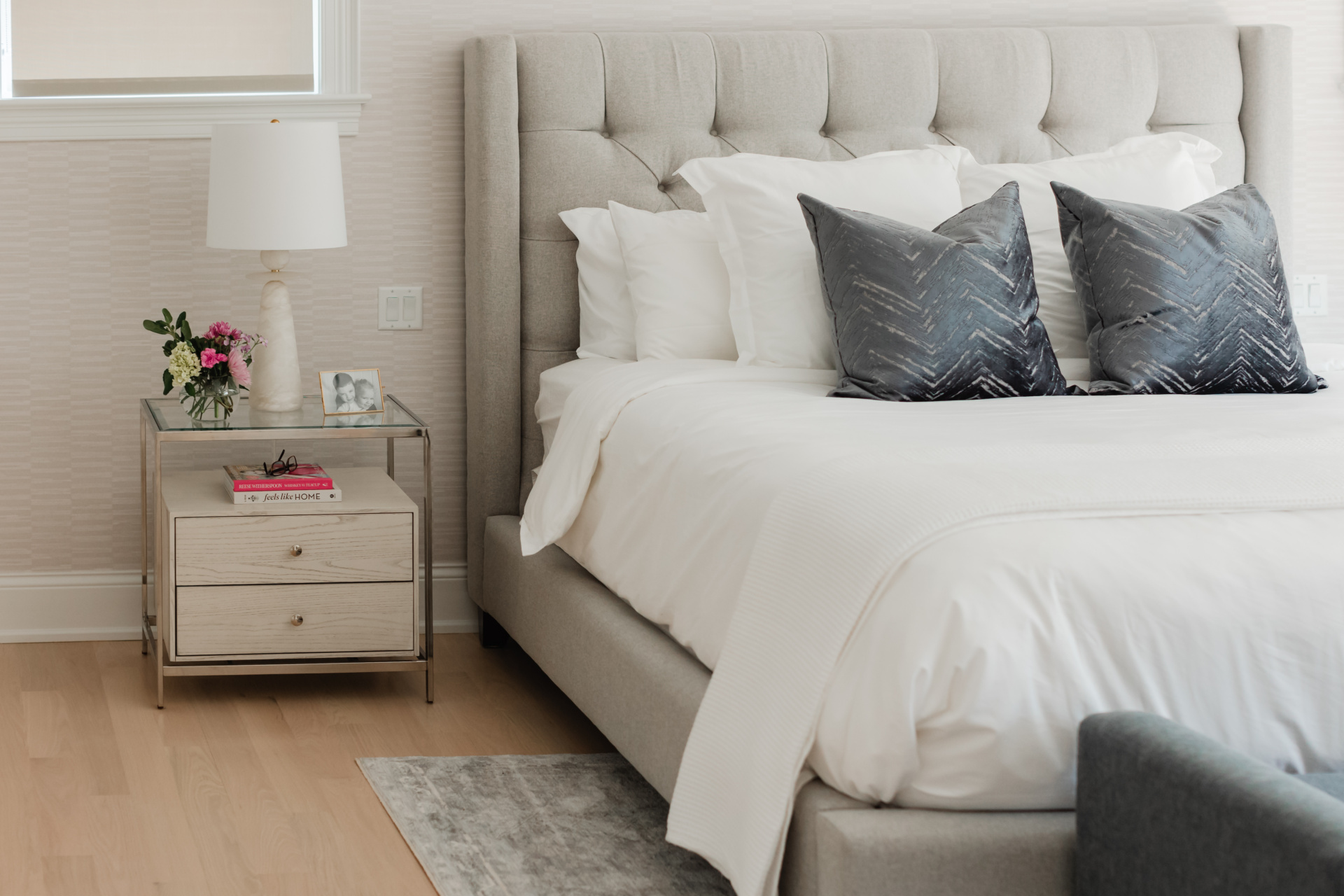
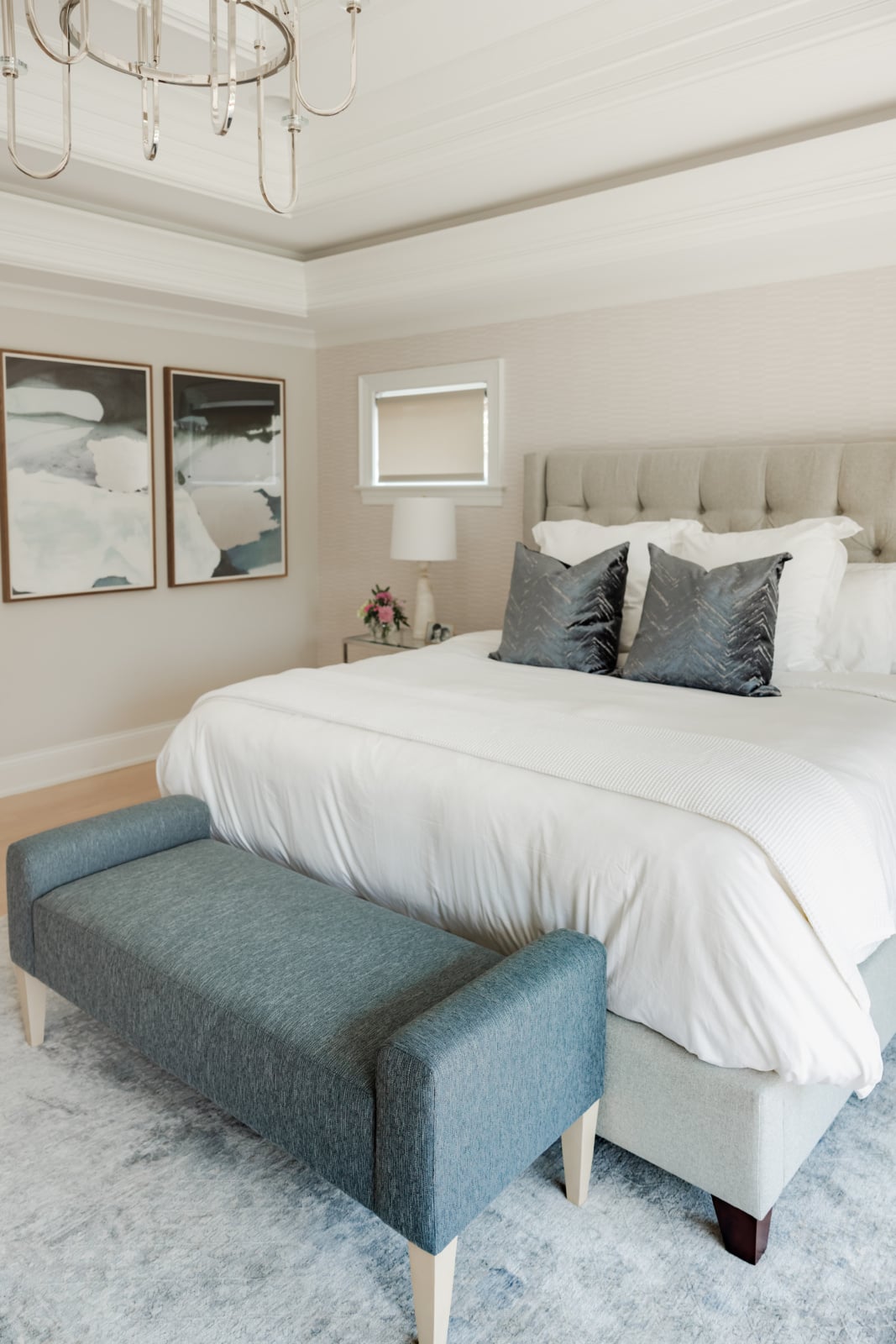
The sleeping pillows sit at the back, usually upright against the headboard. In front of them, larger square pillows, often 26 inch Euros, give the arrangement height and hide the sleeping pillows without stacking on top of them. Then smaller squares, then a lumbar or bolster at the front.
The number that actually gets used matters here more than on a sofa, because anything decorative has to be removed every night and replaced every morning. Three decorative pillows is a habit most people keep. Eight is a habit almost nobody keeps, and after a fortnight they live on a chair in the corner.
Which is worth deciding honestly at the outset rather than discovering later.
The styling conventions, and which to ignore
Two habits from photography that do not always translate to a house somebody lives in.
The chop, where the top of a down pillow is pressed into a dent, is a styling convention for photographs. It looks deliberate in an image and slightly staged in a real room, and it only holds in a soft down insert. Use it if you like it, ignore it without guilt.
Perfect symmetry is the other. Identical pillows in identical positions at both ends of a sofa look correct and slightly lifeless. Varying one element, size, texture, or the position of a lumbar, gives the arrangement some life without making it look accidental.
Odd numbers are commonly recommended and matter less than people think. Two large pillows on a small sofa is right. Three on a large one is right. The number should follow the furniture rather than a rule.
How this fits the rest of the room
Pillows are the easiest thing in a room to change, which makes them the right place to put whatever is most likely to date.
A strong colour, a pattern you are not certain about, something seasonal: all of it belongs here rather than in upholstery, flooring or joinery. If you tire of it, replacing four covers is straightforward, and the sofa underneath is unaffected.
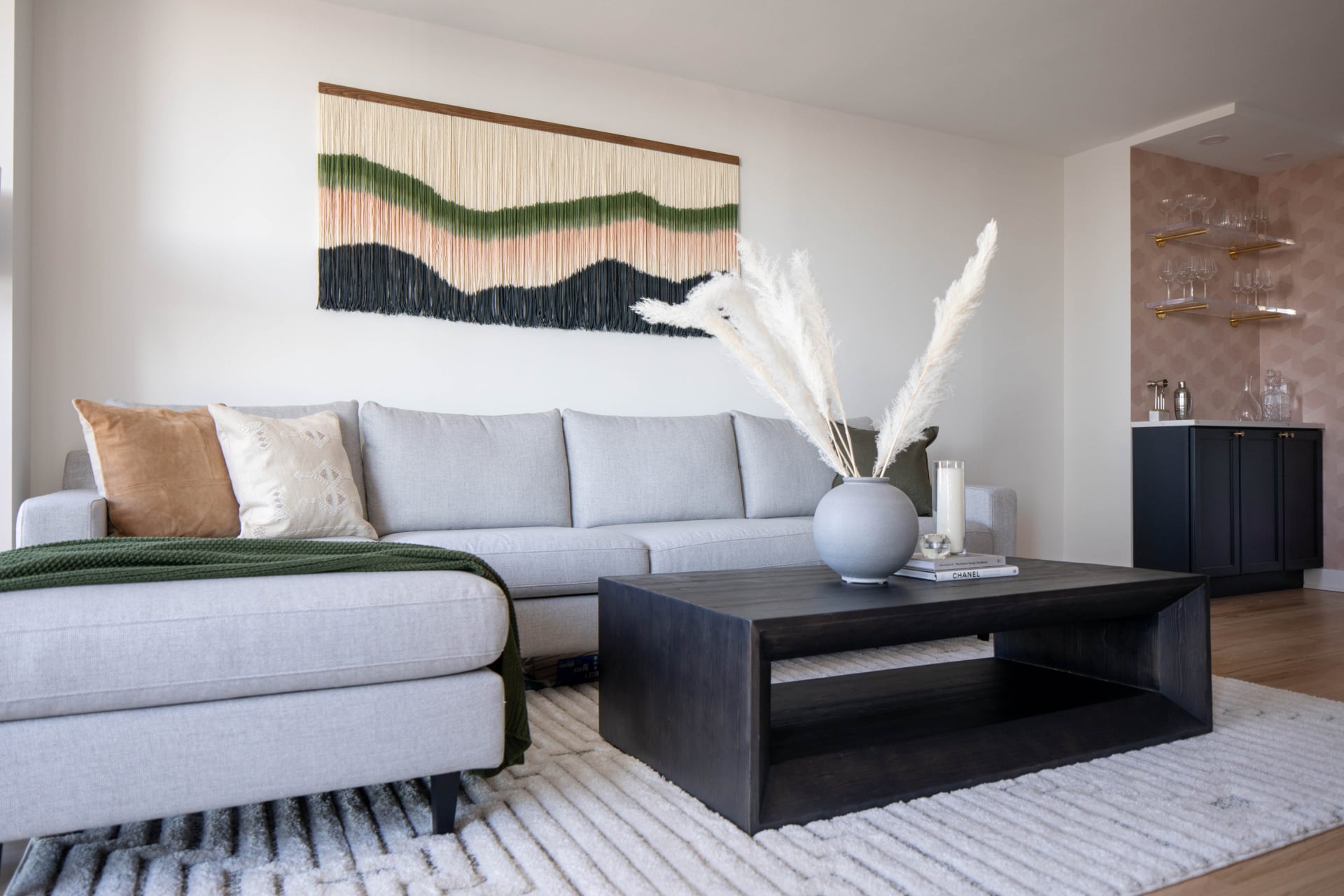
They are also part of what finishes a room. A room is not finished until it is styled, and pillows are among the elements that make a seating group look complete rather than delivered. That is worth doing properly, and it is worth doing with things you actually like rather than what matched.
Chicago homes specifically
One local consideration that changes the specification.
Winters are long and living rooms here do far more work from November to March than they do in a mild climate, which means the pillows on that sofa are in constant use for months rather than being largely decorative. That argues for down or a good down alternative that recovers, for covers that can be cleaned, and for a number that people will actually live with rather than rearrange around.
It is also the reason a throw earns its place alongside them here in a way it does not everywhere. A heavy wool or cashmere over the arm of a sofa is genuinely used for half the year, and like upholstery it is a place where quality shows quickly: a good one keeps its handle for years while a poor one pills within a season.
Working through it with us
Pillows are a small decision that people are surprisingly unhappy with, and it is almost always the insert rather than the fabric. They are also the simplest thing in a room to put right. You can see how we work on our design process page, look through recent projects, or get in touch about your own home.
Related reading: choosing sofa cushion material, best couch fabric for dogs and cats, how long a sofa should last, beds in front of windows and warm neutrals in a living space. We work across Chicago, Hinsdale and Elmhurst.
Frequently asked questions
What size insert should I use in a throw pillow?
One size larger than the cover. A 22 inch insert in a 20 inch cover fills it properly, giving defined corners and a taut face, while a matching 20 inch insert looks underfilled from the start. On an 18 inch cover use a 20, on a 24 use a 26.
Are down or polyester pillow inserts better?
Down, or a good down alternative. Down compresses when leaned on and recovers when shaken, which is what you want in something being used. Polyester mats down permanently, and once the fibres have tangled no amount of plumping brings it back.
How many throw pillows should a sofa have?
Fewer than most people use. On a standard three-seat sofa, two large in the corners and one smaller off-centre is usually enough. On a sectional, three or four grouped rather than spread along the length. If anybody has to move pillows to sit down, there are too many.
What size throw pillows should I buy?
Scale them to the furniture. A standard sofa suits 20 to 22 inch pillows, a deep sofa or sectional wants 24 inch, and anything under 20 disappears against a deep back. A loveseat takes two at 20. On a bed, 26 inch Euro squares form the back layer.
Should throw pillows match?
No, but they should relate. Vary texture more than pattern, since a linen, a boucle and a velvet look distinct even in one colour, while four smooth cottons in four patterns usually reads as busy. One patterned pillow among plain ones is generally enough.
How should pillows be arranged on a bed?
In layers building forward. Sleeping pillows upright at the back, then larger squares such as 26 inch Euros to give height and conceal them, then smaller squares, then a lumbar at the front. Three decorative pillows is a routine most people keep; eight is not.
Do I need to do the karate chop?
No. It is a styling convention for photographs, it only holds in a soft down insert, and in a real room it can look staged. Use it if you like the look and ignore it if you do not.
What fabric is best for throw pillows?
Tightly woven, with a removable zipped cover. Loose weaves and anything with a visible loop will snag, particularly with pets or children, which makes boucle a poor choice despite being fashionable. A cover that can be cleaned is what lets you refresh rather than replace.