
Last updated August 27, 2026
Key Takeaways
- Wool is the default for good reason. It springs back, resists soil naturally, and looks better with age rather than worse.
- Viscose is the trap. It looks like silk and is permanently marked by water, so it does not belong in a dining room or a house with pets.
- Construction matters as much as fibre. A tufted wool rug and a hand-knotted wool rug are different products with different lifespans.
- Most rugs are too small. In a living room the front legs of every seating piece should sit on the rug.
- Under a dining table, the chairs must stay on the rug when pulled out. That means 24 to 30 inches beyond the table on every side.
- Buy the pad. It extends the life of the rug considerably and stops it moving underfoot.
Wool is the best rug material for most rooms: it is resilient, naturally resists soiling, cleans well and improves with age. Jute and sisal suit low-traffic rooms and bring texture nothing else does. Polypropylene is genuinely good under a dining table and outdoors. Viscose looks luxurious and is ruined by a single spill.
Fibre is only half the decision. How the rug is made matters as much, and the size is what people get wrong most often, usually by buying one too small.
Why wool is the default
It is the standard recommendation and it earns the position, for three reasons that are worth knowing rather than taking on trust.
Wool fibres are naturally crimped, so they compress under a footstep and spring back. That resilience is why a wool rug does not develop permanent tracking through the middle of a room the way flat synthetics do.
Wool contains lanolin, which makes it resist soiling and, more usefully, means dirt sits on the surface rather than bonding to the fibre. It vacuums out. Spills bead briefly before soaking in, which buys you the few seconds that decide whether something becomes a stain.
And it ages well. A good wool rug looks better after ten years than it did new, in the way that leather and timber do. Very few floor coverings can be said to improve.
The tradeoffs are honest ones: it sheds for the first few months, and it takes a long time to dry if it is thoroughly wetted.
The viscose trap
Worth a section of its own, because it is the most common expensive mistake in rugs.
Viscose, sometimes sold as art silk, bamboo silk or rayon, has a lustre very like real silk and a much lower price. In a showroom it looks wonderful. It is also a regenerated cellulose fibre, which means it loses most of its strength when wet and does not recover.
The practical consequence: any water leaves a permanent mark. Not a stain that can be treated, a change in the fibre that shows as a lighter patch forever. A dropped glass, a pet accident, a wet umbrella, an over-enthusiastic cleaner. All permanent.
There is no version of a dining room, an entry, a bathroom or a house with animals or small children where this is a sensible choice. In a formal sitting room used carefully by adults it can be beautiful, and you should know exactly what you are accepting.
Materials compared
Every one of these is right somewhere and wrong somewhere else.
| Material | Wears | Cleans | Best in | Avoid in |
|---|---|---|---|---|
| Wool The default for most rooms. |
Excellent. Springs back, resists tracking | Very well. Dirt sits on the surface | Living rooms, bedrooms, dining rooms, stairs | Very wet areas, where drying is slow |
| Jute and sisal Natural plant fibres with real texture. |
Good underfoot, rough on bare feet | Poorly. Water marks and stains set fast | Low-traffic rooms, layering under a smaller rug | Dining rooms, pets, anywhere damp |
| Cotton and flatweave Light, washable, casual. |
Moderate. Shows wear in traffic lanes | Excellent. Many are machine washable | Kitchens, children’s rooms, layering | Heavy-traffic living rooms, where they flatten |
| Polypropylene Solution-dyed synthetic. |
Very good. Does not fade or absorb | Excellent, including bleach on some | Under dining tables, outdoors, pet households | Anywhere the feel of the rug matters most |
| Silk Genuine silk, usually hand-knotted. |
Delicate, and shows every footprint | Specialist only | Formal rooms, low traffic, wall hangings | Almost everywhere else |
| Viscose or art silk Looks like silk, behaves like paper when wet. |
Poorly. Crushes and marks | Water leaves permanent marks | Formal adult rooms, used carefully | Dining rooms, entries, pets, children |
Ask what a rug is made of and how it is made. A shop that cannot answer the second question is worth being careful with.
Hand-knotted, tufted and woven
Two rugs can both be wool and be entirely different products. This is the distinction that most affects how long a rug lasts.
Hand-knotted rugs are made by tying individual knots to a foundation. There is no glue and no backing: the rug is a single structure, which is why antique examples survive a century of use and can be repaired. They cost the most and last longest by a wide margin.
Tufted rugs are made by punching yarn through a backing cloth and fixing it with latex glue, then adding a second backing to hide it. Most wool rugs on the general market are tufted. They look similar when new, shed considerably, and the latex degrades over years, at which point the rug begins to break down from the back and cannot be repaired.
Flatweave rugs are woven rather than pile, with no backing at all. They are thin, reversible, hard-wearing and easy to clean, and they suit layering and high-traffic routes.
None of these is wrong. But a tufted rug is a medium-term purchase and a hand-knotted one is a long-term one, and knowing which you are buying prevents disappointment later.
The size almost everyone gets wrong
Rugs are the most commonly under-sized item in a house, and it is the single change that most improves a room.
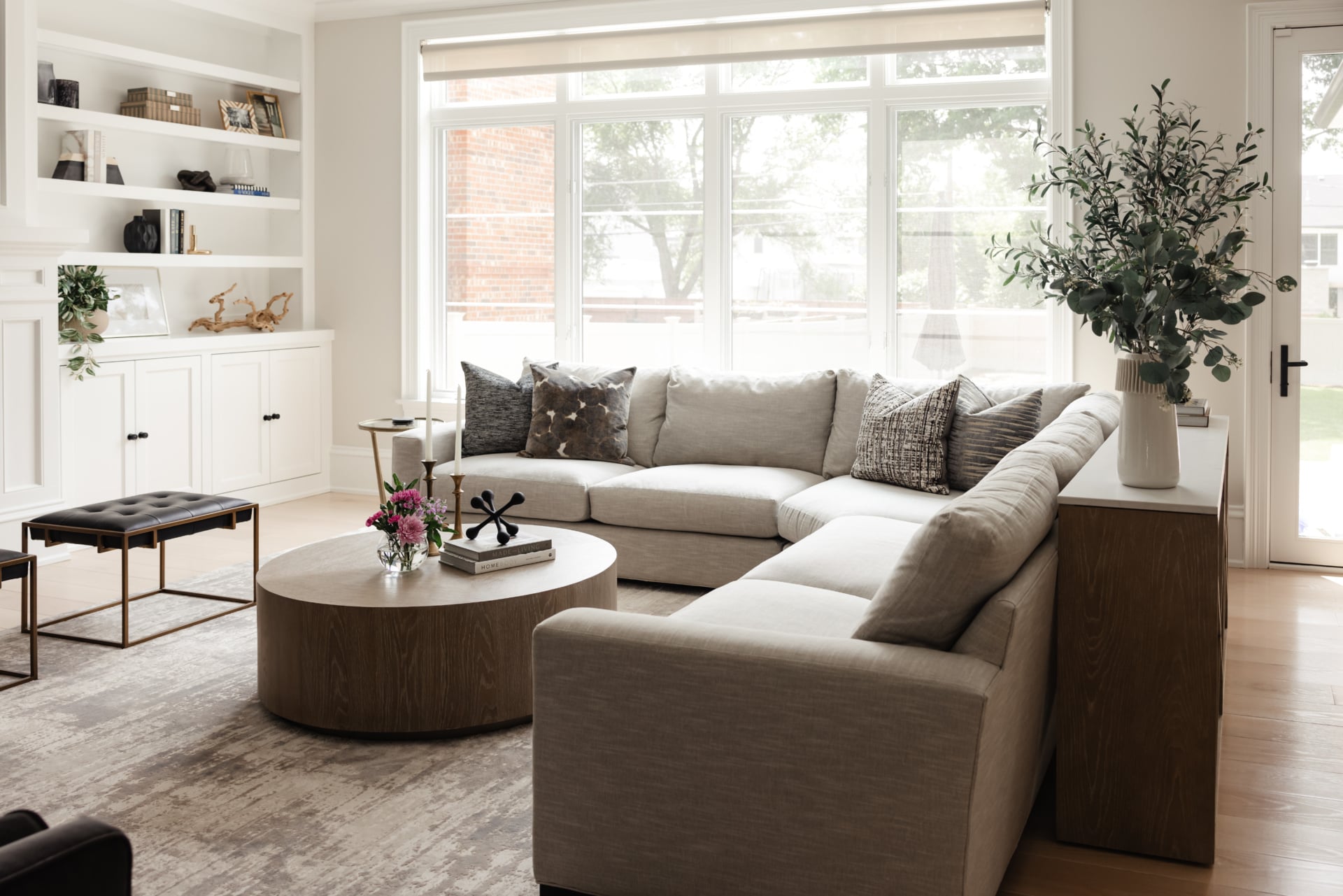
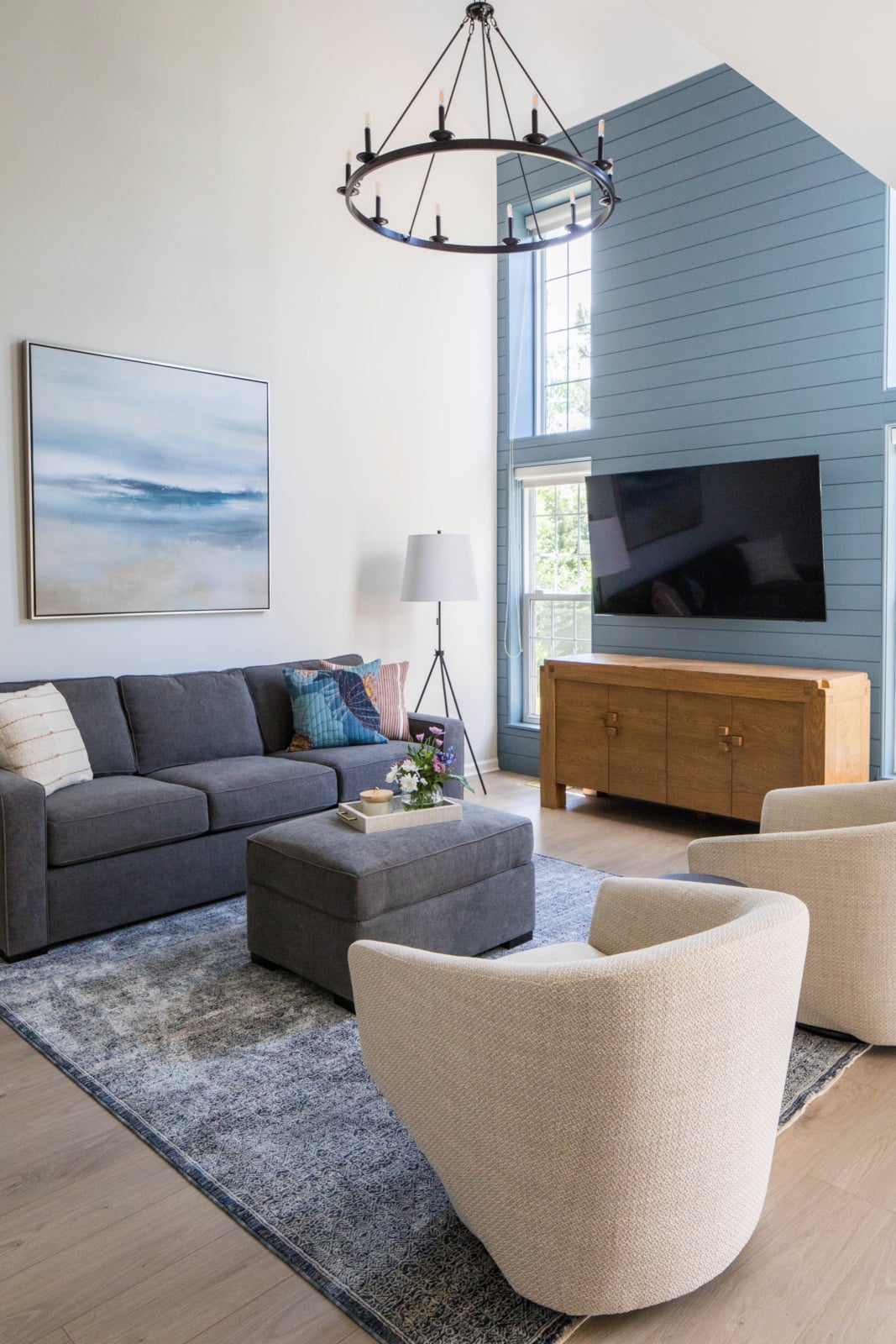
A rug that is too small floats in the middle of the floor with a border of bare boards around it, which visually shrinks the room and makes the furniture look unrelated. The correct size makes the seating read as one group and the room read as larger.
In a living room there are three defensible options. All legs of all seating on the rug is the most generous and needs a large rug. Front legs on the rug, back legs off, is the usual right answer and connects everything without requiring an enormous size. All legs off, with the rug purely as an island under the coffee table, only works in a small room and is the weakest of the three.
What does not work is some pieces on and others off, which is what happens by accident when the rug was chosen by size available rather than by size required.
Dining rooms have one rule
Simple, non-negotiable, and frequently broken.
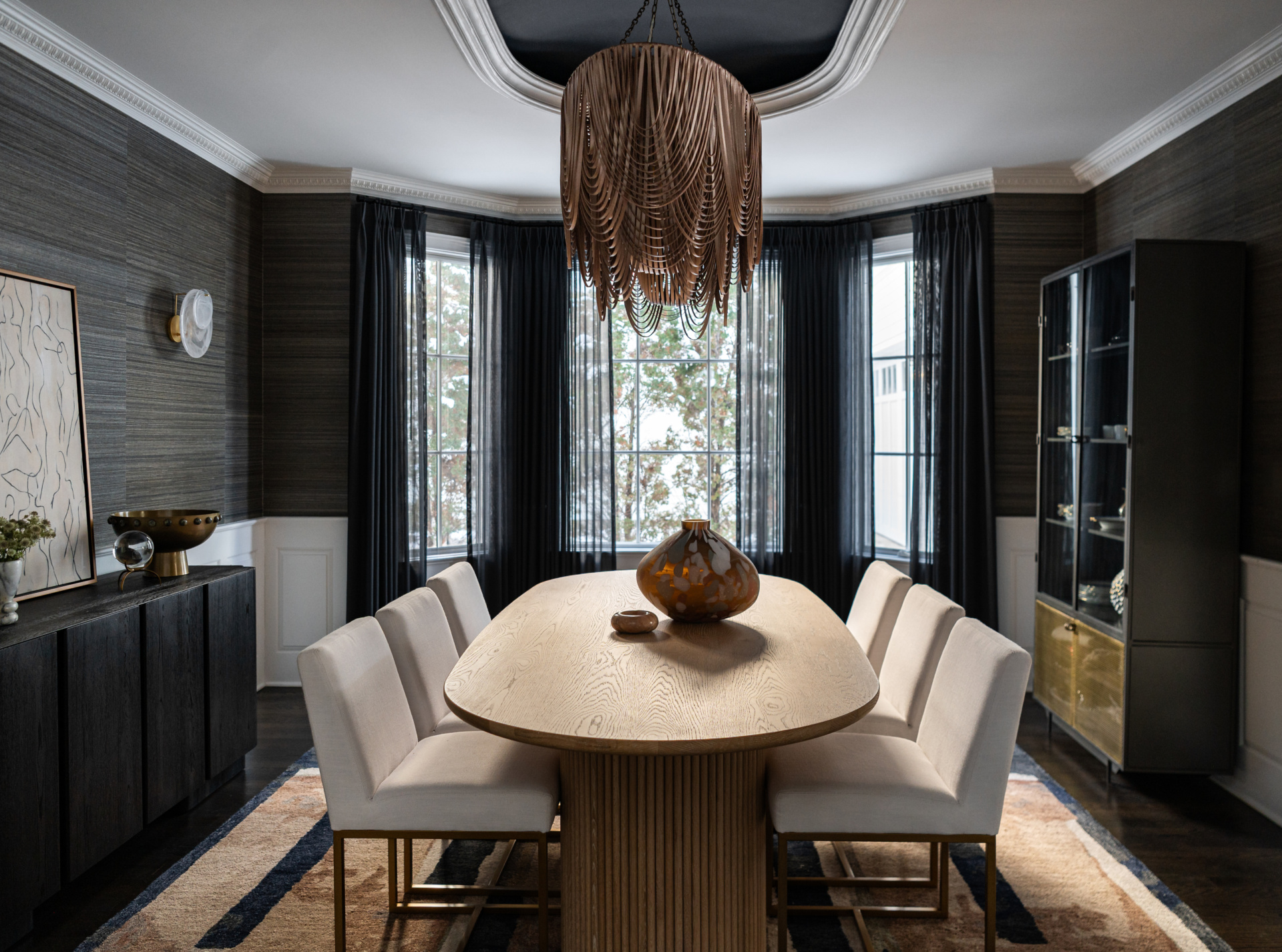
The chairs must remain fully on the rug when pulled out. If a back leg drops off the edge as somebody sits down, it catches every single time, it is annoying daily and it wears the rug edge quickly.
In practice that means the rug should extend 24 to 30 inches beyond the table on every side, and 30 is safer with dining chairs that have arms or with a household that pushes back from the table. Measure the table, add sixty inches to each dimension, and that is your minimum.
This is also why polypropylene and flatweaves earn their place under dining tables. They take the abrasion of chairs, they clean when something is spilled, and nothing catches.
Buy the pad
The least interesting recommendation on this page and one of the most useful.
A rug pad stops the rug moving, which matters for safety on hard floors. Less obviously, it absorbs the compression of footsteps so the pile is crushed against the pad rather than against the floor, which extends the life of the rug considerably. It also lets air circulate underneath, which matters on a slab or over underfloor heating.
Get a felt or felt-and-rubber pad rather than a thin foam one, and have it cut about an inch smaller than the rug on every side so it does not show. On a fine hand-knotted rug this is not optional, and on a tufted one it slows the degradation of the backing.
Living with a rug
Three habits that determine whether a rug looks good in five years.
Rotate it. Sunlight fades one side and traffic wears one route, and turning the rug periodically spreads both. In a room with a strong window this is the difference between even ageing and a visibly two-tone rug.
Vacuum regularly but gently, and avoid a powerful beater bar on a hand-knotted rug or a shaggy pile. On the fringes, do not vacuum at all, since that is how fringes get destroyed.
Deal with spills immediately by blotting rather than rubbing, and have anything significant handled professionally. Wool buys you time; viscose does not, and by the time a viscose rug is wet the outcome is already decided.
Layering, and where texture earns its place
Worth knowing because it solves two problems at once.
A large jute or sisal rug with a smaller wool or patterned rug on top gives you the size the room needs without the cost of a single very large fine rug, and it adds a layer of texture that a single rug cannot. In a neutral room, where texture is doing the work colour would otherwise do, this is genuinely useful rather than a compromise.
It also solves the awkward room. Where a space needs an unusual proportion, layering lets the base rug handle the footprint and the top rug handle the seating group.
Keep the base plain and the top one the interesting one, and use a pad under both.
Chicago homes specifically
Two local conditions that change the specification.
Winter brings salt and slush into the house for months, and salt is harder on rugs than mud because it crystallises in the fibre and abrades it from within. That argues for something washable or cleanable in every entry route, and for taking the entry seriously so most of it never reaches the good rug. Wool copes better than most; jute and viscose do not cope at all.
The second is the housing stock. Older city houses and greystones frequently have beautiful original floors worth showing, which argues for rugs sized to define areas rather than cover everything. Newer suburban houses have large open rooms where the rug is often the only thing defining a zone at all, and there the size rule matters most: a rug that is too small in a large open plan leaves the furniture floating with nothing to sit on.
Working through it with us
Rugs are where the difference between what a room needs and what a shop has in stock shows most clearly, because the right size is frequently not a size anybody keeps on the floor. You can see how we work on our design process page, look through recent projects, or get in touch about your own home.
Related reading: best couch fabric for dogs and cats, seating for a small living room, warm neutrals in a living space and choosing a kitchen floor material. We work across Chicago, Hinsdale and Elmhurst.
Frequently asked questions
What is the best rug material?
Wool for most rooms. The fibres are naturally crimped so they spring back rather than tracking, lanolin makes dirt sit on the surface where it vacuums out, and a good wool rug looks better after ten years than it did new. Jute suits low-traffic rooms and polypropylene suits dining tables and outdoors.
Why should I avoid viscose rugs?
Because water permanently marks them. Viscose, also sold as art silk or bamboo silk, loses most of its strength when wet and does not recover, so a spill leaves a lighter patch that cannot be treated. It has no place in a dining room, an entry, or a house with pets or small children.
What is the difference between hand-knotted and tufted rugs?
Hand-knotted rugs are tied to a foundation with no glue, so they are a single structure that can last a century and be repaired. Tufted rugs are punched through a backing and fixed with latex, which degrades over years. Both can be wool, and they are different products with different lifespans.
What size rug should a living room have?
Large enough that at least the front legs of every seating piece sit on it. All legs on is the most generous option, front legs on is the usual right answer, and all legs off only works in a small room. What fails is some pieces on and others off.
What size rug goes under a dining table?
One that keeps every chair fully on the rug when pulled out. That means 24 to 30 inches beyond the table on all sides, and 30 is safer with armchairs. Measure the table and add sixty inches to each dimension for your minimum.
Do I need a rug pad?
Yes. It stops the rug moving, and it absorbs the compression of footsteps so the pile is crushed against the pad rather than the floor, which extends the rug’s life considerably. Use felt or felt-and-rubber rather than thin foam, cut an inch smaller than the rug on each side.
Can I layer rugs?
Yes, and it solves two problems at once. A large jute or sisal base with a smaller wool rug on top gives the room the footprint it needs and adds texture a single rug cannot. Keep the base plain, let the top rug be the interesting one, and use a pad under both.
How do I make a rug last?
Rotate it so sun fading and traffic wear spread evenly, vacuum regularly but keep a beater bar off hand-knotted and shaggy piles, never vacuum the fringes, and blot spills rather than rubbing. Wool buys you time to react. Viscose does not.