Last updated August 27, 2026
Key Takeaways
- Three properties decide this: a tight low weave, colour that goes all the way through the fibre, and a shade that matches your pet’s coat.
- Weave matters more than fibre. Claws catch loops, so boucle and chenille are the wrong choice however fashionable they are.
- Solution-dyed performance fabric holds its colour through repeated cleaning. Applied stain treatments wear off, usually within a few years.
- Match the fabric to the animal, not to the room. A pale sofa with a black cat is a daily chore you have chosen.
- Leather resists hair and liquid better than anything, and shows claw marks permanently. Whether that reads as patina or damage is a matter of taste.
- Performance fabric means easier to clean, not indestructible. Nothing on the market stops claws.
The best couch fabrics for homes with dogs and cats are tightly woven, low-pile performance fabrics that are solution-dyed, meaning the colour runs through the fibre rather than sitting on it. Tight flatweaves, performance velvets with a dense short pile, and good quality leather all work. Loose weaves, boucle, chenille and anything with a visible loop do not, because claws catch in them.
The property that gets discussed most, stain resistance, is the one that matters least, because applied treatments wear off. The property nobody mentions, matching the colour to your animal’s coat, will do more for your daily life than any specification.
Weave first, fibre second
Almost every guide to this leads with fibre type. The weave is the more important variable and it is easier to judge by touch.
A claw does not damage fabric by cutting it. It hooks into a loop, and when the animal pulls away it drags that loop out into a snag. Once one loop is out, the surface is broken and the rest follow. So the question is not how strong the fibre is, it is whether there is anything for a claw to catch.
Run a fingernail across a sample, firmly, in the direction you would if you were a cat. If your nail catches, a claw will catch harder. If it slides across, you have a candidate. That single test will rule out more unsuitable fabrics than any amount of reading about fibre content.
This is why boucle, currently everywhere, is a poor choice for a house with animals. It is entirely made of loops. Chenille and any looped pile have the same problem.

Solution-dyed is the specification to ask for
This is the technical point worth knowing, and it is the difference between a sofa that still looks right in five years and one that goes patchy.
Most fabric is dyed after it is woven, so the colour sits on the outside of the fibre. Solution-dyed fabric has the pigment added while the fibre is still liquid, before it is extruded, so the colour goes all the way through, like a stick of rock. Scrub it, bleach it, leave it in sunlight, and the colour does not lift.
That matters with animals because you will be cleaning the same spots repeatedly. Surface-dyed fabric cleaned thirty times in the same place goes pale in that place. Solution-dyed does not.
Ask for it by name. It is a specification a good supplier can confirm in writing, and it is more meaningful than the word “performance” on its own, which is not a regulated term and can mean very little.
Fabrics compared
These are the realistic options. The columns that matter are the middle two, because hair and claws are the everyday problems, while genuine stains are occasional.
| Fabric | Claws | Hair | Cleaning | Verdict |
|---|---|---|---|---|
| Tight flatweave, solution-dyed Dense, low, nothing to hook into. |
Excellent. Nothing to catch | Good. Brushes off, does not weave in | Excellent. Scrubs without losing colour | The default recommendation |
| Performance velvet, short dense pile Cut pile rather than looped. |
Very good, claws slide across | Good, though it shows hair on dark shades | Very good if solution-dyed | Excellent, and better looking than most expect |
| Leather, full grain Hide rather than textile. |
Poor. Marks permanently, though many like the result | Outstanding. Hair wipes straight off | Outstanding for liquid | Best for hair, worst for claws. A taste decision |
| Canvas and heavy cotton duck Tight, flat, hard-wearing. |
Good | Good | Fair. Usually surface-dyed, so it fades where scrubbed | Sound, if you can get it solution-dyed |
| Boucle Loops throughout. |
Poor. Snags on first contact | Poor. Hair works into the loops | Difficult | Avoid with animals, whatever the trend |
| Chenille and looped pile Soft, and entirely loops. |
Poor | Poor | Fair | Avoid |
| Linen, loose weave Open weave, slubby surface. |
Poor. Pulls easily | Fair | Poor. Marks and creases | Beautiful, and the wrong room for it |
Ask suppliers for the double rub count as well. Above 30,000 is contract grade and sensible where animals are on the furniture daily.
Match the fabric to the animal
This is the practical trick that changes daily life more than any specification, and almost nobody says it out loud.
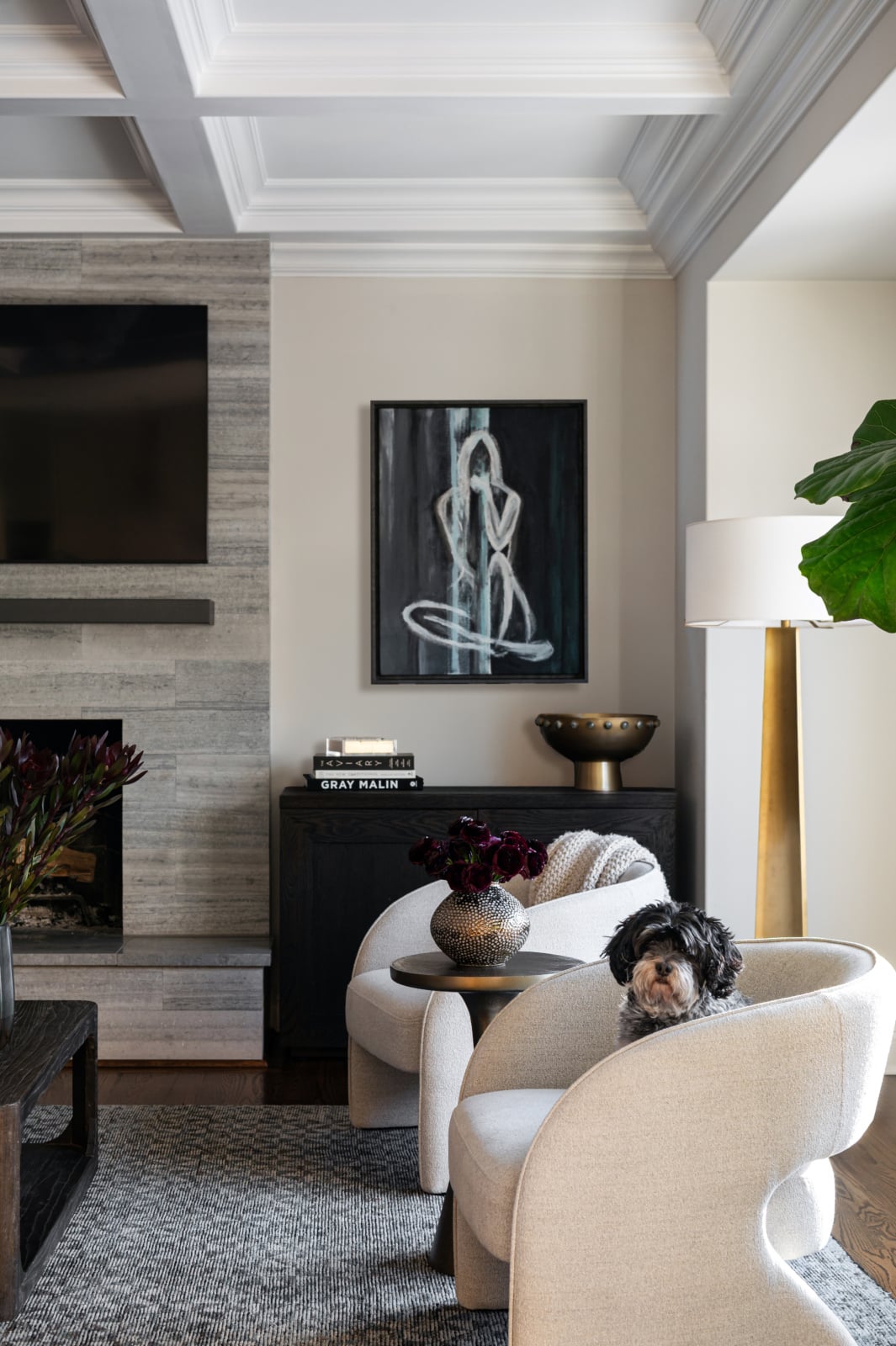
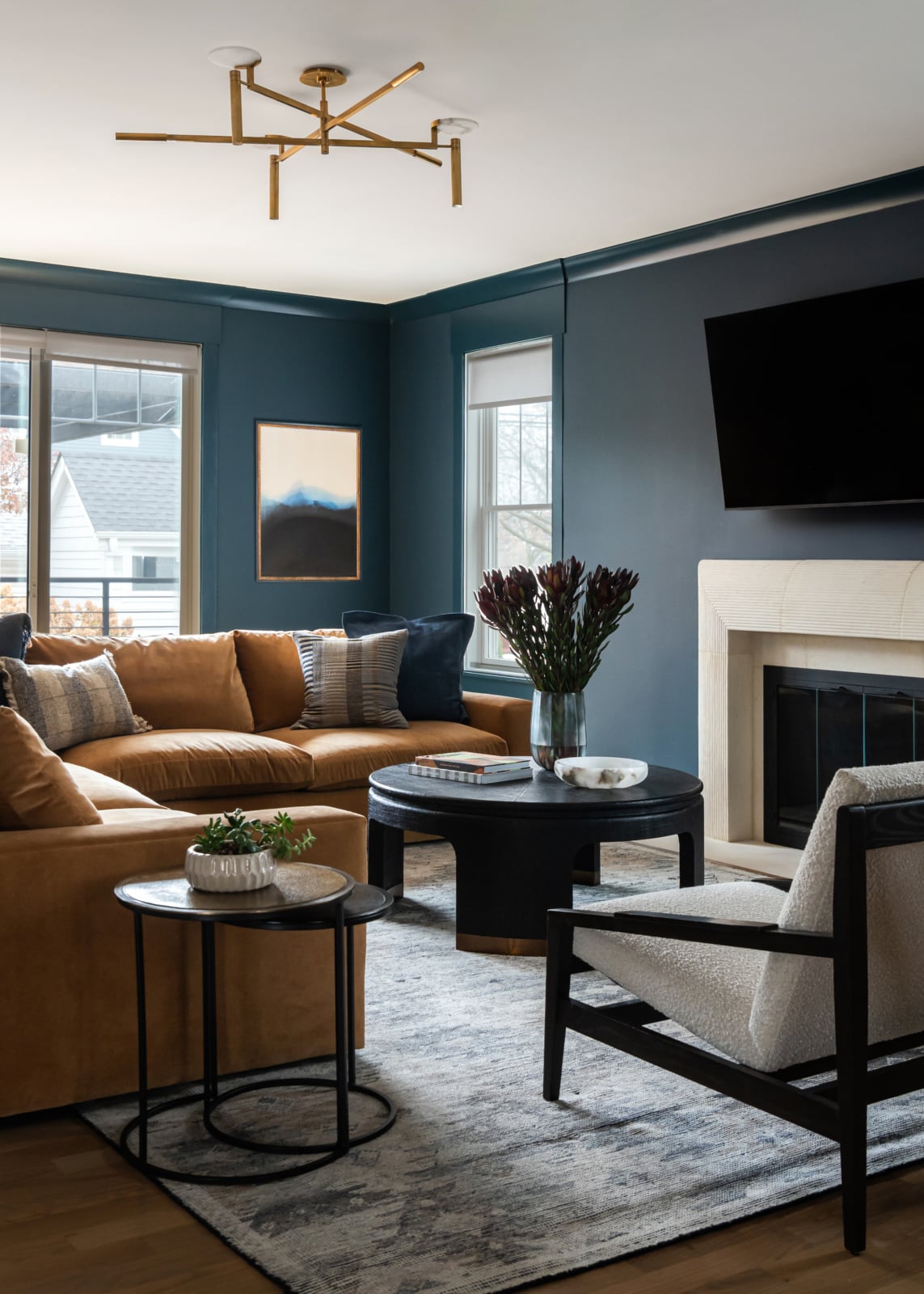
Choose an upholstery colour close to your pet’s coat. A golden retriever household should be looking at oatmeal, camel and warm mid-browns. A black cat household should not be buying a cream sofa unless they enjoy lint rollers. The hair still lands, it simply stops being the first thing anyone sees.
The same logic applies to texture. A fabric with subtle variation in it, a heather, a small two-tone weave, a tweed effect, conceals shed hair far better than a flat solid. A plain dark navy shows every white hair as a line.
People resist this because it feels like letting the animal choose the scheme. In practice it is the difference between a sofa you enjoy and a sofa you are always tidying.
Leather, honestly
Leather divides people and the reasons are worth setting out plainly rather than recommending or dismissing it.
What leather does superbly: hair does not embed, it sits on the surface and wipes off. Liquid does not soak in if you catch it. Odour does not hold the way textile does, which matters more than people expect in a house with a dog.
What leather does badly: it records claws permanently. A cat that has decided your sofa arm is a scratching post will mark it in the first week, and that mark is there for the life of the piece.
The honest position is that this is a taste question rather than a technical one. On a full-grain hide that develops a patina, scratches join the general history of the piece and many people like it. On a corrected-grain or heavily pigmented leather, they read as damage because the surface was uniform to begin with. If you want leather and have cats, buy the hide that ages well rather than the one that looks flawless in the showroom.
What performance fabric actually gives you
Worth being clear, because the marketing implies more than the material delivers.
Performance fabric means the surface releases liquid and soil more readily, so accidents are easier to deal with and cleaning is less punishing. In a house with animals that is genuinely valuable and worth specifying.
What it does not mean is claw-proof. There is no upholstery textile on the market that resists a determined cat, and any supplier suggesting otherwise is overselling. Claw resistance comes from the weave, which is a separate question from the finish.
It also does not mean maintenance-free. Hair still needs removing, and the fabric still benefits from proper cleaning rather than being left because it is supposedly indestructible.
Construction matters more with animals, not less
The frame and the fill are where a sofa in a house with pets is really tested, and it is the part people economise on because it is invisible.
You get what you pay for. Fast construction and low-grade materials are exactly why a sofa looks lumpy three years after it arrives, and animals accelerate that: a dog that jumps onto the same cushion every day for a decade is a load pattern no showroom test replicates.
Look for a hardwood frame rather than engineered board, eight-way hand-tied springs or a good sinuous spring system, and a seat cushion with a supportive core rather than pure foam. Removable, reversible cushion covers are worth insisting on, because they let you rotate wear and clean one section without the whole piece.
Upholstery is the single thing worth spending more on in a house, and a house with animals makes that argument for you. Buy well once and you replace it less often.
Details that decide how the sofa lives
Three specification choices that matter as much as the cloth.
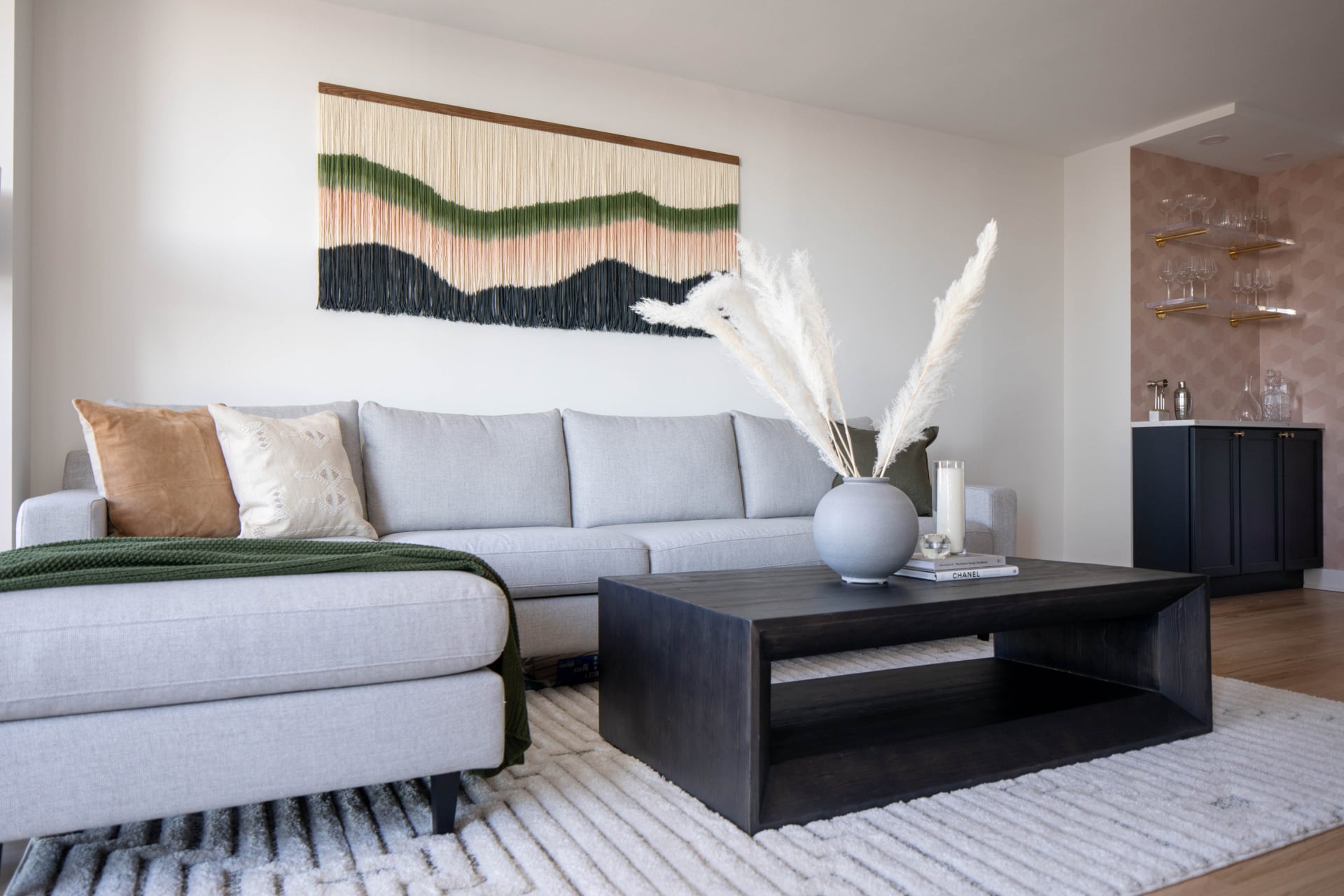
Skirted bases hide a great deal, both structurally and in terms of where hair collects, but they also trap it. A raised sofa on legs lets you actually clean underneath, which in a house with animals is the difference between clean and apparently clean.
Loose covers, where the fabric can be removed and washed, are the most practical option available and are unfairly associated with a country look. Made properly in a good cloth they are tailored and quiet, and they are the only version of a sofa you can genuinely launder.
Trims and buttons are hooks. Deep buttoning, contrast piping and fringe all give claws something to work at, and a sofa without them lasts better.
Rugs and the rest of the room
The sofa is rarely the first casualty. The rug usually is, and the same rules apply with one addition.
Loop pile carpet and rugs are the single worst choice with cats, for exactly the reason above. Cut pile wool wears well and hides a great deal, and wool has the useful property of releasing dirt rather than holding it. Flatweaves are easy to clean and take hard wear, though they show claw pulls on the edges.
Leave the room able to be cleaned. Furniture you can move, a rug you can lift, and floor you can get to. A room that is difficult to clean becomes a room that is not cleaned, and with animals that shows within a season.
Chicago houses specifically
Two local factors that change the answer.
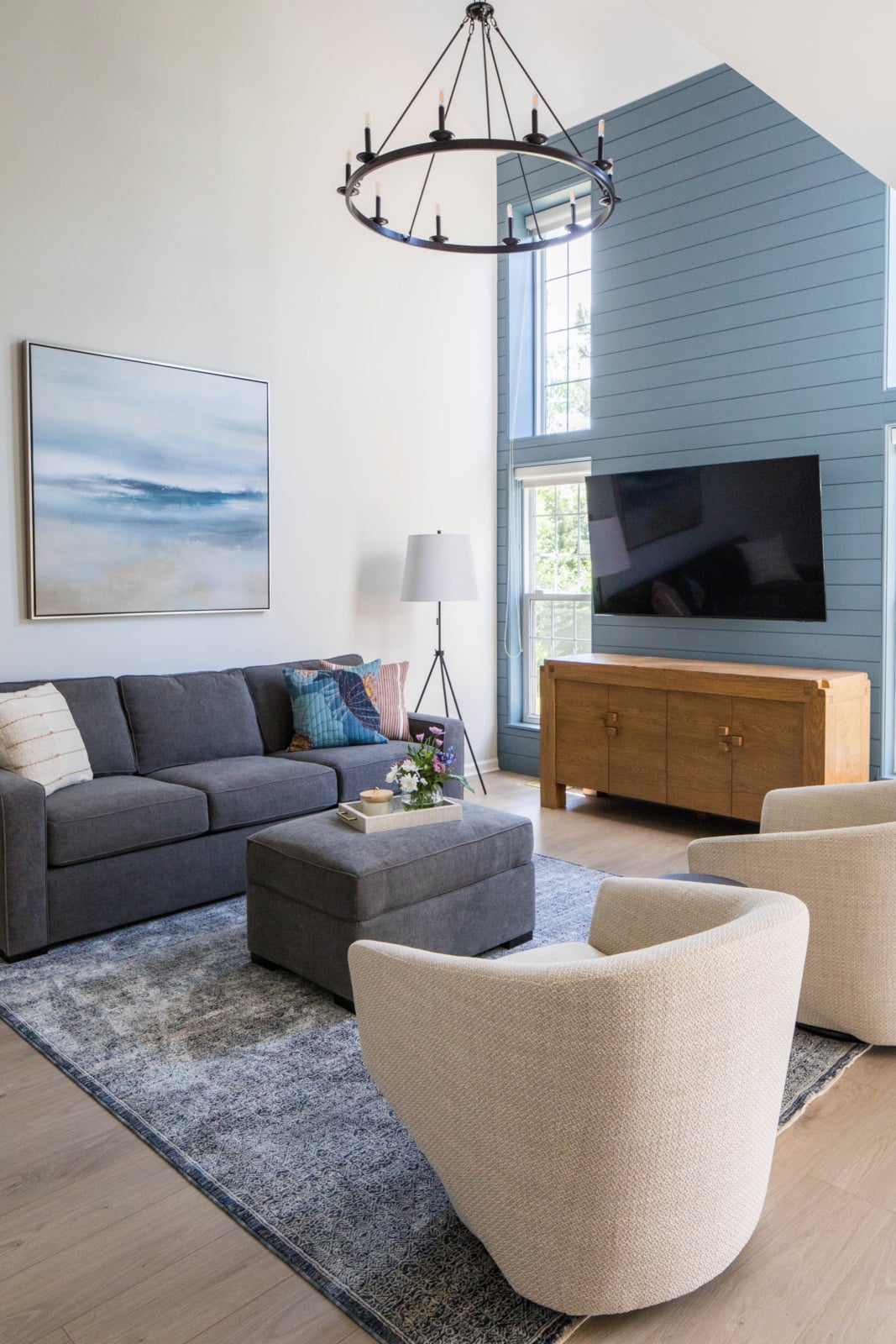
Winter is the big one. Six months of salt, slush and wet paws come through the door in a Chicago winter, and salt is harder on textile than mud because it crystallises in the fibre and abrades it. That argues strongly for solution-dyed fabric you can clean repeatedly, and for taking the entry seriously so most of it never reaches the sofa.
The second is that city apartments put the animal, the seating and the entrance in the same room, often with no hallway to intercept anything. In a suburban house with a mudroom you can absorb a lot before it reaches the living room. In a two-flat you cannot, and the upholstery has to do more of the work.
Working through it with us
Specifying upholstery for a house with animals is mostly about asking suppliers the right questions, and the answers are not always on the product page. You can see how we work on our design process page, look through recent projects, or get in touch about your own home.
Related reading: choosing sofa cushion material, how long a sofa should last, choosing a rug material, choosing throw pillows and seating for a small living room. We work across Chicago, Hinsdale and Elmhurst.
Frequently asked questions
What is the best couch fabric for dogs and cats?
A tightly woven, low-pile, solution-dyed performance fabric. Tight flatweaves and short dense performance velvets both work well. The weave matters more than the fibre, because claws snag on loops rather than cutting threads, so anything with a visible loop is the wrong choice.
Is boucle a good fabric for pets?
No. Boucle is made entirely of loops, which is exactly what a claw hooks into, and once one loop is pulled the surface is broken. It is currently fashionable, which is why it turns up in pet households, but it is among the worst options available.
What does solution-dyed mean and why does it matter?
Solution-dyed means the pigment is added while the fibre is still liquid, so the colour runs all the way through rather than sitting on the surface. It matters with animals because you clean the same spots repeatedly, and surface-dyed fabric goes pale where it is scrubbed. Solution-dyed does not.
Is leather good with dogs and cats?
It is the best option for hair and liquid and the worst for claws. Hair wipes straight off and odour does not hold, but claw marks are permanent. On a full-grain hide that develops a patina those marks read as history; on a heavily pigmented leather they read as damage.
What colour sofa is best with pets?
One close to your animal’s coat. Oatmeal and camel for a golden retriever, something darker for a black cat. The hair still lands, it just stops being the first thing you see. A fabric with subtle variation in it, a heather or small two-tone weave, hides shed hair far better than a flat solid.
Does performance fabric stop cats scratching?
No. Performance refers to how readily the surface releases liquid and soil, which makes cleaning easier and is genuinely worth specifying. No upholstery textile on the market resists a determined cat. Claw resistance comes from a tight low weave, which is a separate property from the finish.
Are removable covers worth it?
They are the most practical option available in a house with animals, because they are the only version of a sofa you can genuinely launder. Made properly in a good cloth they look tailored rather than casual, and they let you clean one section without dealing with the whole piece.
What should I look for in the construction, not just the fabric?
A hardwood frame rather than engineered board, hand-tied or good sinuous springs, and seat cushions with a supportive core rather than plain foam. Animals concentrate wear on the same spots daily, so construction is tested harder than in a household without them. Reversible cushion covers let you rotate that wear.