

Last updated August 27, 2026
Key Takeaways
- Decide what you are hiring before you interview anyone. A decorator selects furnishings for rooms that already work. A full-service interior designer takes responsibility for how the house is planned, built, finished and furnished.
- Read the portfolio for range, not for style. One signature look repeated across every project usually means the designer is designing for themselves.
- Ask who is actually in the room. On a full-service project you should know the name of the person managing your job and how often you will hear from them.
- Trade-only access is a real differentiator. Designers with established showroom and workroom relationships can specify custom millwork, made-to-measure drapery and furniture you cannot buy retail.
- The scope document tells you more than the interview. A serious designer will define phases, deliverables, approvals and installation in writing before work begins.
- Compatibility is not a soft factor. A whole-home renovation can run a year or more. You are choosing someone you will speak with weekly.
Choosing an interior designer comes down to one question: do they take responsibility for the entire outcome, or only for part of it? The designers worth interviewing can tell you exactly where their work begins, where it ends, who is accountable at each stage, and what your home will look like on install day. Credentials, awards and aesthetic are all secondary to that.
If you are renovating or furnishing a home in Chicago or the western suburbs, this guide walks through what to look for, what to ask, and what should give you pause. It is written from the perspective of a full-service design studio that manages projects from first floor plan through the final styled shelf.

Decorator, designer, design-build: what you are actually hiring
These three terms get used interchangeably and they should not be. The difference decides who is responsible when something goes wrong, and it decides how much of the work lands back on you. “Full-service” in particular is used loosely enough to be meaningless, so the chart below defines it line by line.
| What the engagement covers | Interior decorator |
Full-service interior designer |
Design-build firm |
|---|---|---|---|
| Programming and space planning How each room is used, by whom, and how the plan has to change to support that |
No | Yes | Yes |
| Architectural detailing and custom millwork Cabinetry, built-ins, paneling, trim profiles, ceiling treatments, drawn and detailed then built to those drawings |
No | Yes | Yes |
| Finish and fixture specification Tile, stone, flooring, plumbing, cabinet hardware and lighting selected as one coordinated package, not room by room |
Partial | Yes | Yes |
| Lighting design Layered ambient, task and accent lighting laid out before the electrician rough-ins |
No | Yes | Varies |
| Furniture, textiles and window treatments Including custom upholstery and made-to-measure drapery through trade-only workrooms |
Yes | Yes | Rarely |
| Trade coordination Working directly with your general contractor and subs so field questions are answered by the designer, not by you |
No | Yes | In-house |
| Procurement and logistics Ordering, tracking, receiving, inspecting and warehousing every piece until installation |
Varies | Yes | Varies |
| Installation and styling A single install day where the house is finished completely, down to the books on the shelf |
Varies | Yes | Rarely |
| Independent check on the builder Whether anyone outside the construction contract is reviewing quality and specification |
n/a | Yes | No |
| When the decisions get made | After construction | Before demolition | Before demolition |
Scroll the chart sideways on a phone. “Varies” means it depends entirely on the individual firm’s contract, so ask.
Read down the middle column and you have the working definition of full-service: the studio is accountable for the finished result, not for a set of recommendations. Decorating is a legitimate discipline and the right call when the architecture already works and you simply want the house finished properly. Design-build can be efficient, but the same company draws the plan and prices the build, which removes the independent check. We wrote about that trade-off in more detail in interior design vs. design-build.
The two rows most homeowners overlook are procurement and installation. If a designer’s proposal is missing them, you will be receiving freight, inspecting it and chasing damage claims yourself. Our own sequence is laid out step by step on the design process page.
Most homeowners who reach out to us have already discovered the gap the hard way: they hired someone to select furniture for a house whose layout was never going to support the way they live. The sofa was never the problem.
How to read a portfolio the way a designer would
Most people look at a portfolio and ask whether they like it. That is the least useful question. Look for these instead:
Range across styles
Does the work change meaningfully from project to project, or is every home the same palette in a different floor plan? A studio serving real clients produces a dark, layered library in one house and a bright coastal living room in the next. Compare the Literary Retreat against Classic Coastal: same studio, two entirely different clients.
Whole homes, not single rooms
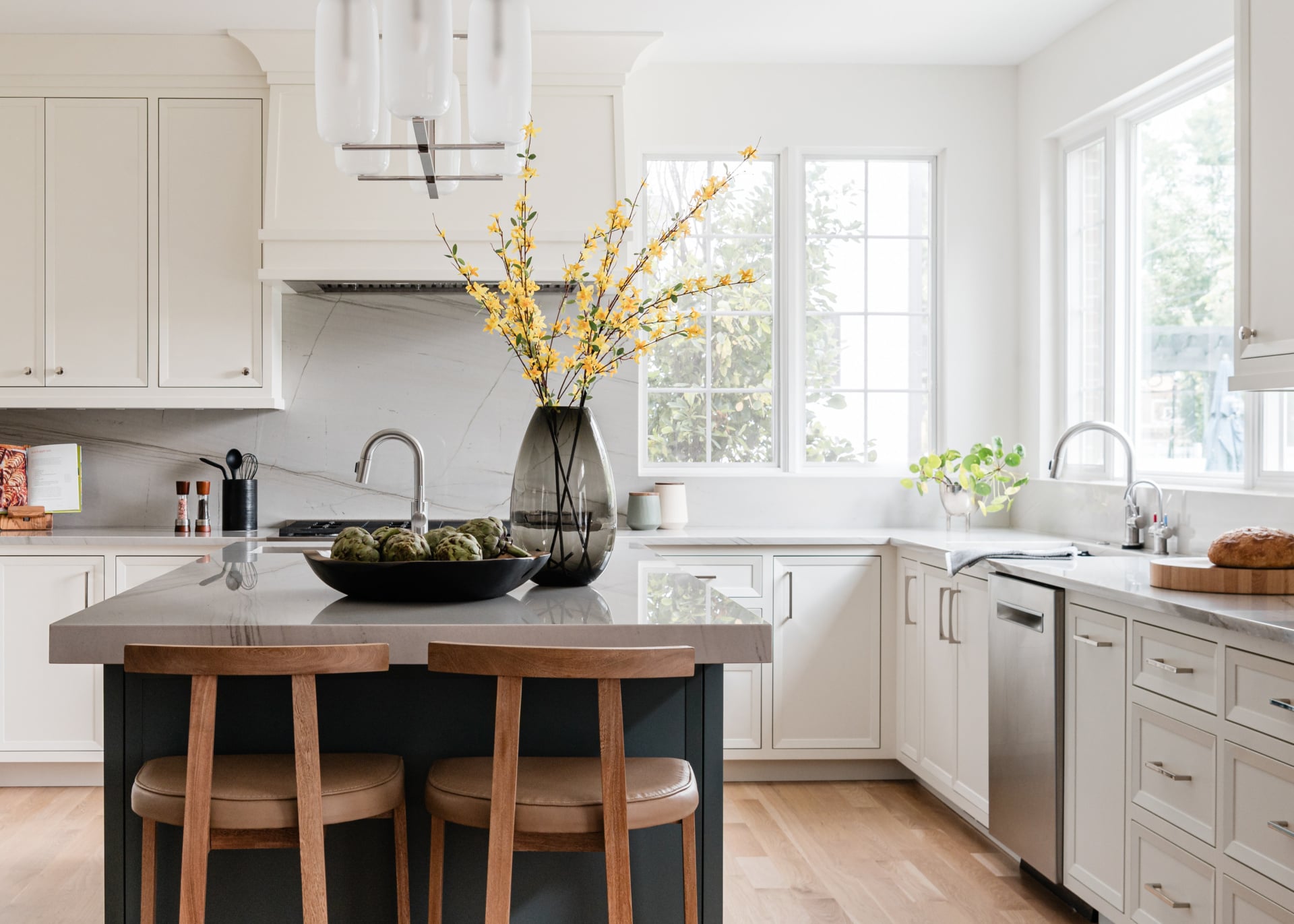
Anyone can photograph one good room. Look for projects documented across a kitchen, a primary suite, a dining room and the connective spaces between them. That is evidence of a designer who was trusted with the whole house.
Before photographs
A designer willing to publish the before shots is telling you the transformation is real. It also shows you what they saw in a difficult room.
Built work, not renderings
Renderings prove someone can operate software. Photographs of finished millwork, installed tile and hung drapery prove the drawings survived contact with the trades.
Detail at close range
Zoom in. Are the reveals consistent? Do the drapery pleats hang correctly? Is the hardware proportioned to the door? Craft shows at close range, and it is the thing you will live with.
You can work through the full body of work on the portfolio, and read what clients say about the experience in the testimonials.

Local trade relationships
A designer who has worked repeatedly with Chicago-area millworkers, tile setters, painters and installers knows whose work holds up. In a market where lead times and installer quality vary widely, that knowledge is worth more than any certificate.
Eight questions to ask before you sign
- Who will manage my project day to day, and who else will I be working with?
- How many projects do you take on at once? Availability is a capacity question, not a personality one.
- Walk me through your phases and what I approve at the end of each one.
- How do you handle procurement: do you order, receive and inspect, or do I?
- What does installation day look like? A single complete install is very different from furniture arriving in waves.
- How do you work with my general contractor, and who resolves conflicts between drawings and field conditions?
- What happens when something arrives damaged or backordered?
- What do you need from me, and how often? Good designers are clear about the decisions only you can make.
The answers matter less than the specificity. A designer who has run these projects many times answers in concrete detail. A designer who has not will speak in generalities.
Compatibility is not a soft factor
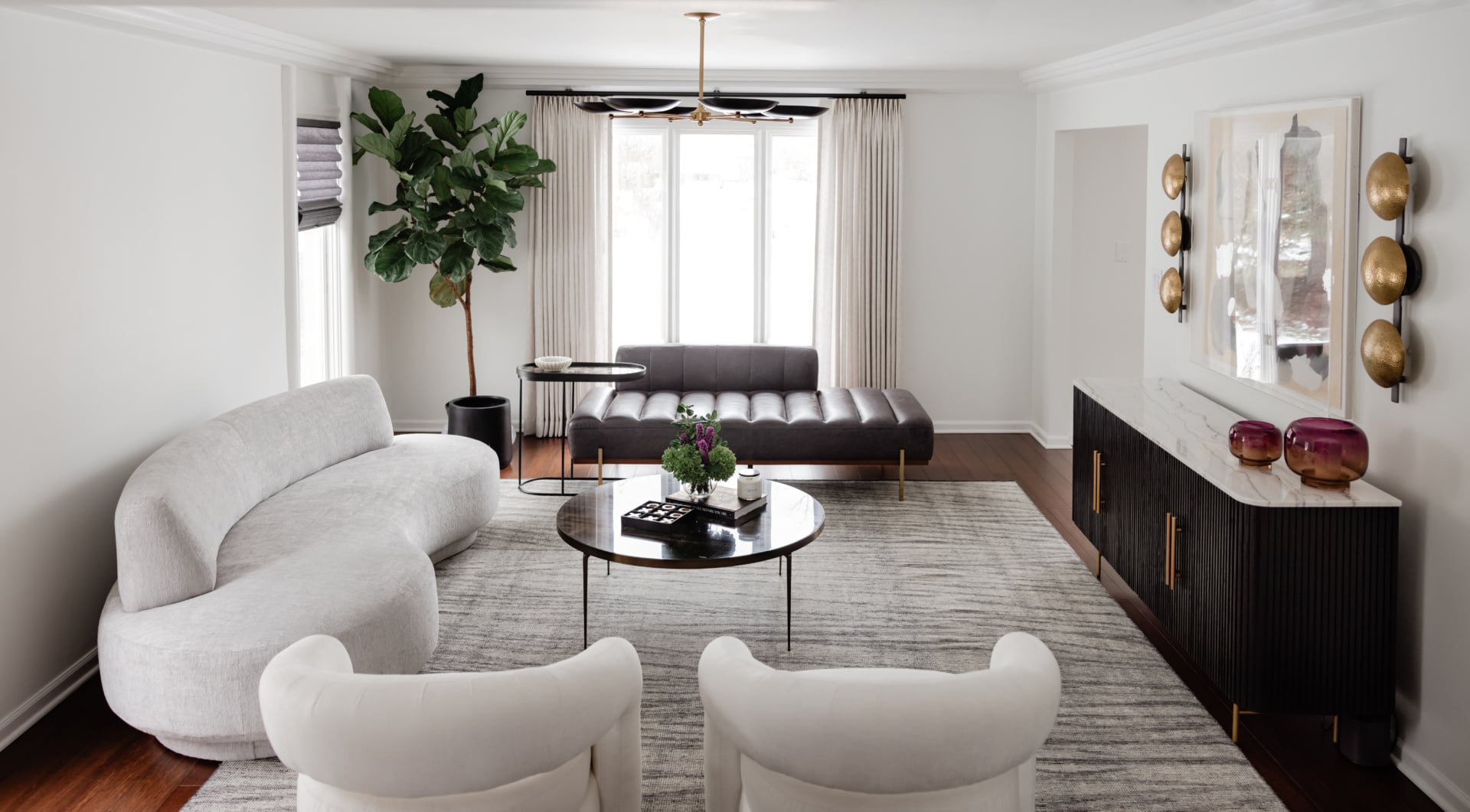
A furnishing project runs several months. A whole-home renovation can run a year or more. Across that span you will be making hundreds of decisions with this person, several of them under time pressure.
Pay attention to how the first conversation goes. Does the designer ask how you actually live before talking about aesthetics: who cooks, whether the dog is on the sofa, how you entertain, which room the family really uses? Do they tell you when they disagree with you? A designer who agrees with everything you say in the first meeting is not going to protect you from a bad decision in month seven.
You should also be able to describe what you want. If you are still forming that, the design quiz and identifying your interior design style are useful starting points before you interview anyone.
What a real scope of work covers
Before anything is ordered, you should have a written agreement that defines:
- Scope by room and by phase. Exactly which spaces are included and to what depth.
- Deliverables. Floor plans, elevations, millwork drawings, lighting plans, finish schedules, furniture plans.
- Approval gates. What you sign off on, and what happens to the schedule when you change your mind after sign-off.
- Procurement responsibility. Who orders, who receives, who inspects, who stores.
- Trade coordination. The designer’s role relative to your general contractor.
- Installation. Whether the house is delivered complete on a single day.
- Timeline and dependencies. Particularly lead times on custom millwork, upholstery and stone. See how long kitchen renovations take and the order to renovate a house for realistic sequencing.
- Photography and publication rights. Whether the finished home may be photographed, and on what terms.
If a designer resists putting scope in writing, that is your answer.
Signs you are talking to the wrong designer
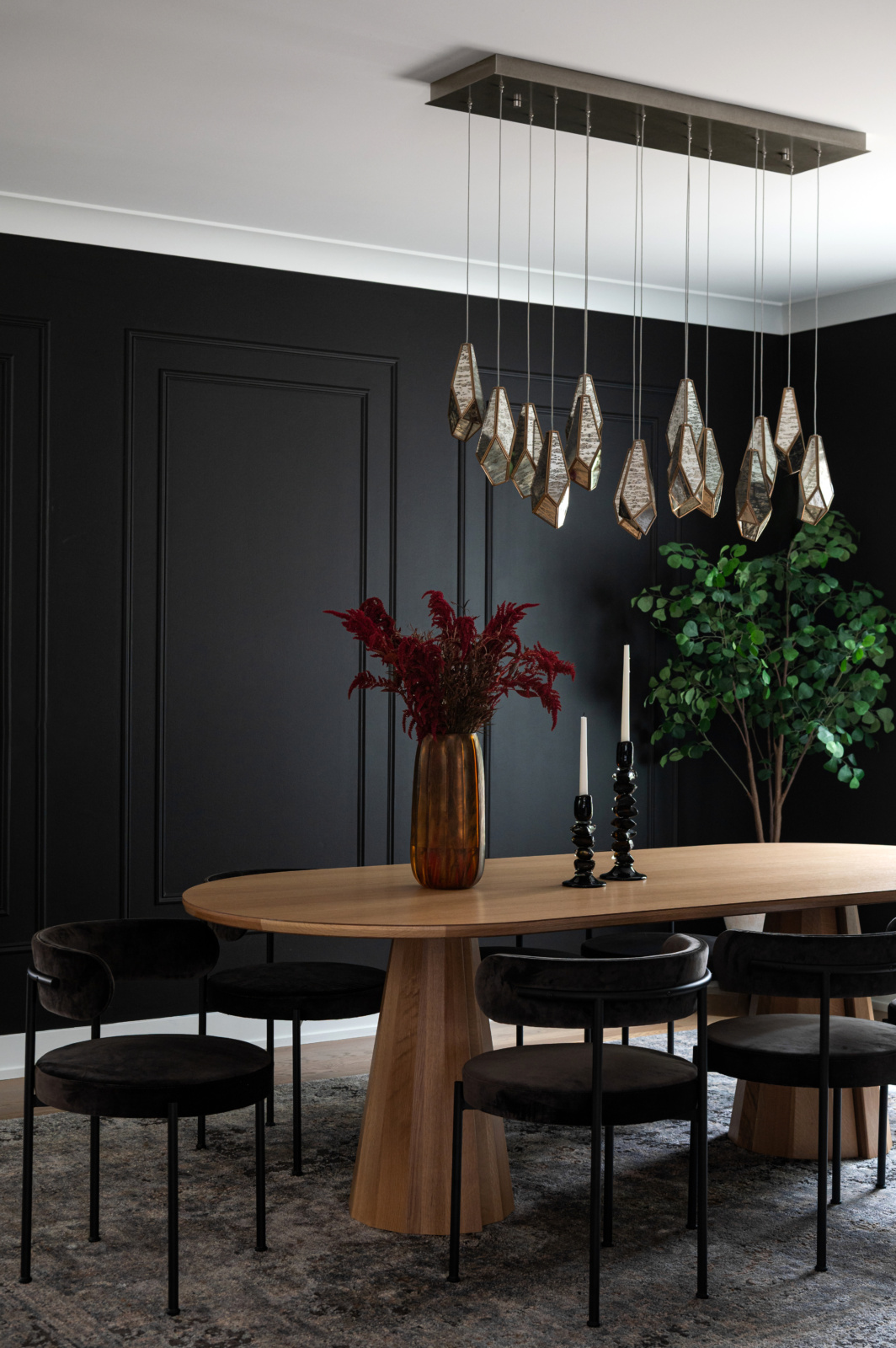
- They present a look before they understand the house. Concept should follow programming, not precede it.
- Every project in the portfolio is the same. You will be getting their house, not yours.
- Scope stays verbal. Undefined scope becomes a dispute later, always.
- Procurement is left to you. Receiving freight and filing damage claims is not a design service you should be performing.
- They cannot produce recent references.
- They agree with everything. You are hiring judgment. Judgment sometimes says no.
Choosing a designer in Chicago and the western suburbs
Housing stock here is specific, and it rewards a designer who knows it. Chicago greystones and vintage walk-ups come with load-bearing masonry, original millwork worth preserving and mechanical systems that constrain what a plan can do. The western suburbs bring a different set: Hinsdale and Naperville homes with generous square footage and large-scale rooms that swallow furniture sized for a showroom floor, and Elmhurst and Burr Ridge properties where new construction and thoughtful rehab sit side by side on the same block.
A designer who works this market regularly knows which village permitting offices are slow, which installers show up, and how to scale furniture to a two-story great room so it reads as a room rather than a lobby. Dara Agruss Design works throughout Chicago and the surrounding suburbs on kitchen, living room, bedroom and new home projects.
Frequently asked questions
What is the difference between an interior decorator and an interior designer?
An interior decorator works with the room as it exists: furniture, textiles, paint, art and accessories. An interior designer works on the room itself, including space planning, lighting design, millwork, finish and fixture specification, and coordination with the trades who build it. Decorating happens after construction; design happens before it.
What does full-service interior design include?
Full-service interior design covers space planning, architectural detailing and custom millwork, finish and fixture specification, lighting design, furniture and window treatments, trade coordination with your general contractor, procurement and receiving, and a complete installation. The studio is accountable for the finished result rather than for a set of recommendations.
When should I hire an interior designer during a renovation?
Before construction documents are finalized, and ideally before you have hired a contractor. Space planning, lighting layouts and millwork detailing all need to be resolved before rough-in. Bringing a designer in after demolition means paying to undo decisions that were made without design input.
How long does a full-service interior design project take?
It depends on scope and on lead times rather than on design hours. Furnishing a set of rooms typically runs several months, driven largely by custom upholstery and drapery production. A whole-home renovation with custom millwork and stone commonly runs a year or more from first meeting to installation day.
What should I prepare before meeting an interior designer?
Bring how you actually live: who uses each room, how you entertain, what you cook, what you own that must stay. Photographs of rooms you respond to are useful, but the more valuable input is a clear account of how the house needs to function. The design quiz is a good place to start.
Does an interior designer work with my general contractor?
On a full-service project, yes. The designer issues drawings and specifications to the contractor, answers field questions directly, and resolves conflicts between the drawings and site conditions, so those questions do not land on you.
Working with Dara Agruss Design
Dara Agruss Design is a full-service interior design studio serving Chicago and the western suburbs. We take responsibility for the entire arc of a project: plan, detail, specify, coordinate, procure and install. Our clients hand us the house and get it back finished.
If you are interviewing designers, we would welcome the conversation. Get in touch to talk through your project, or read more on our FAQs page.