
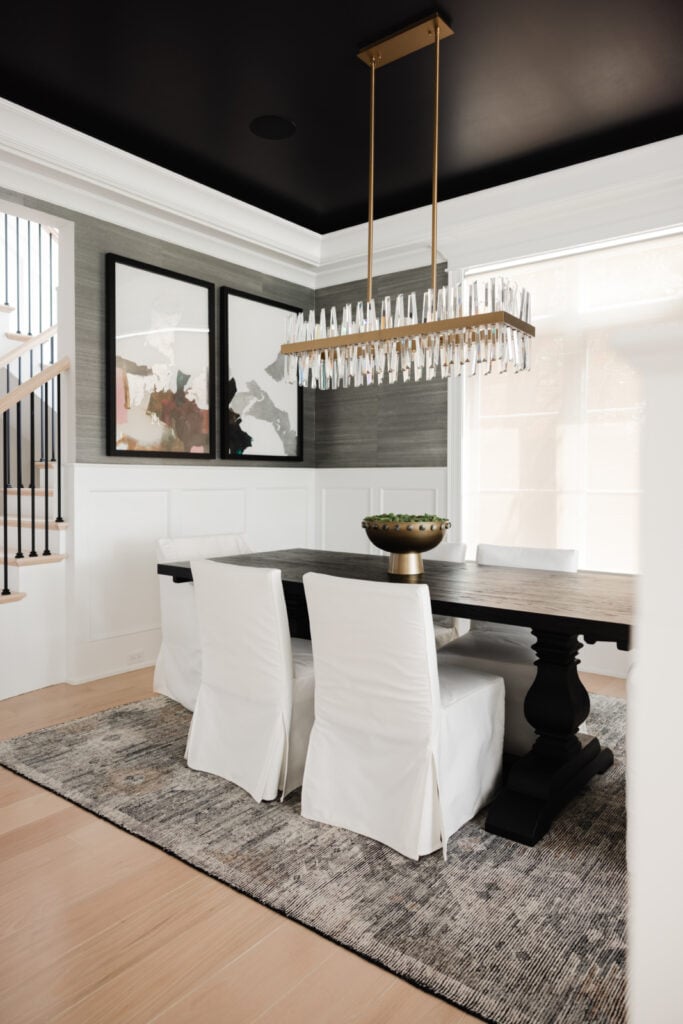
Last updated August 27, 2026
Key Takeaways
- Seat height is the one rule you cannot break. Chairs of different heights at one table are uncomfortable and look wrong immediately.
- Hold one thing constant: the style, the colour, or the material. Vary all three and the table reads as an accident.
- The most reliable mix is different chairs at the heads from the sides, because the difference follows a function rather than a whim.
- Visual weight should stay consistent even when the styles differ. A delicate chair beside a heavy one looks like a mistake.
- Armchairs need to clear the table apron, which rules out more chairs than people expect.
- A bench on one side works visually and is worse to sit on. Nobody wants the middle.
Mixing dining chairs works when one element stays constant across all of them. Keep the same seat height without exception, then hold either the style, the colour or the material steady and vary the rest. The most dependable version is one pair at the heads of the table and a different set along the sides, because that difference follows the shape of the table rather than looking arbitrary.
Most unsuccessful mixes fail on comfort before they fail on looks, and the culprit is almost always seat height.
Seat height is not negotiable
The rule that decides whether a mixed set is usable, and the one people discover after buying.
Dining chair seats sit at roughly 18 to 19 inches from the floor, and tables sit at about 30. That relationship is what makes a table comfortable. Vintage chairs are frequently lower, sometimes 16 or 17 inches, because people were smaller and dining habits were different. Modern chairs occasionally run higher.
Put a 17 inch chair next to a 19 inch chair at the same table and one person is eating at chest height while the other is comfortable. It reads instantly, both to the person sitting in it and to anyone looking at the room, and no amount of styling recovers it.
Measure seat height before anything else. It rules out a proportion of vintage chairs entirely, which is disappointing and much better discovered in advance.
The second measurement is the gap between the seat and the underside of the table. Around 10 to 12 inches is comfortable. Less and legs are trapped, more and the table feels too tall.
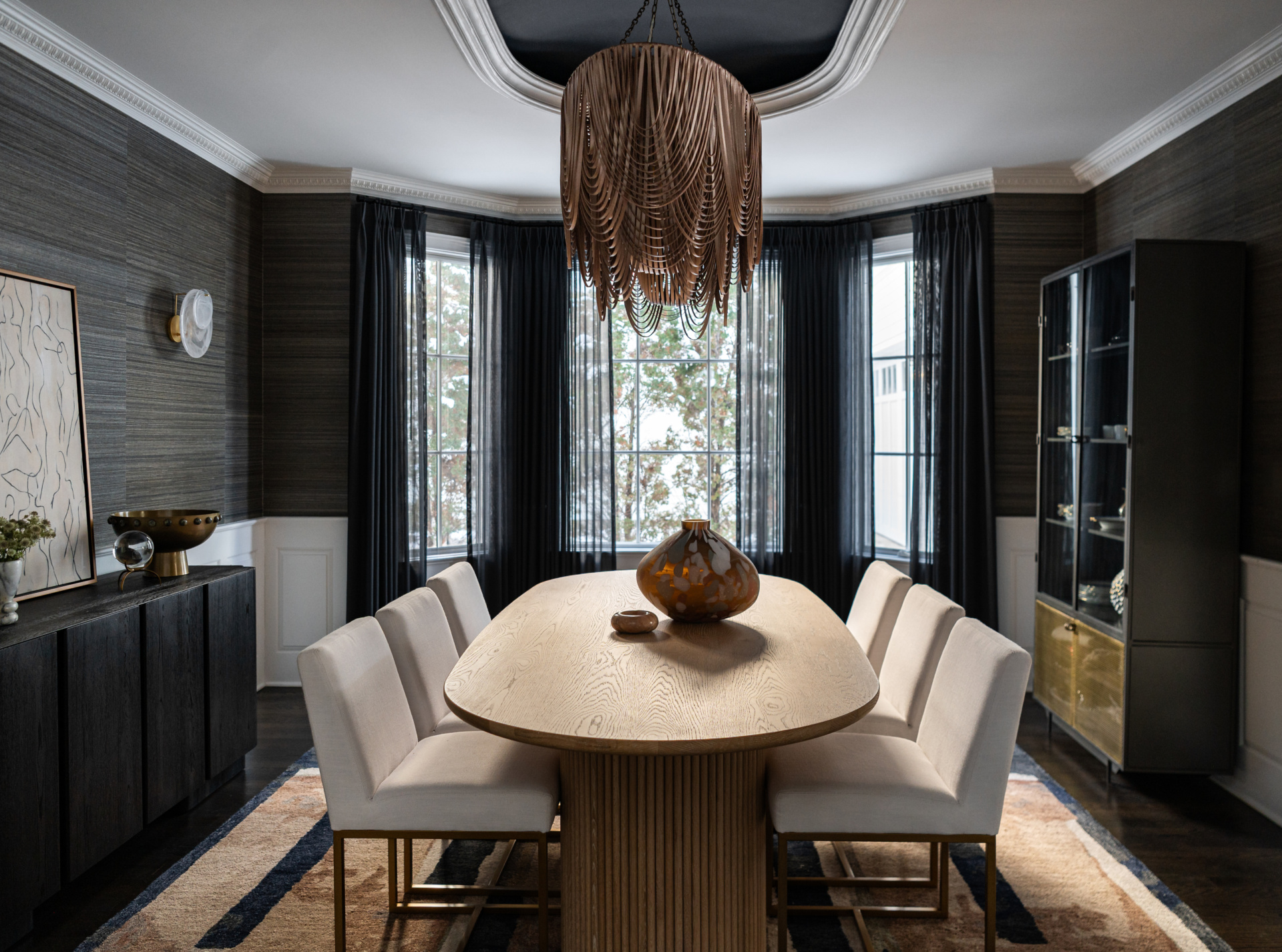
Keep one thing constant
This is the principle that separates a deliberate mix from a collection of chairs that happen to be in one room.
Three attributes are available to vary: style, colour and material. Hold one steady across every chair and you can move the other two freely. Vary all three at once and there is nothing tying the group together, which is when a table looks like it was furnished from whatever was available.
Constant colour is the easiest. Six chairs of entirely different shapes, all painted the same black or all upholstered in the same fabric, read as a deliberate set immediately.
Constant material is next. All timber, in different designs and different tones, holds together because the surface is doing the connecting.
Constant style with varied colour is the most playful and the hardest to judge, since it depends on the colours genuinely relating rather than merely differing.
Approaches, compared
From the most reliable to the most demanding.
| Approach | How it works | Reliability | Watch for |
|---|---|---|---|
| Heads different from sides Two armchairs at the ends, matching set along the sides. |
The difference follows the table’s shape, so it reads as intentional | The most dependable version. Very hard to get wrong | The armchairs must clear the table apron |
| Same shape, different colour One chair design in several finishes or fabrics. |
Silhouette holds it together while colour supplies interest | Very reliable if the colours relate rather than just differ | Random colours read as a nursery rather than a scheme |
| Different shapes, one colour Varied designs unified by a single finish. |
Colour does all the connecting work | Reliable, and the best route for genuinely mismatched vintage chairs | Seat heights still have to match |
| Different shapes, one material All timber or all metal, otherwise varied. |
Material connects them | Good, though weaker than colour as a unifier | Timber tones that clash rather than contrast |
| Bench on one side Bench along one long side, chairs opposite. |
Visually effective and genuinely casual | Looks good, sits poorly | Nobody wants the middle of a bench |
| Fully mismatched Every chair different in every respect. |
Nothing is holding the group together | Rarely works outside a very particular eclectic scheme | Reads as unfinished rather than collected |
Whichever approach you take, seat height stays constant. It is the only element with no room for variation.
Heads and sides
Worth spelling out because it is the version we specify most.
Two chairs at the ends of the table, different from the four or six along the sides. Usually the end chairs are the more substantial: armchairs, upholstered, a deeper colour, or simply a larger version of the same design. The sides are lighter and quieter.
It works because the difference is doing a job. The ends of a table are different positions, they have more room around them, and marking that with a different chair reads as a decision rather than as chairs that did not match. It is also practical: the end seats are the ones people linger in.
The constraint is the apron, the rail running beneath the table top. Armchairs have to slide under it, and a great many do not. Measure from the floor to the underside of the apron and compare it with the height of the chair arms before committing.
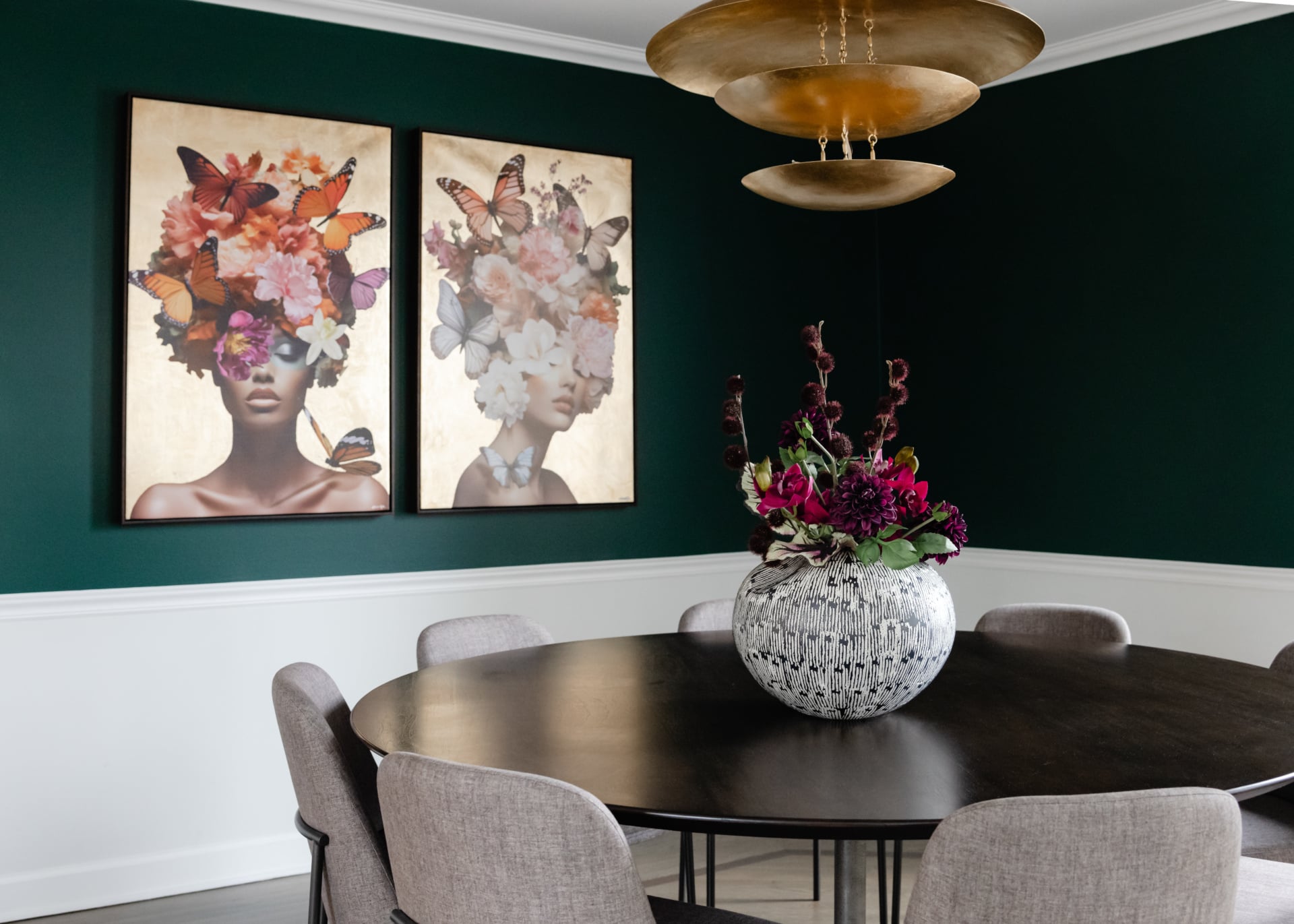
Visual weight has to agree
A subtler point that explains why some mixes look wrong despite following the rules.
Chairs can differ in shape and still need to feel like they belong to the same family in terms of substance. A delicate spindle-back chair beside a heavy upholstered one, at the same table, reads as an error rather than a contrast, because the eye compares them directly and one looks like it wandered in.
Keep the mass roughly comparable. Two light chairs and four heavy ones is unbalanced; six chairs of similar presence in different designs is not. Where you do want a heavier chair, put it at the head, where the difference has a reason.
Height of the back matters here too. Wildly different back heights around one table produce a jagged line that is hard to resolve, and the effect is more noticeable in a room with a low ceiling.
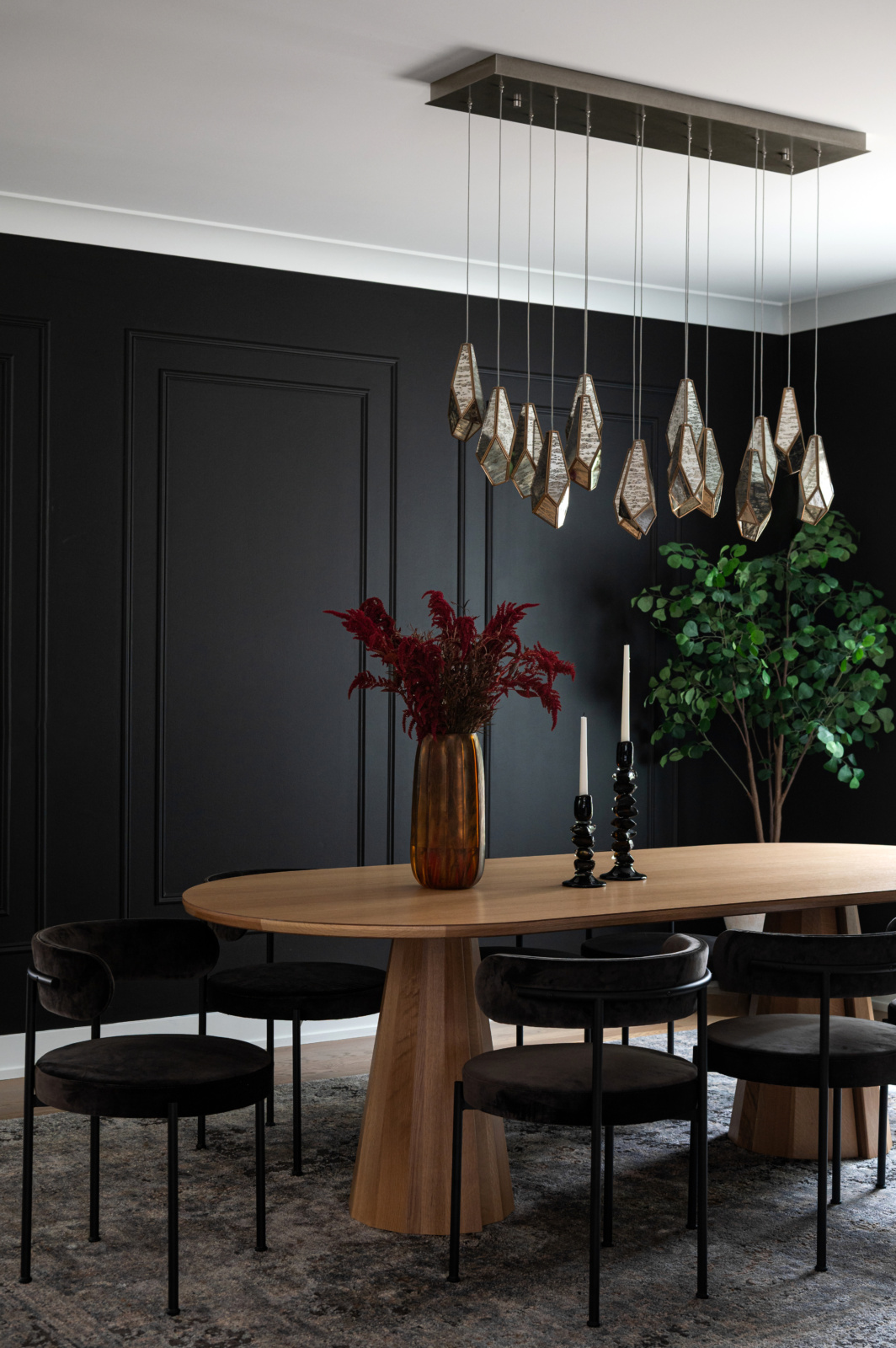
Comfort, because these get sat in
Dining chairs are used for longer stretches than most people account for, particularly where a household eats together or works at the table.
Sit in one for several minutes before deciding, not a few seconds. A chair that feels fine briefly can be uncomfortable by the end of a meal, and seat depth is usually the reason: too deep and shorter people cannot reach the back, too shallow and it feels perched.
Upholstered seats are considerably more comfortable for long sitting and require more thought about fabric, since dining chairs meet food. A tight weave that can be cleaned, and ideally removable seat pads, makes the difference between a chair you keep and one you resent.
Where chairs are used daily by a family, construction matters as much as it does in a sofa. Joints loosen from being dragged and leaned back on, and a chair that creaks in the showroom will fail within a year.
Where mixed chairs come from
The practical routes, each with a different constraint.
Buying a set and adding two different ends is the simplest, and the one that most reliably looks intentional.
Collecting vintage chairs over time is the most rewarding and the most demanding, because seat height varies so much and you cannot commission more if you fall short. Buying more than you need, when you find them, is the usual answer.
Reupholstering mismatched inherited chairs in one fabric is the most transformative single move available here. Chairs of entirely different designs, all in the same cloth, read as a set. It is also what makes a group of family pieces usable rather than merely sentimental.
A home should tell your story, and inherited chairs are one of the more direct ways that happens. They just need something holding them together.
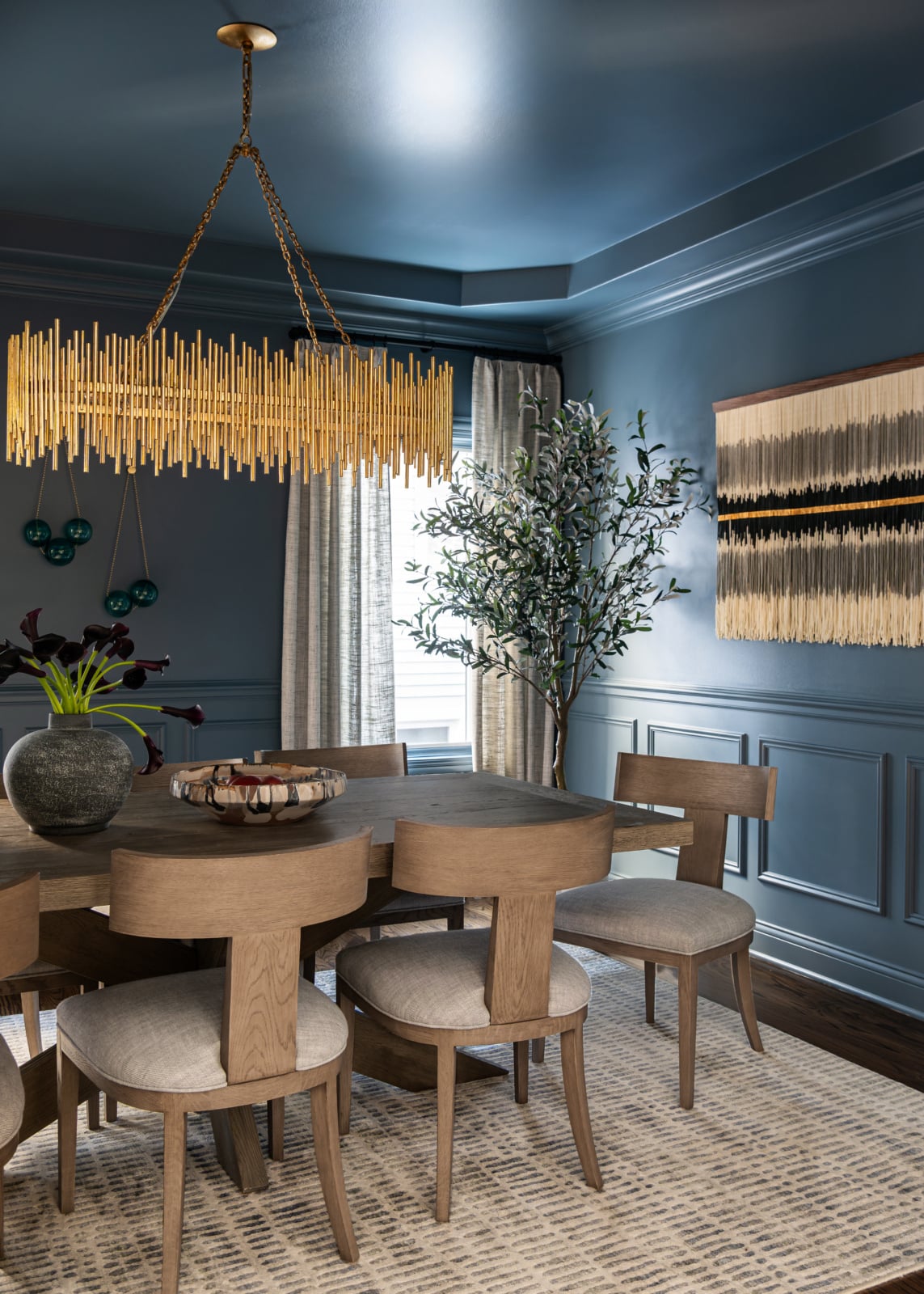
How many chairs, and where the spare ones live
An unglamorous point that decides whether a mixed set is practical.
A table seats a certain number comfortably, and households usually want capacity beyond that for occasions. Chairs that live elsewhere in the house and come to the table when needed are a good solution, and they are the natural place for the odd ones out in a mixed scheme.
That works better than storing chairs in a garage, because a chair that lives in a bedroom or a hall gets used and looked after, and it means the mix extends into the rest of the house rather than stopping at the dining room door.
Allow around 24 inches of table width per person, and check that chairs can be pulled out without hitting a wall or a sideboard. Circulation around a dining table is the thing most often forgotten in a space plan, and it is what makes a room feel tight regardless of its actual size.
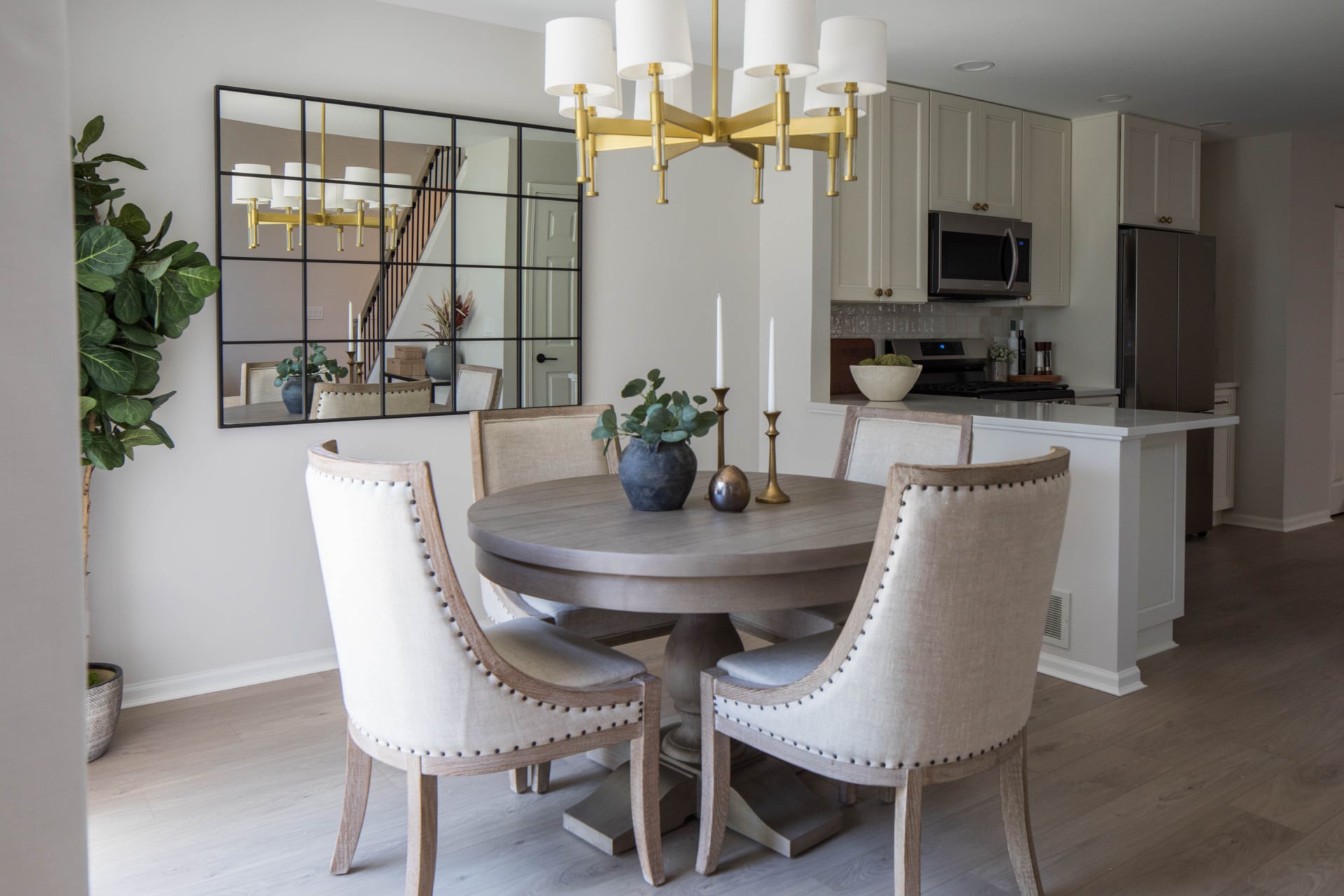
Chicago dining rooms specifically
Two local conditions worth designing around.
Older city houses and greystones frequently have separate dining rooms with real proportion and generous ceiling height, which suits a considered mixed set and takes a more substantial chair than a modern room would. Those rooms often came with a table already, and a mixed set of chairs is one of the more effective ways of bringing an inherited table into the present without replacing it.
Newer suburban houses tend to have open plan eating areas where the dining chairs are visible from the kitchen and the living space at all times. That raises the bar: chairs which read as slightly mismatched in a closed room can look unresolved when they are part of one large view. In those rooms, holding colour constant is usually the safest of the approaches above, because it survives being seen from three directions at once.
Working through it with us
Mixed chairs are one of the better ways to make a dining room feel like it belongs to someone, and the difference between a set that looks collected and one that looks unresolved usually comes down to two measurements. You can see how we work on our design process page, look through recent projects, or get in touch about your own home.
Related reading: mixing traditional and modern furniture, why get custom furniture, how long a sofa should last, the art of transitional design and choosing a rug material. We work across Chicago, Hinsdale and Elmhurst.
Frequently asked questions
Can you mix and match dining chairs?
Yes, provided one element stays constant across all of them. Keep the seat height identical without exception, then hold either the style, the colour or the material steady and vary the rest. Varying all three at once is what makes a table look accidental.
Do mixed dining chairs need to be the same height?
Yes, and this is the one rule with no flexibility. Seats sit at roughly 18 to 19 inches against a 30 inch table. A 17 inch vintage chair next to a 19 inch modern one means one person eats at chest height, which is obvious to sit in and obvious to look at.
What is the easiest way to mix dining chairs?
Different chairs at the heads of the table from the sides, usually more substantial armchairs at the ends. The difference follows the shape of the table rather than looking arbitrary, and the end seats are where people linger anyway.
How do I unify a set of completely different chairs?
Reupholster or paint them all in one colour. Chairs of entirely different designs in a single finish read as a deliberate set immediately, and it is the most transformative single move available. It is also what makes inherited chairs usable rather than merely sentimental.
Why does my mix of dining chairs look wrong?
If the heights match, it is usually visual weight. A delicate spindle-back beside a heavy upholstered chair reads as an error rather than a contrast, because the eye compares them directly. Keep the mass roughly comparable and put any heavier chair at the head.
Will armchairs fit at my dining table?
Check the apron, the rail beneath the table top. Measure from the floor to its underside and compare that with the height of the chair arms. A great many armchairs do not clear it, which rules them out however well they suit the room.
Does a bench work with dining chairs?
Visually, yes, and it is a genuinely useful casual look. Practically it is the weakest seat at the table, because nobody wants the middle of a bench and everyone has to shuffle to let one person out. Good on a side used by children, less good as the main seating.
How much space does each dining chair need?
About 24 inches of table width per person, plus room to pull the chair out without hitting a wall or sideboard. Circulation around a dining table is the thing most often forgotten in a plan, and it is what makes a dining room feel tight regardless of its size.