
Last updated August 27, 2026
Key Takeaways
- Style labels are marketing categories rather than design tools. Naming yours is the least useful part of the exercise.
- Look at what you already own and have kept through several moves. That is evidence about your taste, not aspiration.
- Separate what you like looking at from what you like living in. Saved images measure the first. Your home has to do the second.
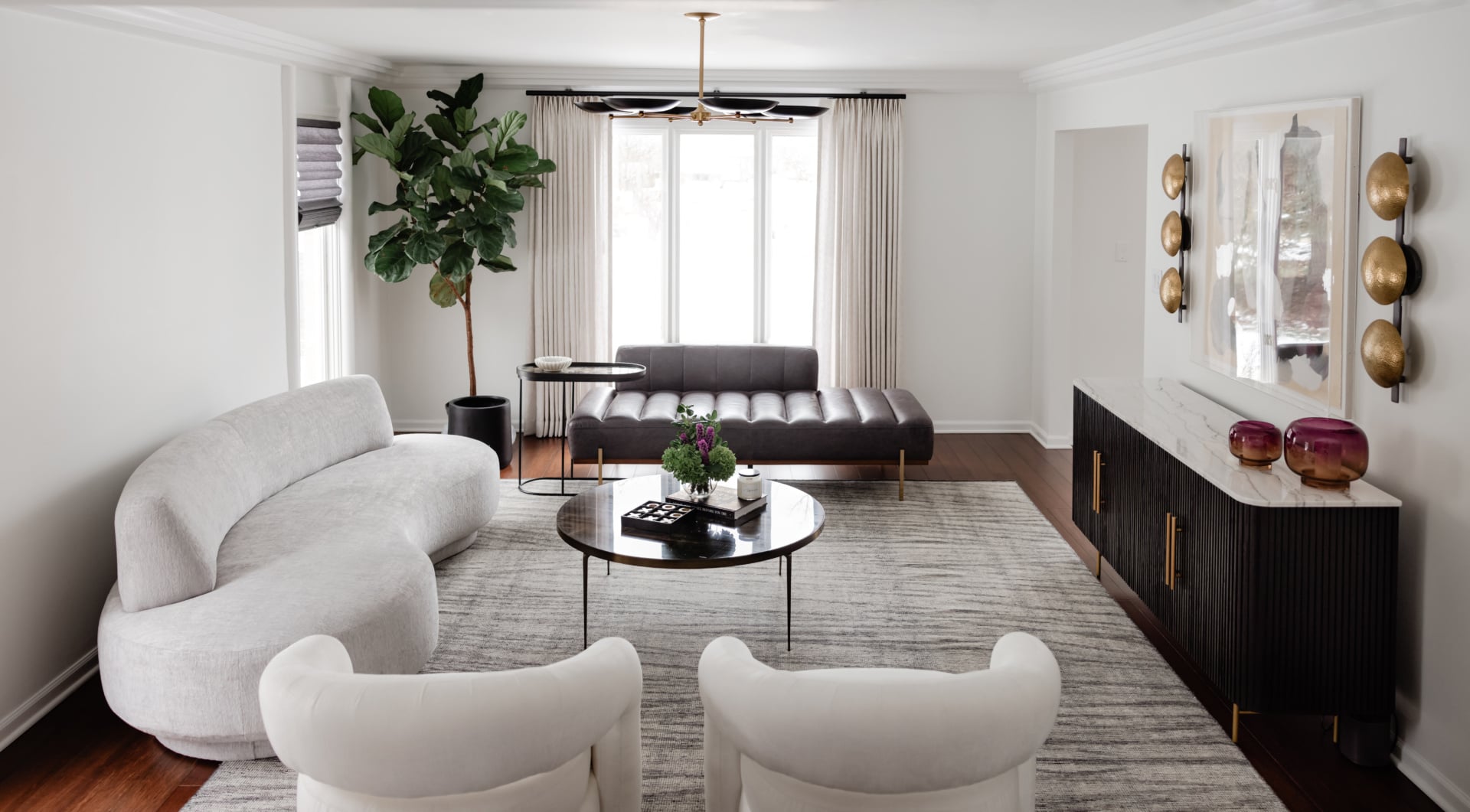
- Three decisions locate almost anyone: how much visual weight you want, how much pattern and ornament you can live with, and warm or cool.
- Your saved images almost always share a through-line you cannot see. Naming it is more useful than naming a style.
- Do not design for resale or for what is current. A home that could have been ordered from a catalogue has failed.
The quickest way to identify your interior design style is to stop looking at style quizzes and look at what you already own and have chosen to keep. Then answer three questions: whether you want rooms that feel heavy or light, how much pattern and ornament you can live with, and whether you are drawn to warm or cool. Those three locate almost anybody, and the label is the least important part.
The labels are useful for shopping and for talking to a designer quickly. They are close to useless for deciding what your house should be.
Why the labels do not help much
Modern, transitional, farmhouse, coastal, industrial, maximalist. These are categories that exist because retailers need to organise a catalogue, and they get treated as if they were personality types.
The trouble is that they describe surfaces rather than decisions. Two rooms both correctly described as transitional can feel completely different: one calm and pale, one dark and heavy. The label did not capture the thing that actually distinguishes them.
They also encourage a kind of fancy dress, where somebody decides they are farmhouse and then buys the accessories of farmhouse rather than working out what they actually want to live in. That is how rooms end up looking like a set.
Naming a style is a fine shorthand once you know what you like. It is a poor way of finding out.
Start with what you have kept
The most reliable evidence about somebody’s taste is already in their house, and it is usually being ignored.
Look at the things you have carried through two or three moves. Not the practical items, the ones you chose to keep when keeping them was inconvenient. A chair, a rug, a painting, a set of plates, a lamp. Those objects survived because you actually like them, which is a much stronger signal than anything you have saved on a phone.
Then look at what they have in common. It is rarely a style. More often it is a colour temperature, a level of ornament, a material you keep returning to, or a certain weight. Nearly everyone has a pattern like this and nearly nobody can see it in their own things until it is pointed out.
The same trick works with a wardrobe. People are usually far more decisive about what they wear than about what they live in, and the two are more closely related than they expect.
Looking at versus living in
This distinction resolves a great deal of confusion, and it explains why people’s saved images do not match their real preferences.
Images are consumed for a few seconds and reward drama: a striking colour, a bold pattern, an unusual object. Rooms are inhabited for years and reward comfort, storage, light and calm. It is entirely normal to be drawn to photographs of rooms you would find exhausting to live in.
So separate the two lists. What do you enjoy looking at, and what do you want to come home to. Where they agree, you have found something solid. Where they disagree, the living-in answer wins for the rooms you use daily, and the looking-at answer can have the powder room, the study or one wall.
The three questions that locate you
These matter more than any label, and they are the ones we actually ask.
| Question | One end | The other end | What it decides |
|---|---|---|---|
| How much visual weight? Whether you want rooms that feel substantial or airy. |
Heavy: deep colour, solid forms, dark timber, enclosure | Light: pale walls, legs on furniture, open sightlines | Almost everything. Two rooms with identical furniture read differently on this alone |
| How much pattern and ornament? Your tolerance for things happening on a surface. |
High: pattern, carving, layered textiles, collections | Low: plain surfaces, quiet materials, few objects | Whether the room feels restful or dull to you specifically |
| Warm or cool? The temperature you are drawn to. |
Warm: reds, browns, brass, timber, plaster | Cool: greys, blues, greens, steel, stone | Every material and finish choice downstream |
| What do you keep? The objects that survived several moves. |
Evidence of real taste | Not applicable | The most reliable data you have, and it is free |
| Look at or live in? Whether an image is aspiration or preference. |
Look at: drama, novelty, boldness | Live in: calm, comfort, light, storage | Which rooms can take the bold version |
Answering these three gives a brief a designer can actually work from. A style name gives one that has to be interrogated anyway.
Find the through-line in your saved images
Saved images are worth using, just not in the way people usually use them.
The instinct is to count how many are farmhouse and how many are modern, and conclude you are somewhere in between. That produces the vague answer most people arrive with.
Instead, look for what is consistent regardless of style. Are the rooms mostly dark or mostly pale? Is there timber in nearly all of them? Do the images have almost no pattern, or a lot? Is the light warm or cool in most of them? Is there always a fireplace, always books, always a large plant?
That consistency is your actual taste, and it is usually much narrower than people think. When we go through a set of saved images with a client, the useful moment is almost never “these are all modern”. It is “every single one of these has warm timber and no pattern”, which is a brief you can build a house on.
Beware the words that mean nothing on their own
Some words come up constantly and need unpacking before they are useful.
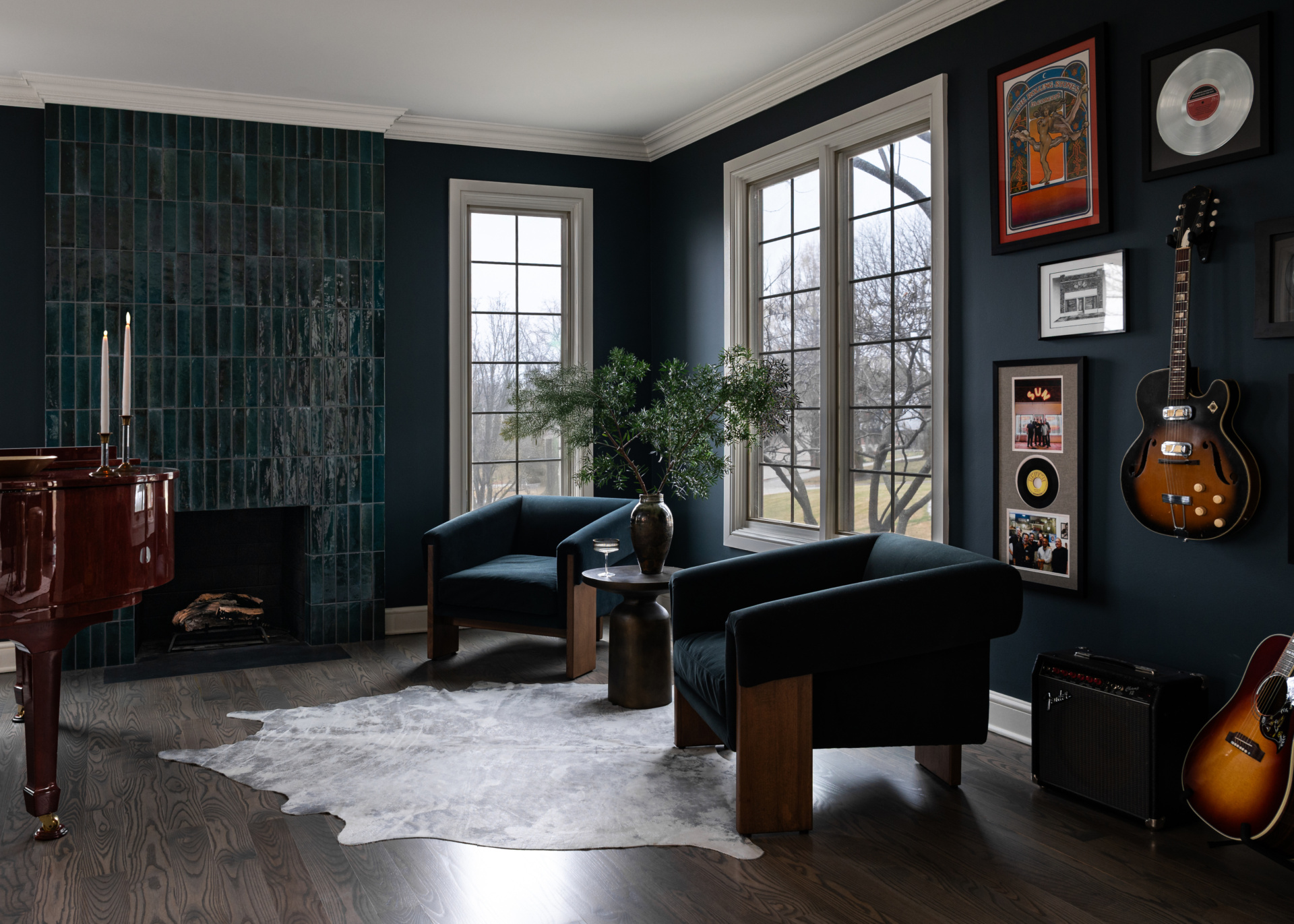
Warm is the main one. Warm is a feeling and it means different things to different people. For some it is colour. For others it is light. For others it is texture, or the way a room flows, or simply that the seating faces each other. Asked for a warm room, the job is to find out what that person means rather than to reach for a recipe of layered textures and warm whites.
Cosy, clean, timeless, elegant and inviting are all the same kind of word. Each describes an effect rather than a means, and each can be achieved several different ways. If somebody hands you one of these without asking what you mean by it, you will get their interpretation rather than yours.
Your house has an opinion
Taste is only half the equation. The building is the other half, and ignoring it produces rooms that never quite settle.
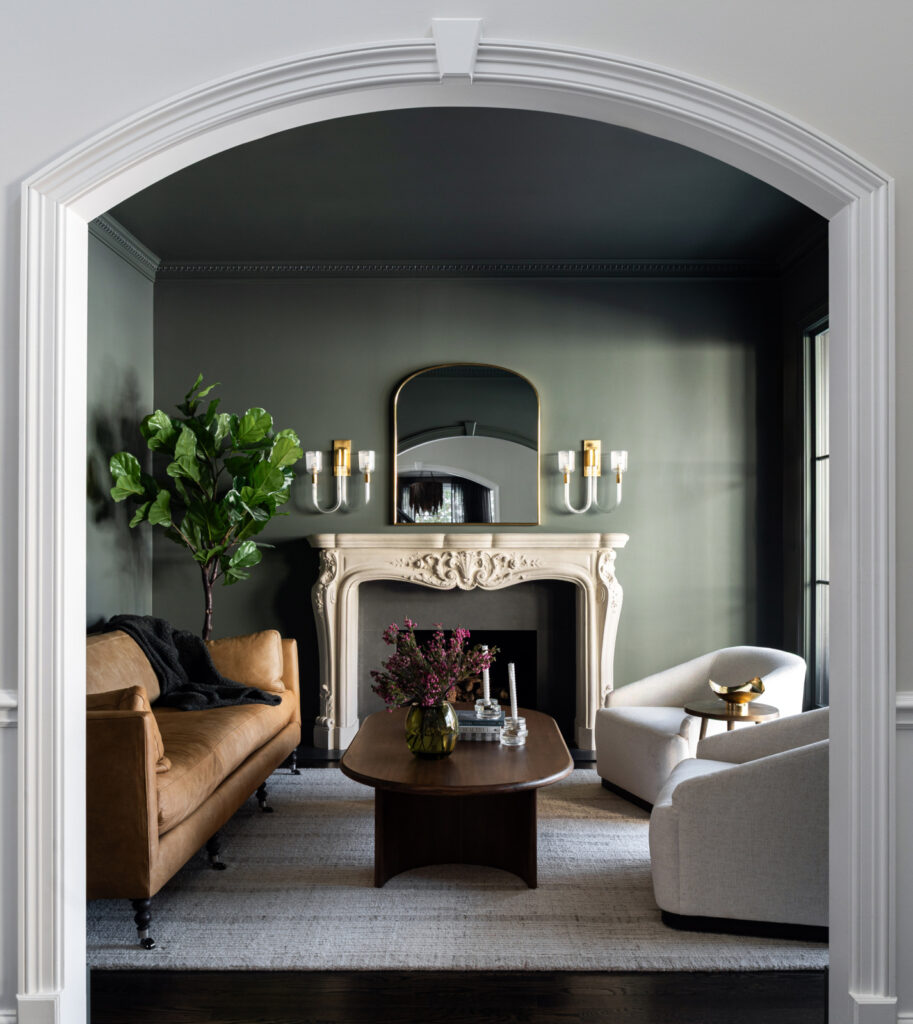
A greystone with deep original mouldings, panelled doors and a carved mantel has a traditional voice that is louder than any sofa. You can absolutely furnish it in a contemporary way, and the result can be excellent, but you are working with that architecture rather than replacing it. Fill it entirely with minimal modern pieces and the room reads as unfurnished rather than modern.
A new build with flat walls and square openings has almost no voice, which is freeing and also means nothing is helping you. Rooms like that need something introduced, whether that is millwork, colour, or pieces with real character, or they stay generic.
The most successful houses we work on are the ones where the owner’s taste and the building’s character were reconciled early rather than fought about for a year.
The mistake that spans every style
Rooms fail for the same reason regardless of which label they wear, and it is worth naming because it is not about taste at all.
The most common problem in homes that are beautiful and expensive is that they do not reflect the personality of the people who live there. A home should tell your story and say who you are. If it looks like everything was ordered from a page in a catalogue, the design falls flat no matter how good the individual pieces were or how coherent the style is.
Which is why the objects matter so much. A room is not finished until it is styled, and accessories are what make a room feel complete. They are also what tells you about the people: a coffee table book says something about their interests, their art says what they find beautiful, the things on a shelf say where they have travelled or where they came from.
You cannot buy that in a single trip, and a room that has it is instantly recognisable.
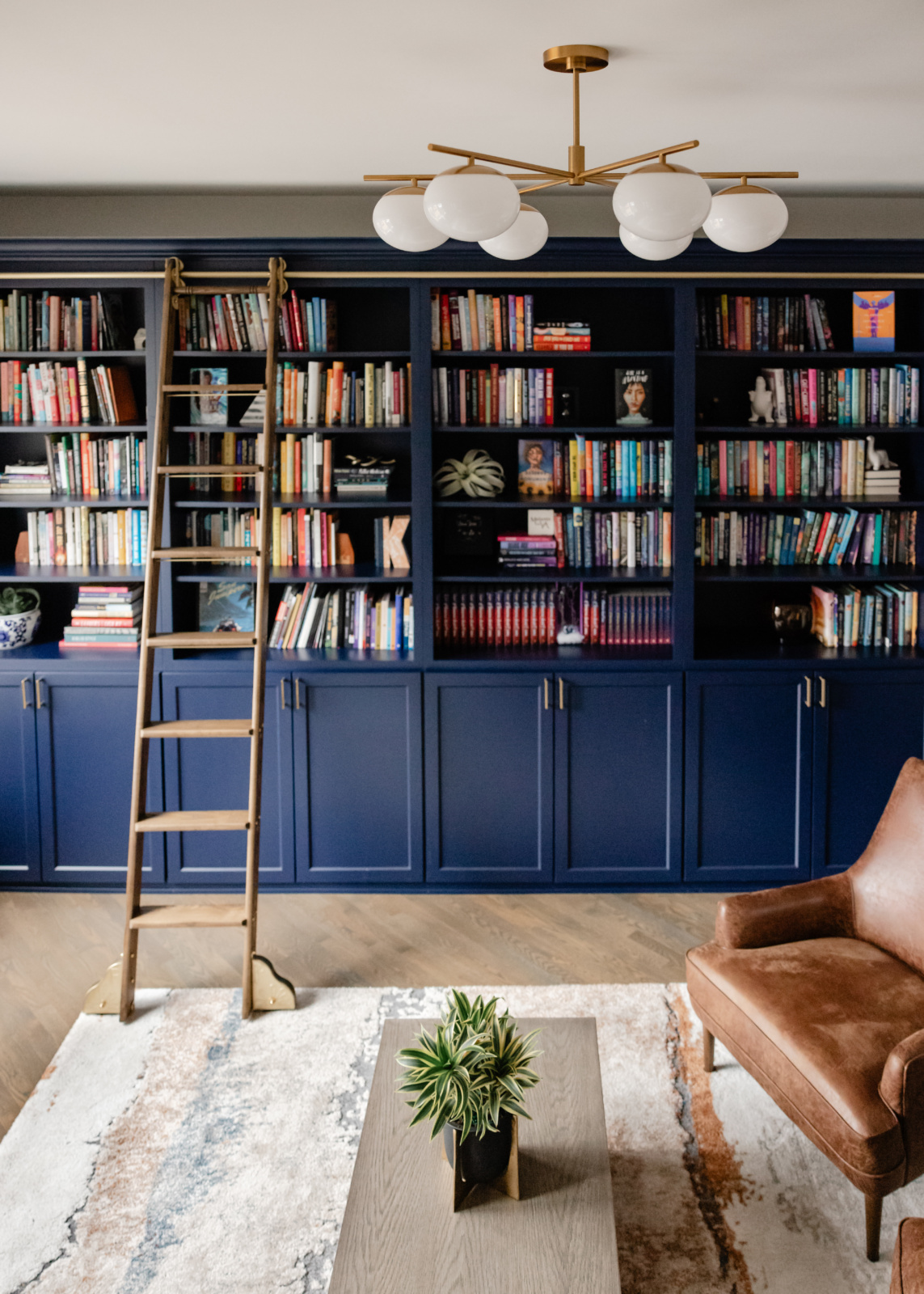
Do not chase timeless
The most common instinct once people identify a style is to hedge it, keeping everything neutral so the room will not date. It is worth arguing against directly.
Nothing is ever completely timeless. There is always some element of an item that shows when it was chosen. It is similar to clothes: styles come and go, and every time they return something is different from the previous version. Stone might be called timeless, marble for instance, but the way it is used is what goes out of style rather than the material.
Try to design everything in a home to be timeless and everything ends up neutral, and honestly, boring. Use what you love and worry less about whether it will date. Life is too short, and you should love your home.
The same applies to designing for resale. Unless you are selling next year, you are giving a hypothetical stranger a vote on rooms you have to live in.
How to turn all this into a brief
If you are about to work with anybody on your house, this is what is genuinely worth writing down, and it is more useful than a style name.
The three answers above. A short list of the objects you are keeping and want designed around. A note on how the household actually lives, because kids, pets and allergies change what gets specified and there is no point designing around an imagined family. And the rooms in order of how much they matter to you, which is where attention should be concentrated.
Then the practical constraints: what has to stay, what is definitely going, and what the timeline is. A brief like that lets a designer get to a proposal that is recognisably about you, rather than a first attempt that has to be corrected twice.
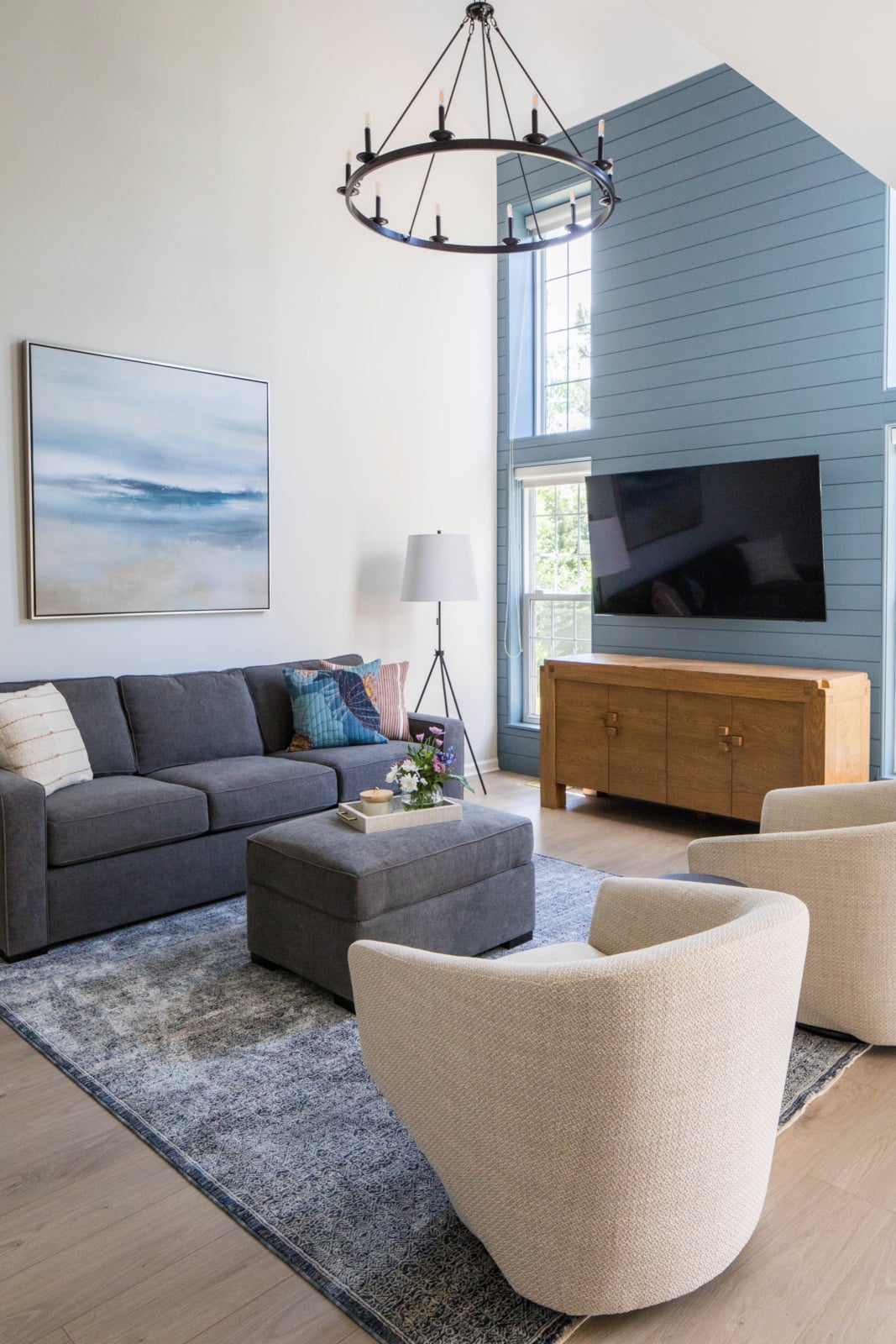
Chicago houses specifically
Where you live locally shapes how much the building is contributing to the answer.
City greystones, two-flats and vintage walk-ups come with strong architectural character: deep trim, high ceilings, original millwork, sometimes leaded glass. Your style is being expressed in dialogue with that, and the most interesting results tend to come from contrast rather than agreement, a very contemporary kitchen inside a hundred-year-old shell, for instance.
Western suburb houses in Hinsdale, Elmhurst, Naperville and Oak Brook are more varied, ranging from real period houses to new construction with generous, quiet rooms. In the newer ones your taste has to supply everything, which is more freedom and more work. Scale is the specific thing to watch, because large rooms swallow anything chosen for a smaller house, and a scheme that felt confident on a mood board can disappear entirely.
Working through it with us
Most people arrive knowing more about their taste than they can articulate, and the useful part of the first conversation is usually getting it said out loud. If you would like a starting point, our design quiz is a reasonable way in, and you can see how we work on our design process page, look through recent projects, or get in touch.
If the quiz has already told you where you sit, each of the three directions we work in has a page of its own: transitional, boho and eclectic and farmhouse craftsman. Read it as a description of a surface, and bring the three questions above to the first conversation.
Related reading: the art of transitional design, mixing traditional and modern furniture, building a palette from scratch, how to choose an interior designer and choosing a statement piece. We work across Chicago, Hinsdale and Elmhurst.
Frequently asked questions
How do I find out what my interior design style is?
Look at what you already own and have kept through several moves, then answer three questions: whether you want rooms that feel heavy or light, how much pattern and ornament you can live with, and whether you are drawn to warm or cool. Those locate almost anyone, and the label matters least.
Are interior design style quizzes useful?
Not very. Style labels are categories that exist so retailers can organise a catalogue, and they describe surfaces rather than decisions. Two rooms both correctly called transitional can feel completely different, which means the label missed the thing that actually distinguishes them.
Why do I like rooms in photos that I would not want to live in?
Because images are looked at for seconds and reward drama, while rooms are lived in for years and reward comfort, light and calm. It is entirely normal for the two to differ. Keep both lists, let the living-in answer win in the rooms you use daily, and give the bold version a powder room or a study.
How do I use my saved images properly?
Look for what is consistent regardless of style rather than counting how many fall into each category. Are the rooms mostly dark or pale, is there timber in nearly all of them, is there almost no pattern or a lot. That through-line is your actual taste and it is usually narrower than people expect.
What does it mean if I like several different styles?
Usually that the labels are the wrong tool rather than that your taste is unresolved. Rooms you like across several categories almost always share something concrete, a colour temperature, a level of ornament, a material. Name that and the apparent contradiction disappears.
Should my furniture match the style of my house?
It should engage with it. A house with deep mouldings and a carved mantel has a traditional voice louder than any sofa, and contemporary furniture works well there as deliberate contrast. A new build with flat walls has almost no voice, which means your choices have to supply all the character.
Should I choose a style that will not date?
No. Nothing is completely timeless, and even materials described that way go out of style in how they are used rather than in themselves. Designing everything to be safe produces rooms that are neutral and boring. Use what you love.
What should I give a designer instead of a style name?
How heavy or light you want the rooms, how much pattern you can live with, warm or cool, the objects you are keeping, how your household actually lives including kids, pets and allergies, and the rooms ranked by how much they matter. That is a brief somebody can work from.